
Filing Your ITR? One Small Mistake Could Reduce Your Tax Refund
Filing Your ITR? One Small Mistake Could Reduce Your Tax Refund
Many taxpayers eagerly wait for their Income Tax Refund after filing their Income Tax Return (ITR). However, a small mistake while filing your return can reduce your refund amount, delay the refund process, or even trigger a notice from the Income Tax Department. Every year, thousands of taxpayers lose a part of their refund simply because they select the wrong option, enter incorrect information, or miss important details in their ITR. The good news is that most of these mistakes can be avoided with a little care. In this guide, we will explain the common ITR filing mistakes that can reduce your tax refund and how you can avoid them.
Why Your Tax Refund Matters
A tax refund is the amount returned by the Income Tax Department when you have paid more tax than required during the financial year. This excess tax may arise because of: Higher TDS deducted by your employer TDS deducted by banks on fixed deposits Advance tax paid in excess Self-assessment tax paid mistakenly Tax-saving deductions not considered during salary processing If your ITR contains errors, you may not receive the refund amount you actually deserve.
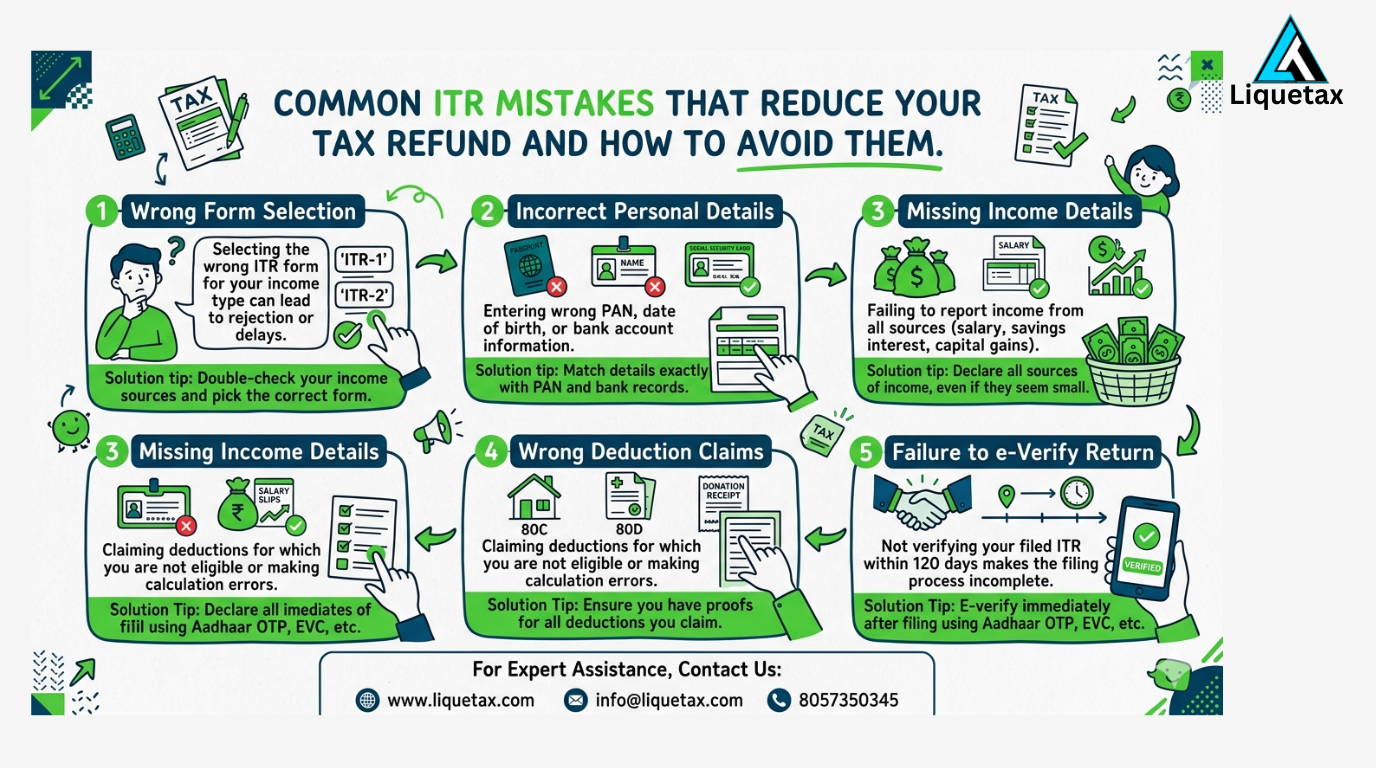
Common ITR Mistakes That Can Reduce Your Refund
1. Selecting the Wrong ITR Form
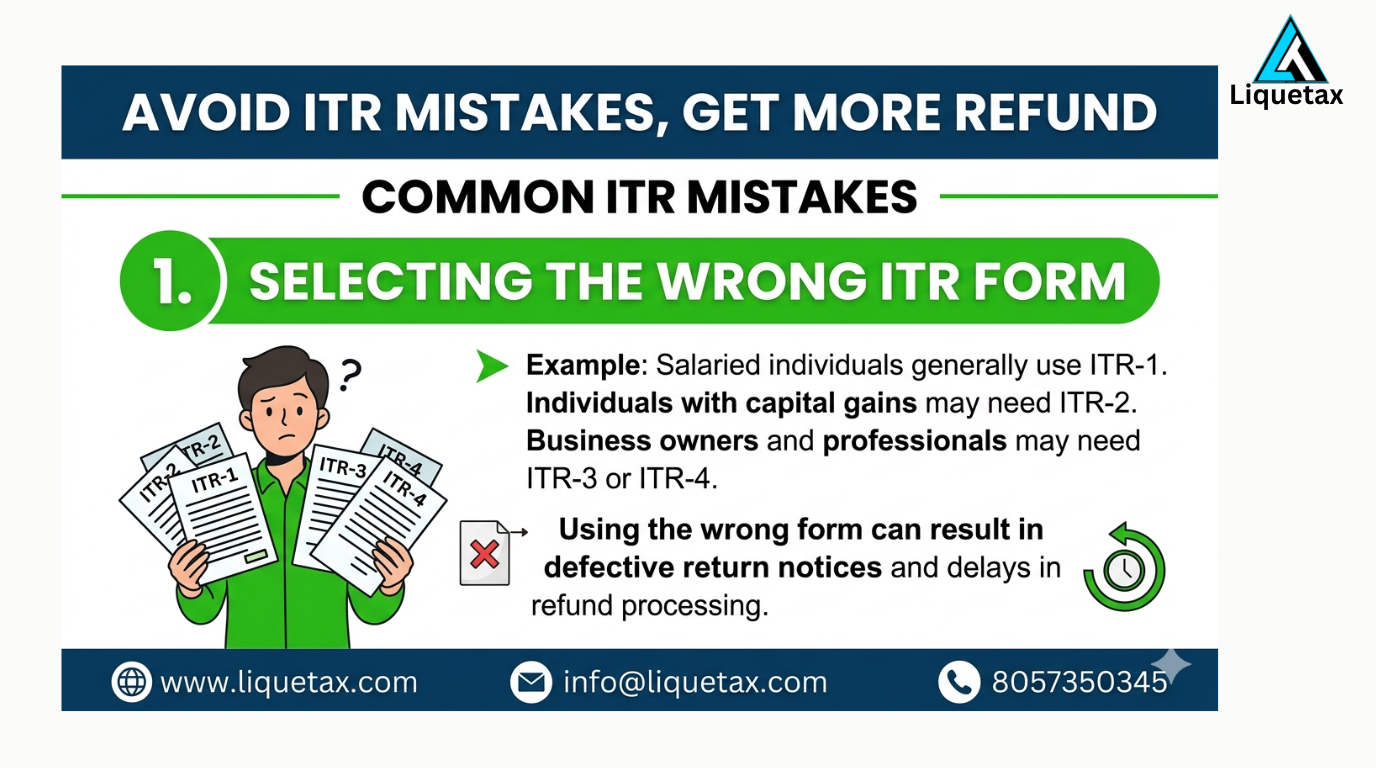
One of the most common mistakes taxpayers make is choosing the wrong ITR form. For example: Salaried individuals generally use ITR-1. Individuals with capital gains may need ITR-2. Business owners and professionals may need ITR-3 or ITR-4. Using the wrong form can result in defective return notices and delays in refund processing.
2. Not Checking Form 26AS
Form 26AS contains details of: TDS deducted Advance tax paid Self-assessment tax High-value transactions Many taxpayers file their returns without verifying Form 26AS. If the TDS shown in your ITR does not match Form 26AS, your refund claim may be reduced or rejected.
3. Ignoring
AIS provides a detailed summary of your financial transactions. It includes: Interest income Dividend income Securities transactions Mutual fund investments Foreign remittances If you miss reporting income shown in AIS, your return may be processed with adjustments, affecting your refund.
4. Claiming Wrong Deductions
Taxpayers often claim deductions without verifying eligibility. Common deductions include: Section 80C Section 80D Section 80G Home loan interest deduction Wrong deduction claims may result in: Refund reduction Additional tax demand Scrutiny by the department Always keep supporting documents before claiming deductions.
5. Incorrect Bank Account Details
Your refund is directly credited to your bank account. If you enter: Wrong account number Wrong IFSC code Unvalidated bank account The refund may fail or get delayed. Before submitting your return, verify all bank details carefully.
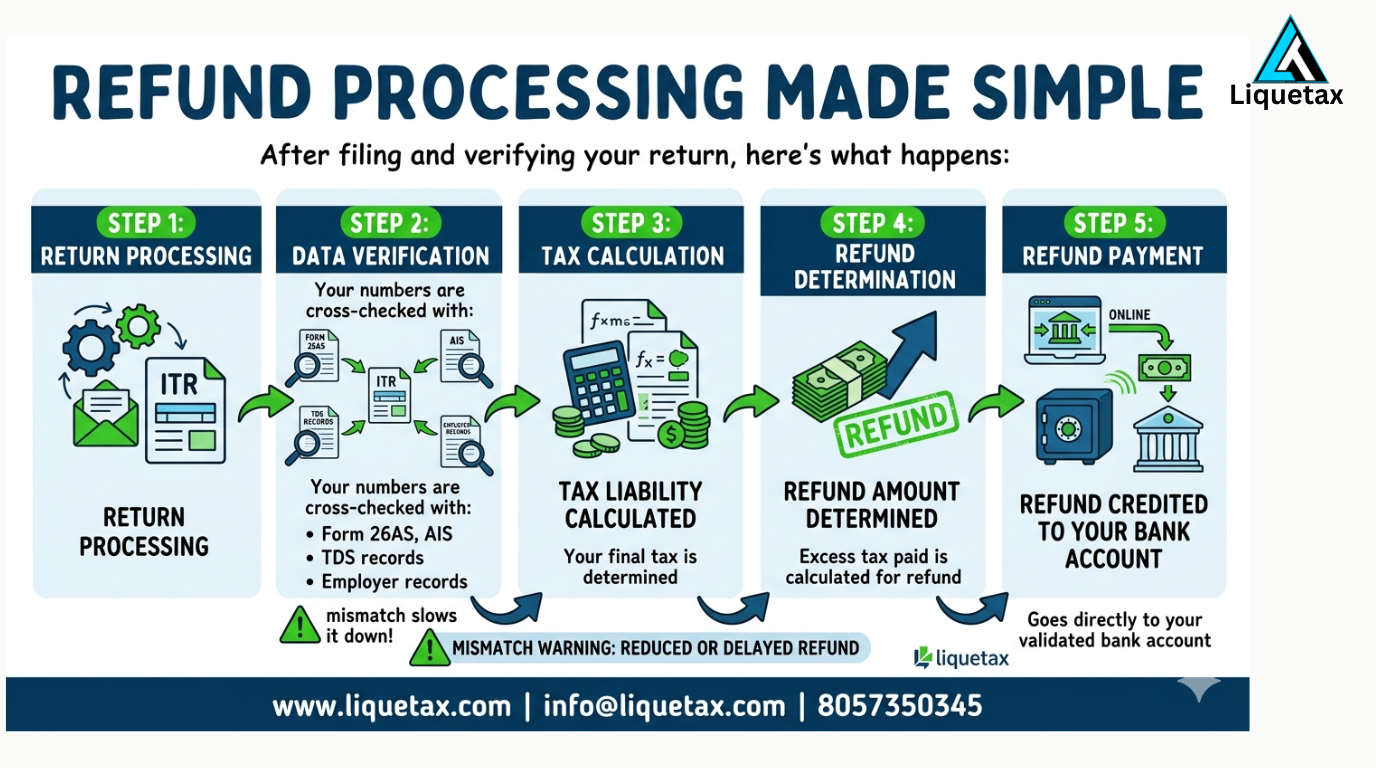
How Refund Processing Works
After filing and verifying your return:
Step 1
The Income Tax Department processes your ITR.
Step 2
Information is matched with: Form 26AS AIS TDS records Employer records
Step 3
Tax liability is calculated.
Step 4
Refund amount is determined.
Step 5
Refund is credited to your validated bank account. Any mismatch during this process can reduce or delay your refund.
Practical Example
Rahul is a salaried employee. His employer deducted ₹45,000 as TDS during the year. After claiming eligible deductions, his actual tax liability was only ₹30,000. He was eligible for a refund of ₹15,000. However, while filing his ITR, Rahul forgot to include one TDS entry appearing in Form 26AS. As a result, the department considered lower tax paid and processed a refund of only ₹8,000. After filing a revised return, the issue was corrected and the balance refund was received. This example shows how a small mistake can significantly affect your refund.
Benefits of Professional ITR Filing Assistance
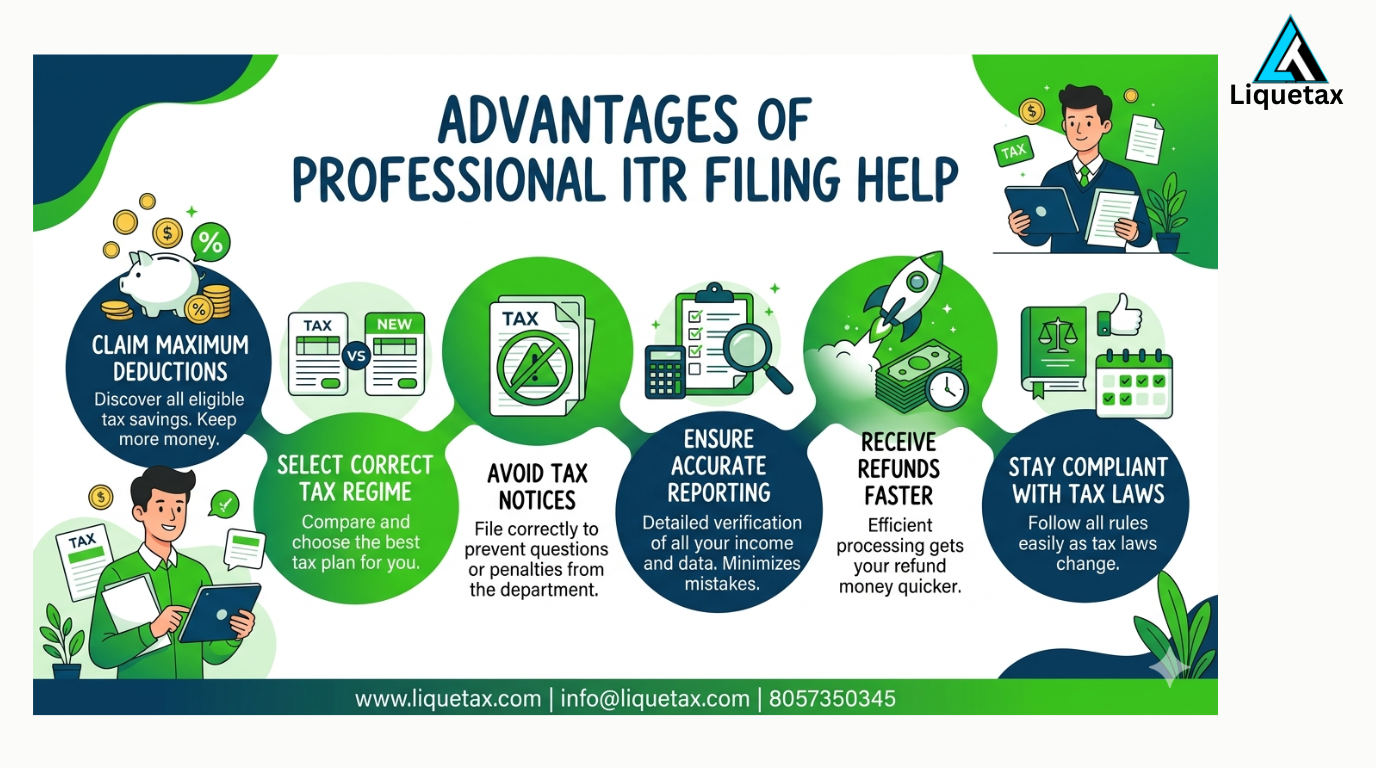
Tax laws change regularly, and filing errors can become expensive. Professional assistance helps you: Claim maximum eligible deductions Select the correct tax regime Avoid notices Ensure accurate reporting Receive refund faster Stay compliant with tax laws
How Liquetax Can Help
At Liquetax, our team of tax professionals assists individuals, freelancers, business owners, and companies with accurate income tax filing. Our services include: Income Tax Return Filing Tax Planning Refund Assistance Notice Handling GST Compliance Company Compliance Services We review your tax information carefully to ensure that you claim every eligible benefit and receive the refund you deserve.
Conclusion
A single mistake in your Income Tax Return can reduce your refund, delay processing, or create unnecessary complications. Whether it is selecting the wrong tax regime, failing to report income, or missing TDS details, these errors can cost you money. Before submitting your ITR, take time to review every detail carefully. Cross-check Form 26AS, AIS, bank details, deductions, and tax calculations. A few extra minutes of verification can help you receive your full refund without delays.
Contact Liquetax
Need help with Income Tax Return Filing or Refund Claims? 🌐 Website: www.liquetax.com 📧 Email: info@liquetax.com 📞 Mobile: 8057350345 Get professional assistance and file your ITR accurately with Liquetax.
Frequently Asked Questions (FAQs)
Q1. Can a wrong ITR form reduce my refund?
Yes. Filing the wrong ITR form may lead to processing issues, notices, or refund delays.
Q2. What is the most common reason for reduced tax refunds?
Mismatch in TDS details between ITR and Form 26AS is one of the most common reasons.
Q3. Can I revise my ITR if I make a mistake?
Yes. You can file a revised return within the prescribed time limit.
Q4. Why should I check AIS before filing my return?
AIS contains information about your income and financial transactions. Missing these details can result in tax adjustments.
Q5. Does selecting the wrong tax regime affect my refund?
Yes. Choosing a less beneficial tax regime may increase tax liability and reduce your refund.