
Has Your Employer Deducted More TDS Than Required? Here's How to Check
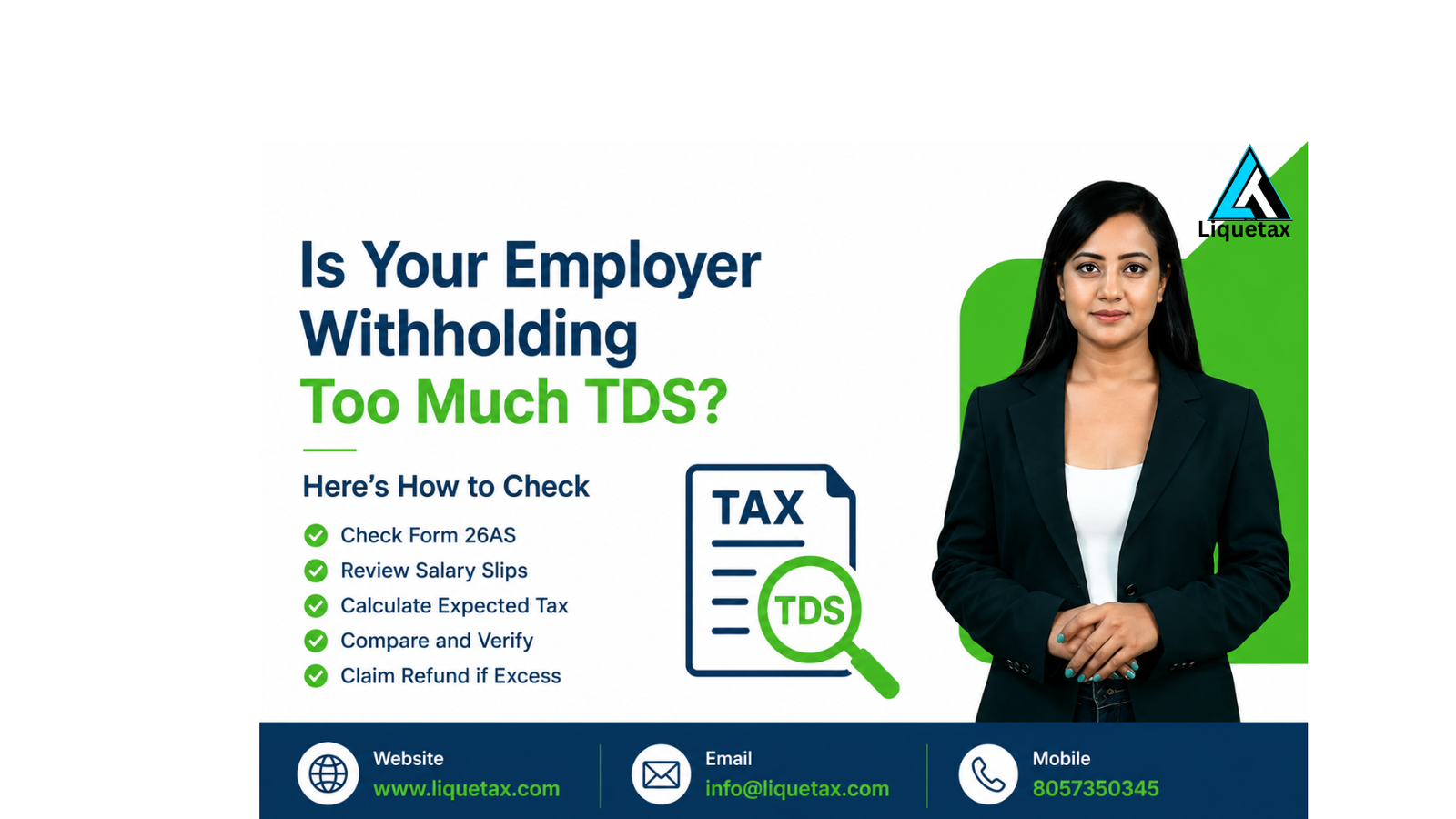
Has Your Employer Deducted More TDS Than Required? Here's How to Check
Introduction
Many salaried employees assume that the Tax Deducted at Source (TDS) deducted by their employer is always correct. However, this is not always the case. Every year, thousands of taxpayers discover that more tax was deducted from their salary than was actually required. As a result, they become eligible for an income tax refund. If your employer has deducted excess TDS from your salary, you should not ignore it. The good news is that you can easily check whether you have paid extra tax and claim a refund while filing your Income Tax Return (ITR). In this guide, we will explain what excess TDS means, why it happens, how to identify it, and the steps you can take to recover your money.
What is TDS on Salary?
TDS stands for Tax Deducted at Source. Employers are required to deduct income tax from an employee's salary before making payment. Instead of paying your entire tax amount at the end of the financial year, the tax is collected gradually through monthly salary deductions. For example: Annual Salary: ₹10,00,000 Estimated Tax Liability: ₹75,000 Monthly TDS Deduction: Around ₹6,250 The employer deposits this tax with the Income Tax Department on behalf of the employee.
What Does Excess TDS Mean?
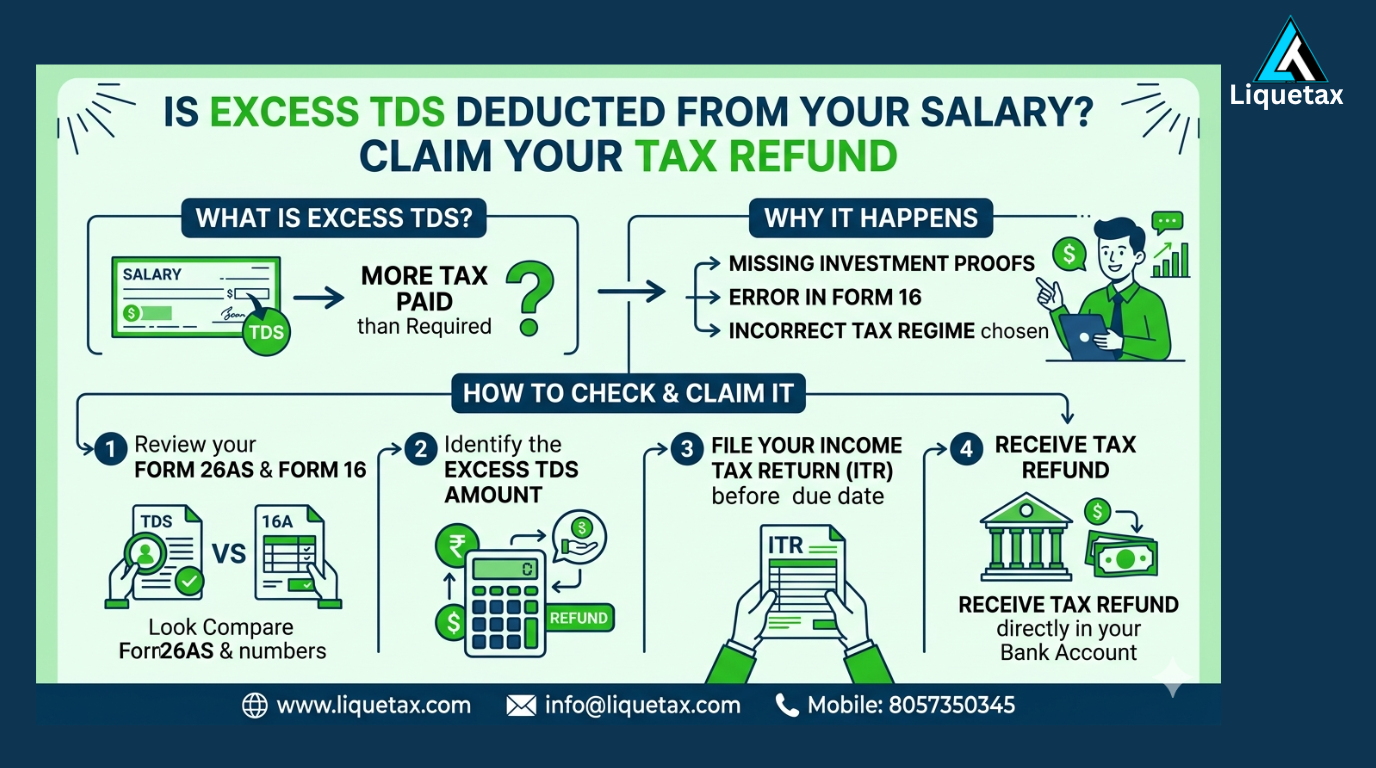
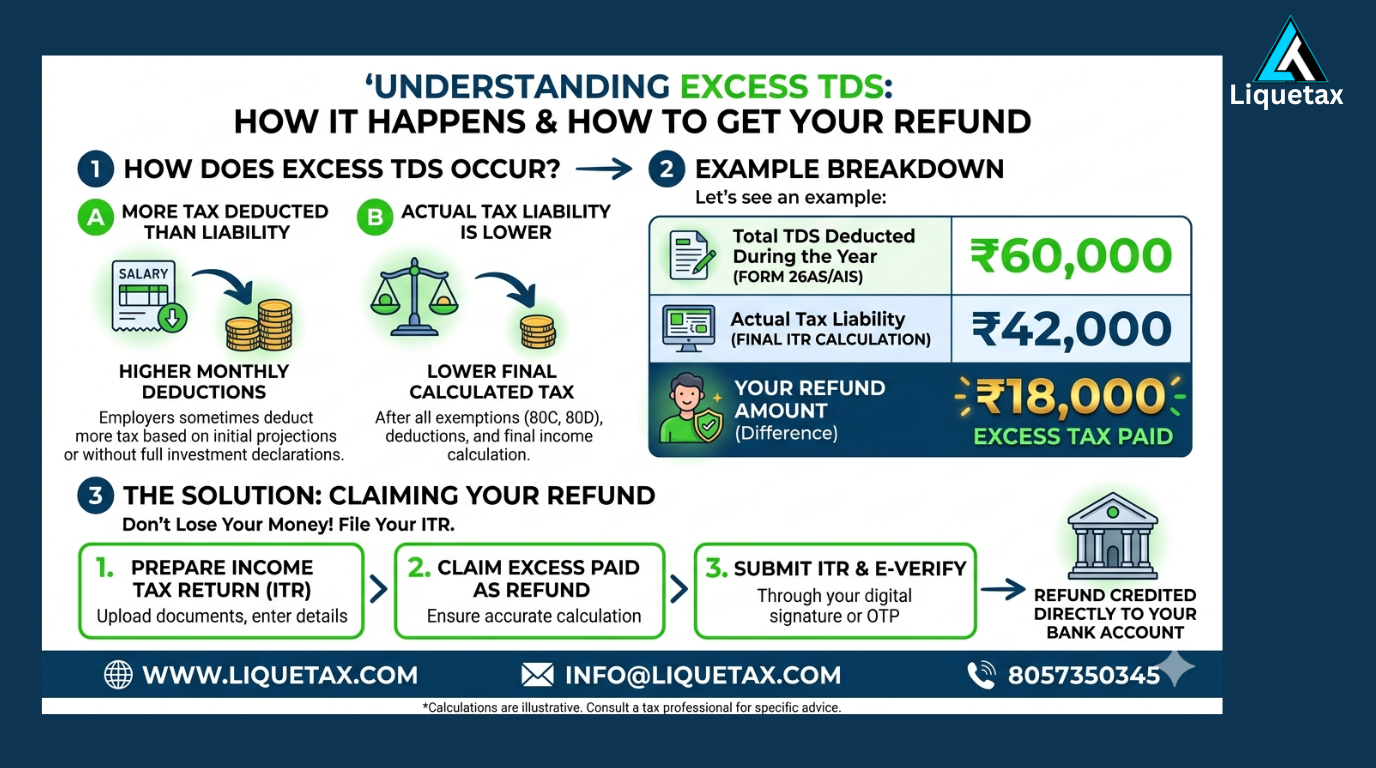
Excess TDS means that more tax has been deducted from your salary than your actual tax liability. For example: Total TDS Deducted During the Year: ₹60,000 Actual Tax Liability: ₹42,000 Excess Tax Paid: ₹18,000 This ₹18,000 can be claimed back as a refund when you file your Income Tax Return (ITR).
Why Do Employers Deduct Excess TDS?
There are several reasons why excess TDS may be deducted from your salary.
1. Investment Proofs Were Not Submitted
Many employees declare tax-saving investments at the beginning of the year but fail to submit supporting documents later. Examples include: PPF Investments ELSS Mutual Funds Life Insurance Premiums Tuition Fees Tax Saving Fixed Deposits If these proofs are not submitted on time, the employer may ignore the deductions and calculate higher TDS.
2. Wrong Tax Regime Selection
India currently offers two tax regimes:
Old Tax Regime
Allows various deductions and exemptions.
New Tax Regime
Offers lower tax rates but fewer deductions. If your employer calculates TDS under a tax regime that is not suitable for your financial situation, excess tax may be deducted.
3. Job Change During the Year
Employees who switch jobs during a financial year often face TDS issues. When salary details from the previous employer are not properly considered, the new employer may deduct higher tax as a precaution.
4. Incorrect Salary Estimation
Employers often estimate annual income while calculating TDS. If projected bonuses, incentives, or allowances are not received later, the TDS deducted may become higher than necessary.
5. Payroll Errors
Human mistakes and payroll software issues can also result in incorrect TDS calculations. Although uncommon, such errors do happen and can impact your salary.
Signs That You May Have Paid Excess TDS
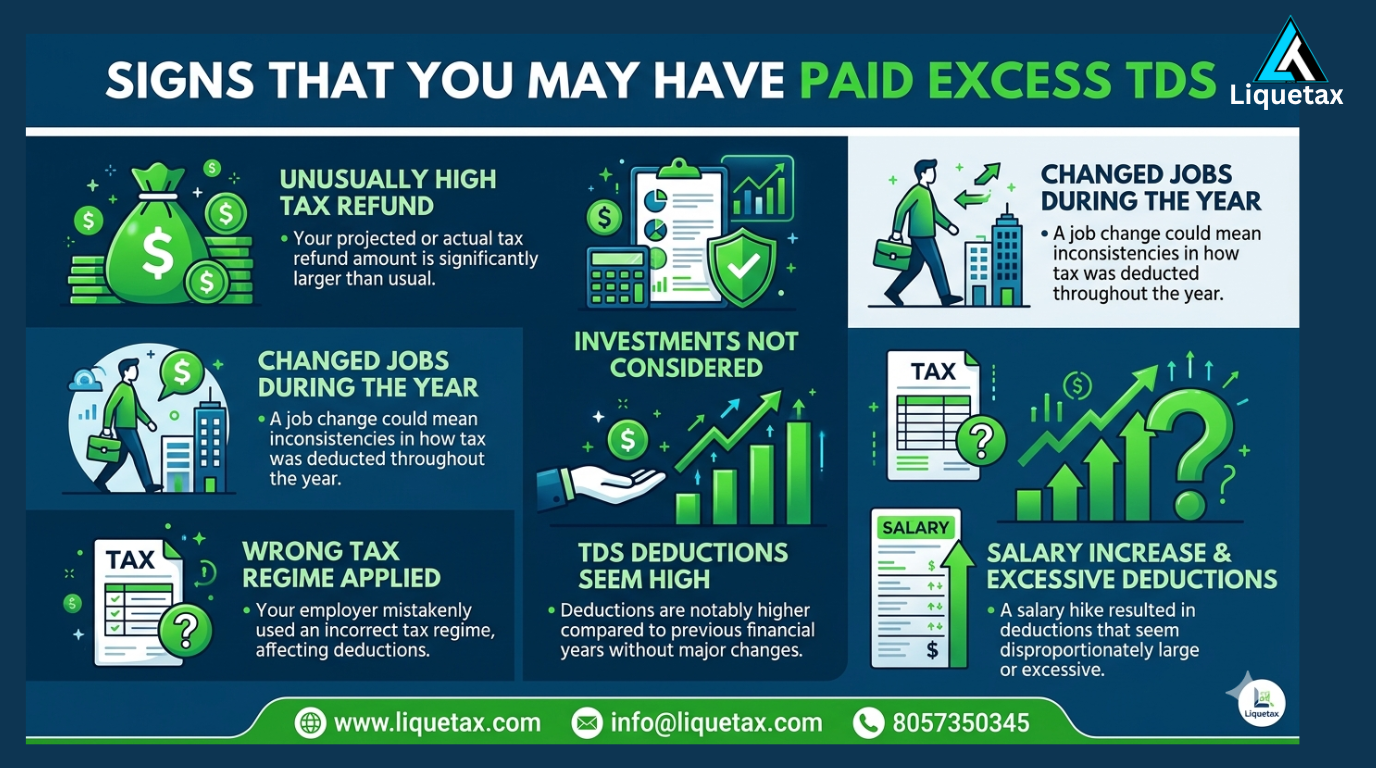
You should review your tax records if: Your tax refund amount is unusually high. Your investments were not considered. You changed jobs during the year. Your employer used the wrong tax regime. TDS deductions seem unusually high compared to previous years. You received a salary increase but your deductions appear excessive.
How to Check Whether Excess TDS Has Been Deducted
Checking your TDS is not difficult. Follow these simple steps.
Step 1: Review Your Salary Slips
Start by reviewing all your monthly salary slips. Check: Gross Salary Net Salary Monthly TDS Deduction Calculate the total TDS deducted during the financial year.
Step 2: Verify Form 16
Form 16 is issued by your employer after the end of the financial year. It contains: Salary Details Taxable Income TDS Deducted Tax Deposited Carefully compare the tax deducted with your estimated tax liability.
Step 3: Check Form 26AS
Form 26AS is your consolidated tax statement. It shows: TDS deposited by employer TDS deducted by banks Advance tax payments Tax refunds received Make sure the TDS shown in Form 16 matches the amount reflected in Form 26AS. Any mismatch should be corrected immediately.
What Should You Do If Excess TDS Has Been Deducted?
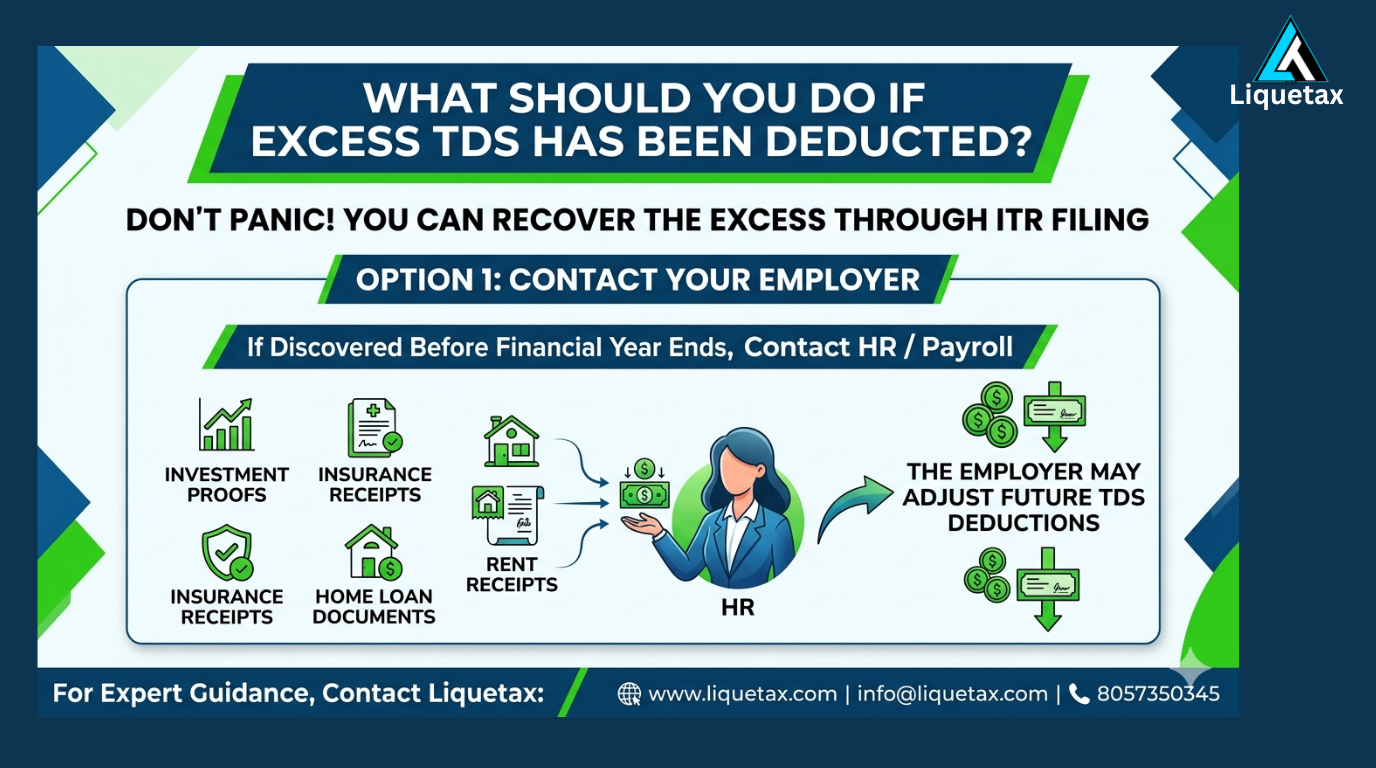
Do not panic. You can recover the excess amount through the Income Tax Return filing process.
Option 1: Contact Your Employer
If you discover the issue before the financial year ends, contact your HR or payroll department. Provide: Investment Proofs Insurance Receipts Home Loan Documents Rent Receipts The employer may adjust future TDS deductions.
Option 2: Claim Refund Through ITR
If the financial year has already ended, simply file your Income Tax Return correctly. The Income Tax Department will process your return and issue the refund directly to your bank account.
Common Mistakes Employees Make
Many taxpayers miss out on refunds because of avoidable mistakes.
Not Checking Form 16
Employees often accept Form 16 without verifying the details.
Ignoring Form 26AS
Always cross-check Form 16 with Form 26AS.
Missing Deduction Claims
Many people forget to claim eligible deductions while filing ITR.
How Liquetax Can Help
Understanding tax deductions and refund calculations can be confusing for many employees. At Liquetax, our experts help taxpayers: ✔ Review Form 16 and Form 26AS ✔ Verify TDS deductions ✔ Calculate correct tax liability ✔ Identify missed deductions ✔ File Income Tax Returns accurately ✔ Claim maximum eligible refunds ✔ Resolve tax-related queries quickly Whether you are a salaried employee, freelancer, consultant, or business owner, our team can help ensure that you do not pay more tax than required.
Contact Liquetax Today
If you think your employer may have deducted excess TDS, do not wait until it is too late. Get professional assistance and ensure your tax refund is claimed correctly. 🌐 Website: www.liquetax.com 📧 Email: info@liquetax.com 📞 Mobile: 8057350345
Frequently Asked Questions (FAQs)
1. How can I check if excess TDS has been deducted?
Compare the total TDS shown in Form 16 with your actual tax liability after considering all deductions and exemptions.
2. Can I get a refund for excess TDS deducted by my employer?
Yes. You can claim the excess amount as a refund while filing your Income Tax Return.
3. What is Form 26AS?
Form 26AS is a tax credit statement that shows all TDS deposited against your PAN.
4. Is Form 16 enough to verify TDS?
Form 16 is important, but it should always be cross-checked with Form 26AS and AIS.
5. Why do employers sometimes deduct higher TDS?
Common reasons include missing investment proofs, incorrect tax regime selection, payroll errors, or job changes.