
Received an Income Tax Notice After Claiming a Refund? Here's What You Should Do
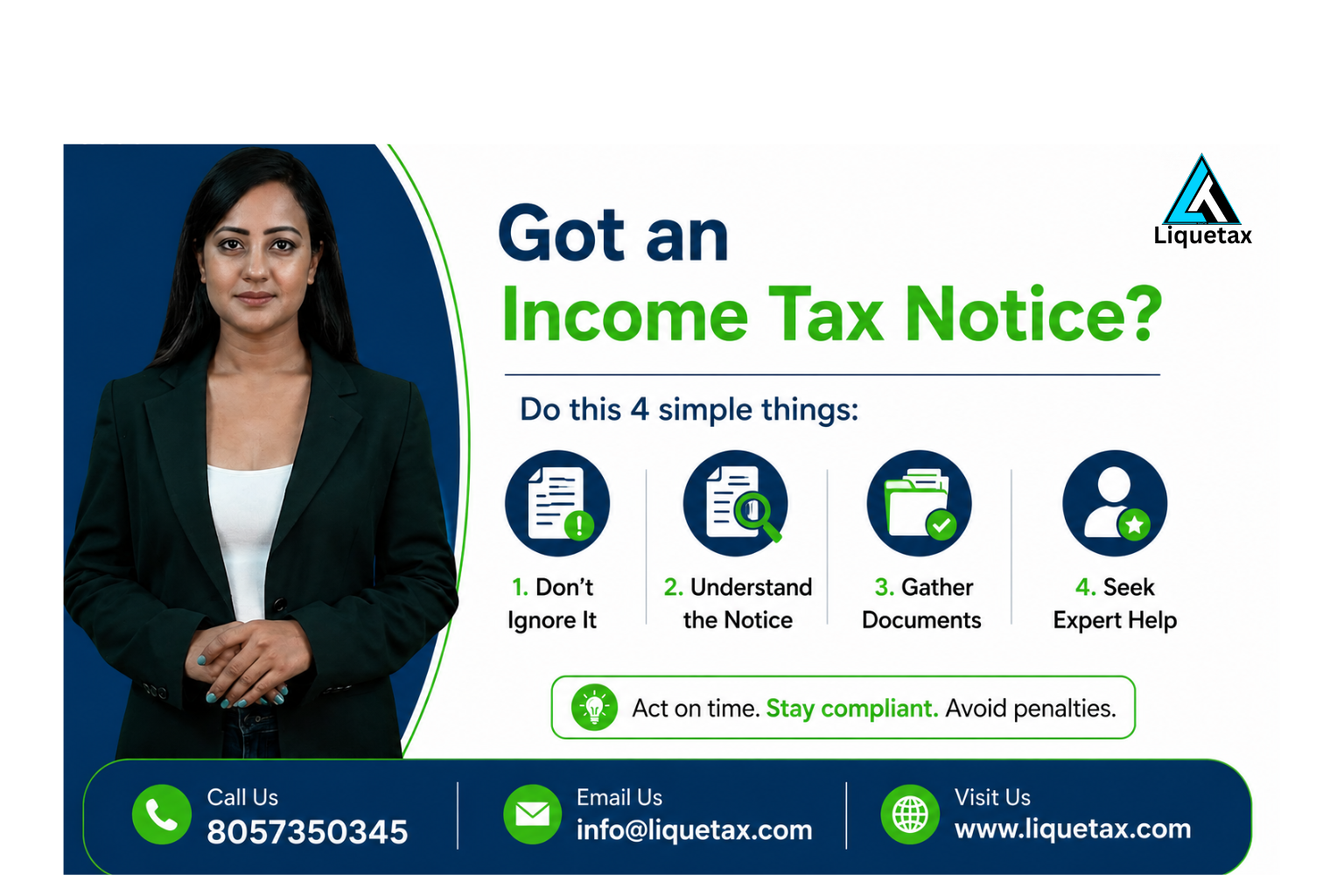
Received an Income Tax Notice After Claiming a Refund? Here's What You Should Do
Introduction
Receiving an income tax refund is always good news. It means that you paid more tax than necessary during the financial year, and the Income Tax Department is returning the extra amount to your bank account. However, many taxpayers become worried when they receive an Income Tax Notice after claiming a refund. The moment a notice arrives, questions start coming to mind: Did I make a mistake while filing my return? Will I have to pay a penalty? Will my refund be cancelled? Is there any legal problem? The good news is that receiving a notice does not automatically mean that you have done something wrong. In many cases, notices are sent simply to verify information, check deductions, confirm income details, or resolve mismatches found during the processing of your Income Tax Return (ITR). Today, the Income Tax Department uses advanced technology and data analytics to compare information reported by taxpayers with details received from employers, banks, mutual funds, stock brokers, and other financial institutions. If any mismatch is detected, a notice may be generated automatically. In this complete guide, we will explain why you may receive a notice after claiming a refund, what different notices mean, how to respond correctly, common mistakes taxpayers make, and how you can avoid notices in the future.
Why Do Taxpayers Receive Income Tax Notices After Claiming a Refund?
Many people believe that tax notices are sent only when there is tax fraud or tax evasion. This is not true. Most notices are simply requests for clarification or verification. Some common reasons include: Mismatch between income reported and department records Incorrect TDS claims Excess deduction claims Errors in return filing High refund claims Unreported income Incorrect bank details Missing information in the return The department wants to ensure that the refund being issued is correct and justified.
Understanding the Tax Refund Verification Process
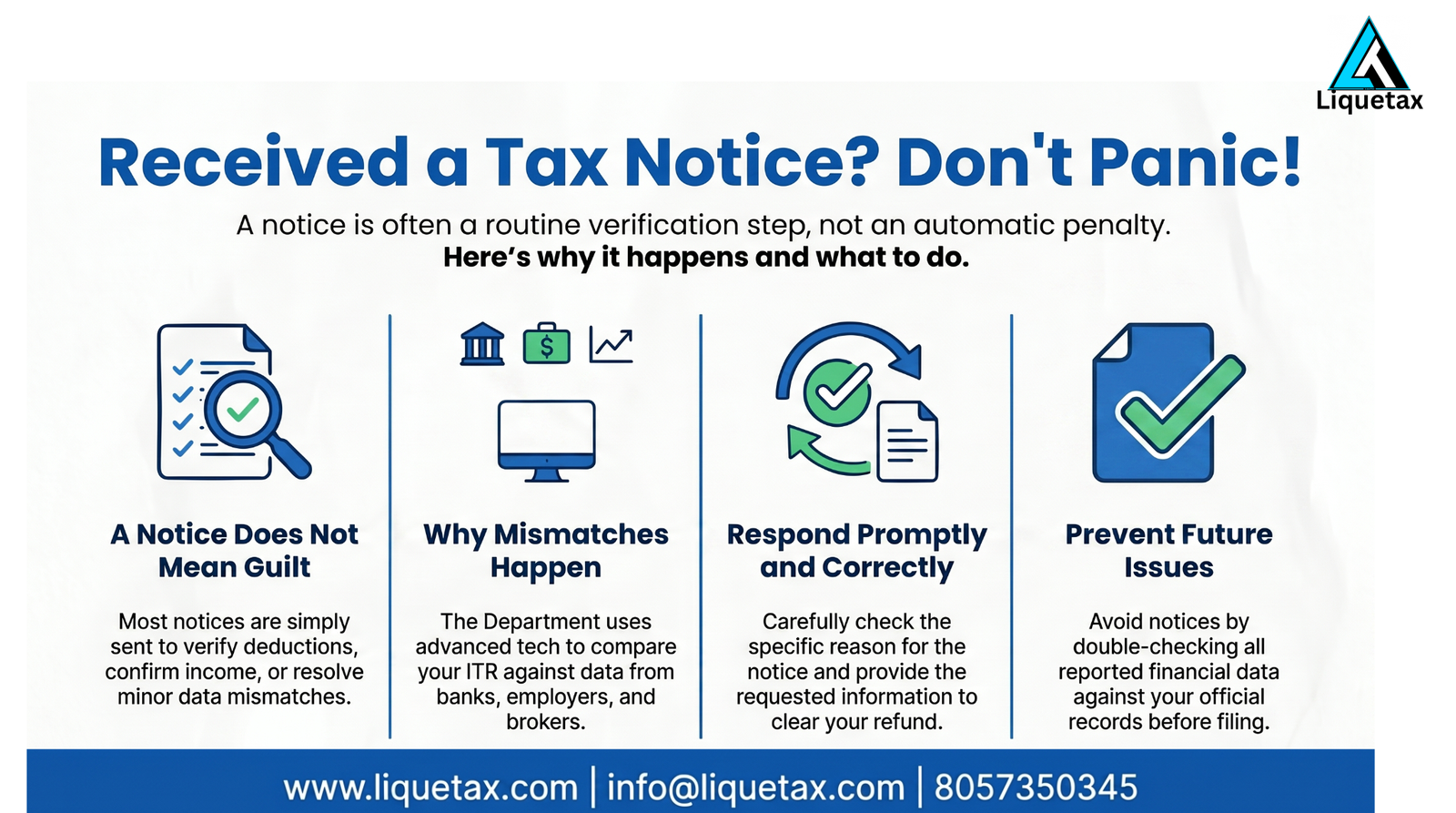
Before a refund is approved, the Income Tax Department verifies several details:
Income Verification
The department checks whether all sources of income have been reported correctly.
TDS Verification
TDS credits claimed by taxpayers are matched with Form 26AS and employer records.
Deduction Verification
Deductions claimed under various sections are reviewed.
Refund Calculation Verification
The department ensures that the refund amount is accurate and legally claimable. If anything appears unusual, a notice may be issued.
Common Types of Income Tax Notices
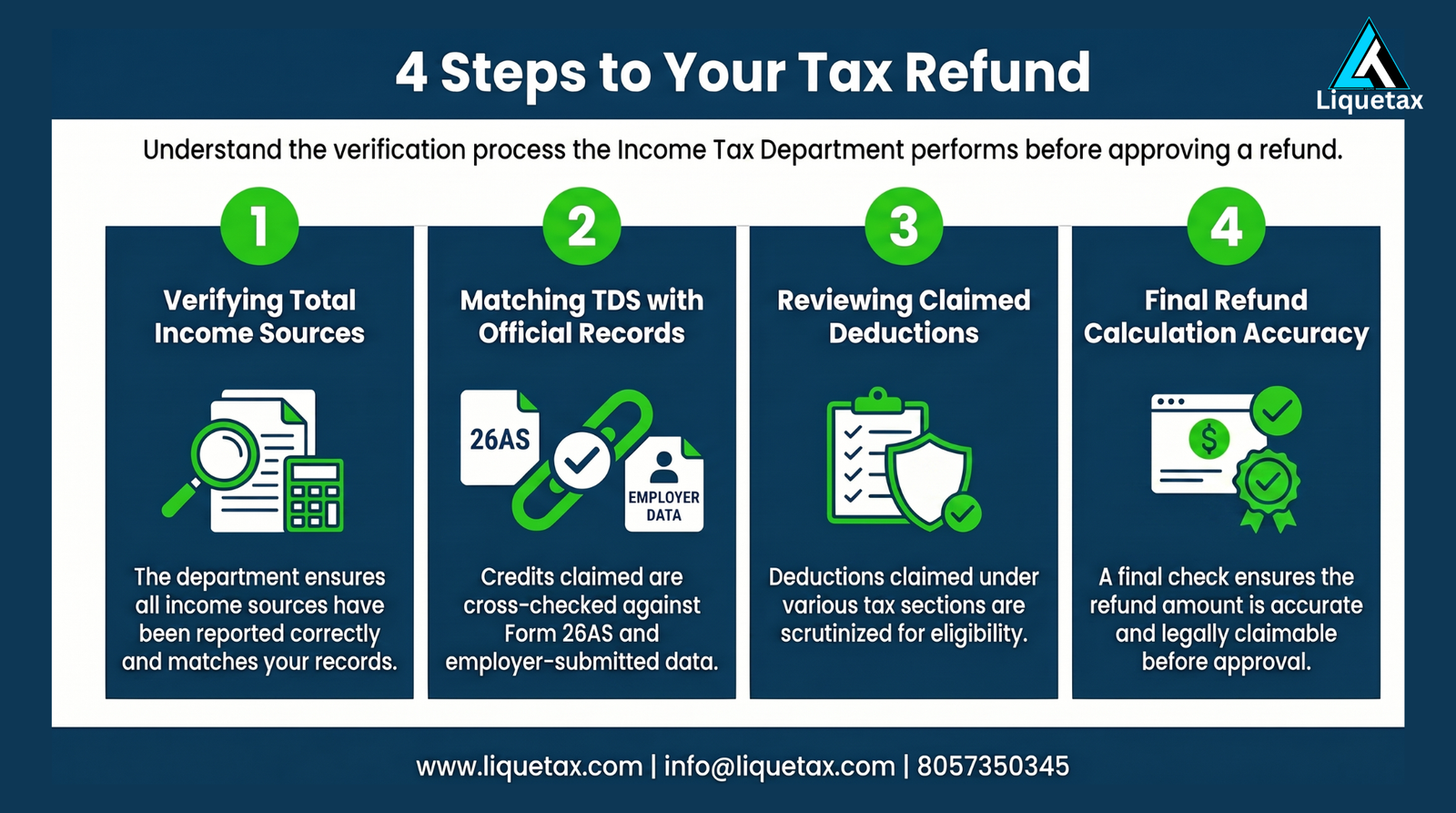
1. Notice for Income Mismatch
One of the most common notices is related to income mismatch. The department receives information from multiple sources including: Employers Banks Mutual funds Stock brokers Property registrars If your return does not match the available information, you may receive a notice.
Example
Suppose you reported only salary income but forgot to include: Fixed Deposit Interest Savings Account Interest Dividend Income The department may identify the mismatch and seek clarification.
2. Notice for Incorrect TDS Credit
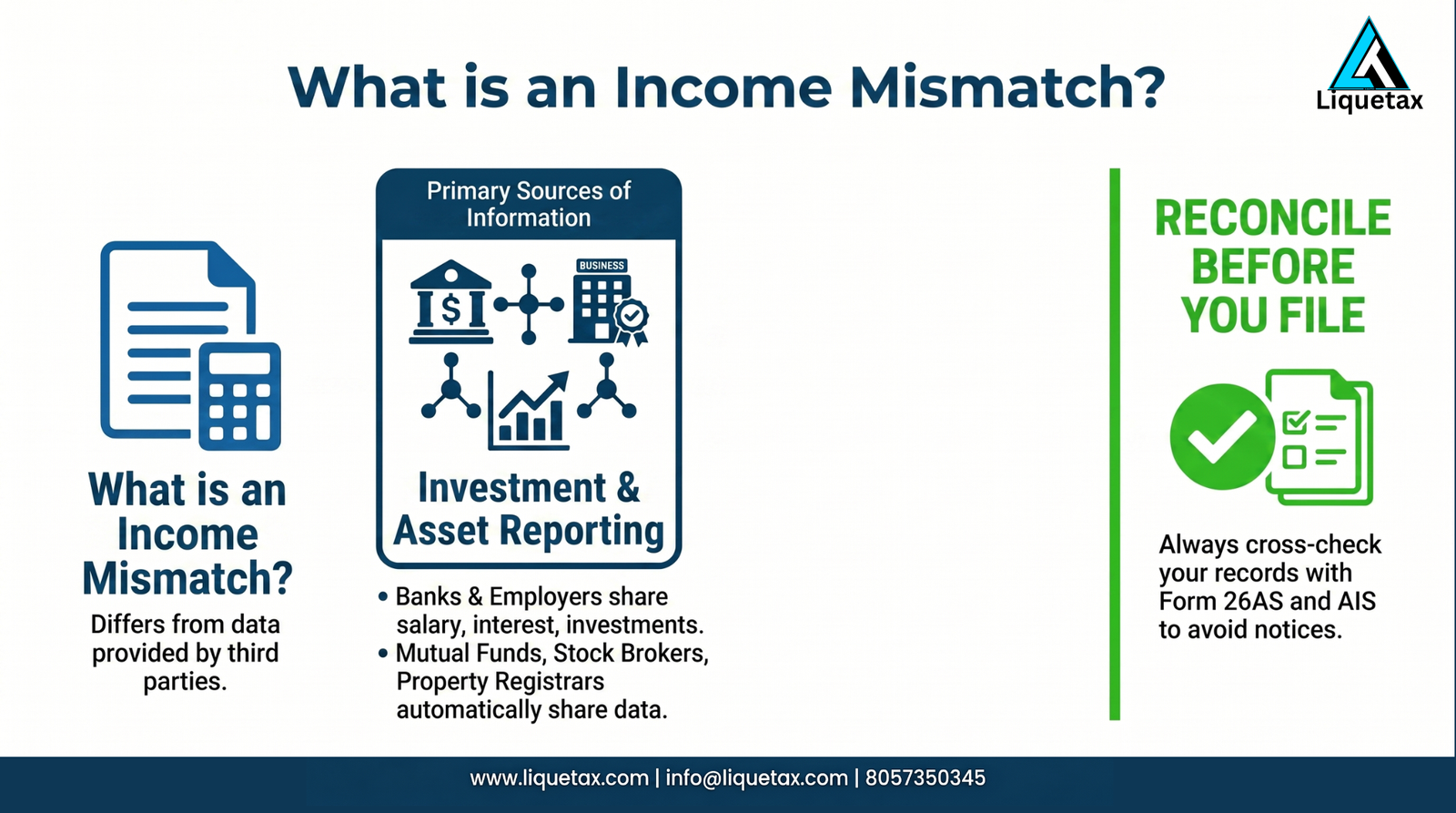
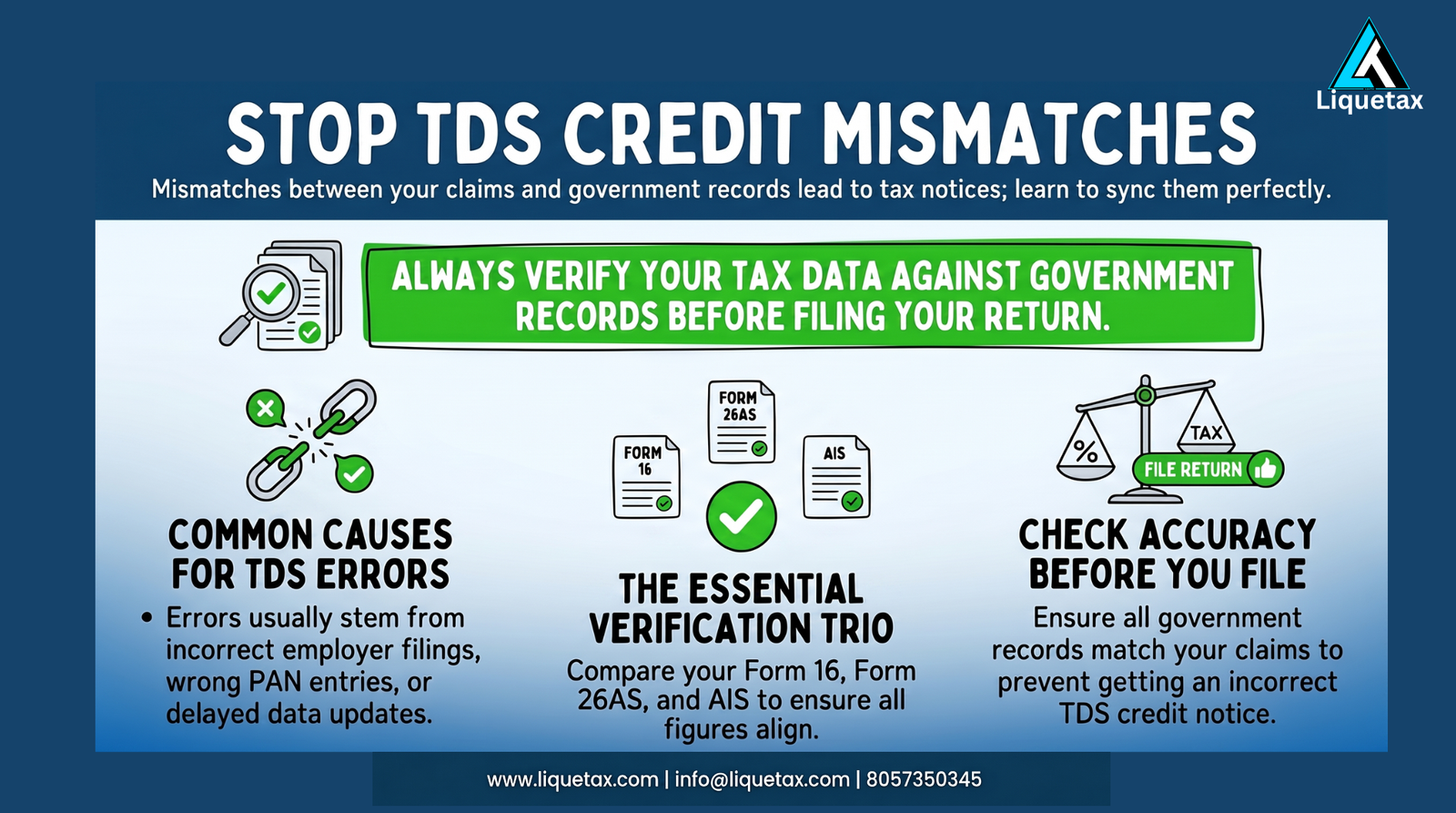
Many taxpayers claim TDS credits that do not match government records. This can happen because: Employer filed incorrect TDS returns Wrong PAN was mentioned TDS data was not updated Before filing your return, always compare: Form 16 Form 26AS AIS to ensure accuracy.
3. Notice for Incorrect Deduction Claims
Taxpayers often claim deductions under: Section 80C Section 80D HRA Home Loan Interest If the claimed deductions appear excessive or unsupported, the department may request proof.
4. Notice for High Refund Claims
Large refund claims are more likely to be reviewed. The department may ask for documents supporting: TDS credits Tax payments Investments Deduction claims This is a normal verification process.
What Should You Do Immediately After Receiving a Notice?
Stay Calm
The first and most important step is not to panic. Most notices are routine and can be resolved easily.
Read the Notice Carefully
Pay attention to: Notice number Assessment Year Reason for notice Response deadline Understanding the notice correctly is crucial.
Verify the Notice
Always verify the notice through your Income Tax Portal account. This protects you from fraud and fake notices.
Conclusion
Receiving an Income Tax Notice after claiming a refund does not automatically mean you have done something wrong. Most notices are issued to verify information and ensure that refunds are processed correctly. The best approach is to stay calm, understand the notice, collect the necessary documents, and respond on time. By maintaining accurate records, reporting all income, matching AIS and Form 26AS before filing, and claiming only genuine deductions, you can significantly reduce the chances of receiving tax notices in the future.
Contact Liquetax for Professional Assistance
If you have received an Income Tax Notice, need help responding to the Income Tax Department, or want expert assistance with Income Tax Return filing, Liquetax is here to help. Get Expert Tax Support Today 🌐 Website: www.liquetax.com 📧 Email: info@liquetax.com 📞 Mobile: 8057350345 Our experts can assist with: Income Tax Return Filing Tax Refund Claims Income Tax Notice Responses GST Registration & Returns Company Registration Trademark Registration Compliance Services
Frequently Asked Questions (FAQs)
1. Is it normal to receive a tax notice after claiming a refund?
Yes. Many notices are routine verification requests.
2. Will my refund be cancelled if I receive a notice?Not necessarily. Most notices simply require clarification.
3. How can I check if the notice is genuine?
Verify it through your Income Tax Portal account.
4. What documents should I keep for deductions?
Keep investment proofs, rent receipts, insurance receipts, and home loan certificates.
5.Can incorrect TDS claims create problems?
Yes. TDS credits must match government records available in Form 26AS.