
One Wrong Transaction Can Invite a Tax Notice: What Every Taxpayer Should Know
One Wrong Transaction Can Invite a Tax Notice: What Every Taxpayer Should Know
Introduction
Many people think that only business owners or wealthy individuals get income tax notices. The truth is, one wrong financial transaction can get the attention of the Income Tax Department if it does not match your income records or tax filings.
Today banks, financial institutions, credit card companies, mutual fund houses and property registrars regularly share transaction details with the Income Tax Department. This means your major financial activities are being tracked through reporting systems.
The good news is that getting a tax notice can often be avoided by keeping records and reporting income correctly and understanding which transactions are closely monitored.
In this blog we will discuss the high-risk transactions that can trigger a tax notice and how you can stay compliant.
Problem Explanation
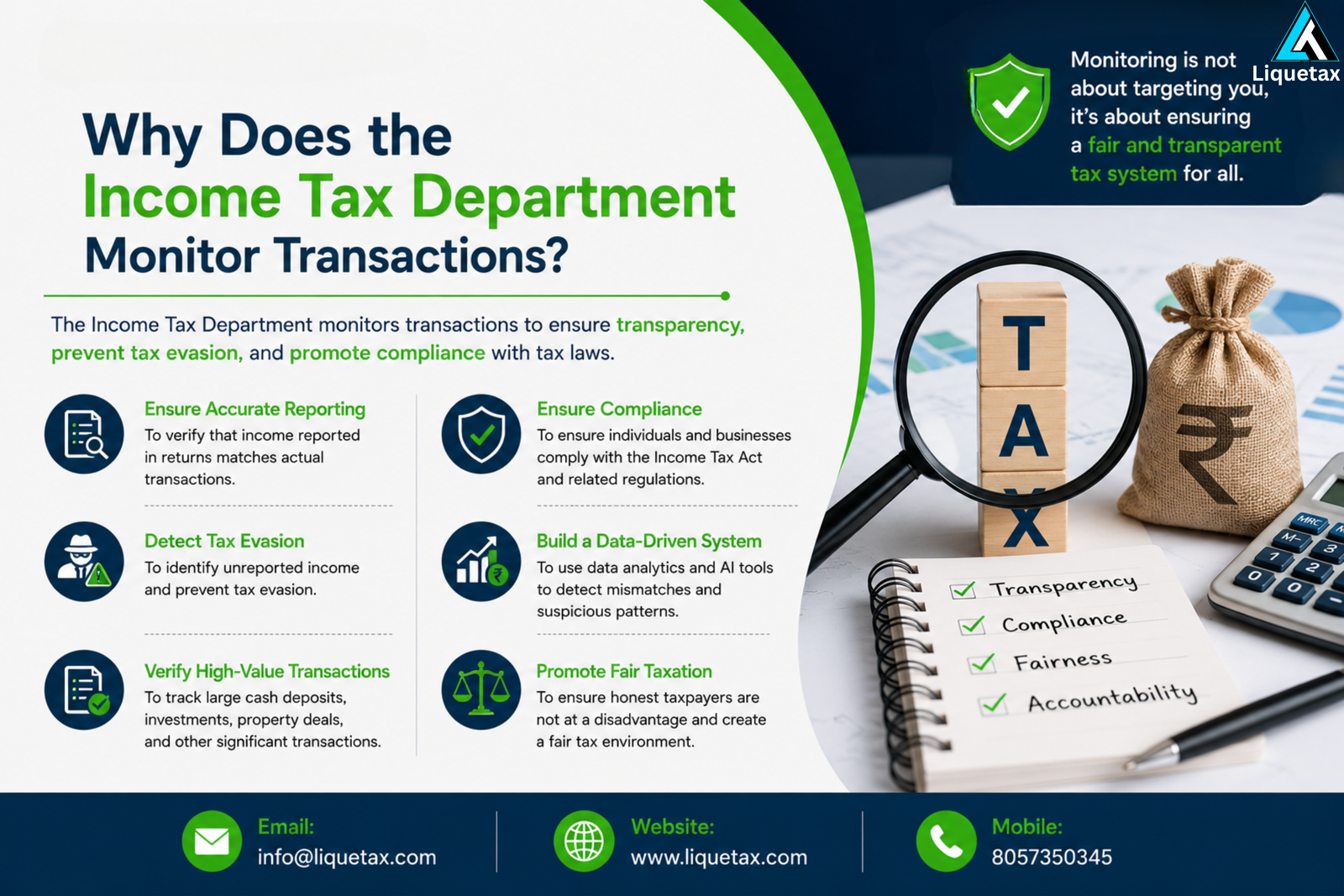
Why Does the Income Tax Department Monitor Transactions?
The Income Tax Department uses technology and data analytics to identify activities that do not match a taxpayers reported income.
For example a person reports an income of ₹5 lakh. The same person buys a property for ₹80 lakh. Spends ₹10 lakh through credit cards in a year. These mismatches can raise questions. May result in a notice seeking clarification.
The purpose is not to trouble taxpayers. To identify income and improve tax compliance.
Step-by-Step Solution
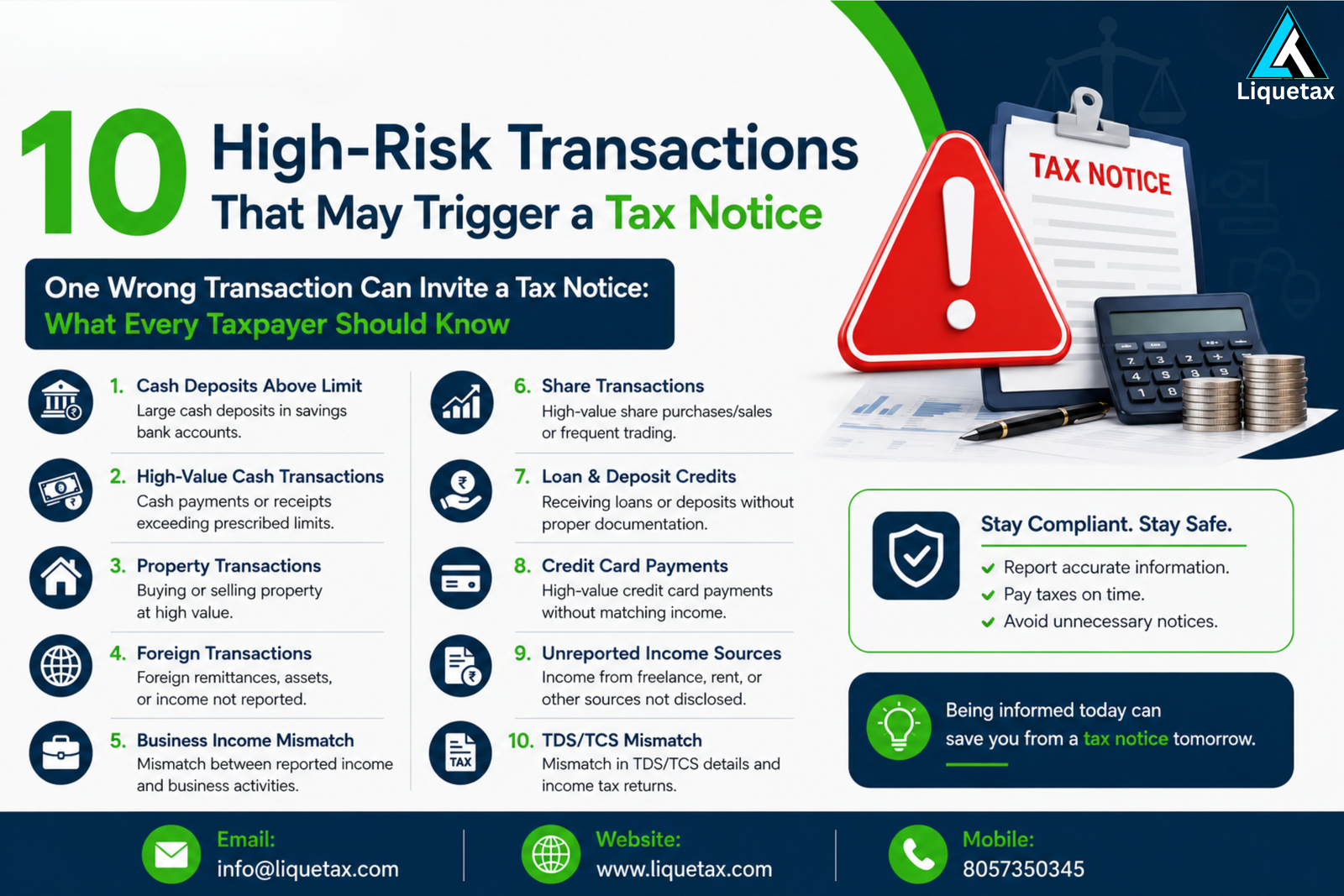
10 High-Risk Transactions That May Trigger a Tax Notice
1. Large Cash Deposits
Depositing a lot of cash into your bank account can attract scrutiny. This is especially important when the deposit amount is very high deposits are frequent. The source of funds cannot be explained. Always keep proof of the source of cash, such as business receipts, sale proceeds, gifts or withdrawals made earlier.
2. Heavy Credit Card Spending
Credit card spending is closely monitored. If your spending is much higher than your declared income the Income Tax Department may ask how the expenditure was funded. If there is any income. Always make sure your tax returns reflect your capacity.
3. Purchase or Sale of Property
Real estate transactions are among the tracked activities. The Income Tax Department may review the source of funds used for purchase capital gains on sale stamp duty values and property registration records. Failure to report property-related income correctly can result in notices and penalties.
4. Investments in Fixed Deposits and Stocks
Investments in fixed deposits, shares, mutual funds and bonds can attract attention if they are not supported by declared income. Keep records of investment sources. Ensure interest income and capital gains are reported in your Income Tax Return.
5. Foreign Travel Expenses
International travel or expensive vacations can raise questions if your reported income appears insufficient. The Income Tax Department may compare travel expenses, foreign exchange purchases and declared income. Keeping transparency in income reporting helps avoid issues.
6. Cash Gifts
Receiving cash gifts from friends or relatives can become a concern if proper documentation is unavailable. Certain gifts from relatives may be exempt. Gifts from non-relatives above limits may be taxable. Always keep gift deeds. Supporting documents.
7. Large Cash Withdrawals
Many people assume only deposits are monitored. However large cash withdrawals are also tracked. Repeated high-value withdrawals may raise questions regarding usage of funds, business transactions and source and purpose of cash movement. Keep records whenever substantial cash transactions occur.
8. Business Transactions
Business owners should be extra careful. Common mistakes include underreporting sales, incorrect GST filings unrecorded cash receipts and mismatch between GST and Income Tax data. Today GST and Income Tax systems are increasingly integrated, making mismatches easier to detect.
9. Loans and Borrowings
Receiving or giving loans without documentation can create tax complications. Always keep loan agreements bank transaction records and repayment schedules. Proper documentation helps explain the nature of the transaction if questioned.
10. High-Value Financial Activities
Several other transactions may also come under scrutiny including purchase of luxury goods high-value bank transfers, investments, corporate transactions and multiple financial accounts with activity. The key factor is whether your transactions align with your reported income.
Examples / Case Study
Common Reasons Tax Notices Are Issued
Most notices are triggered because of income mismatch, where reported income does not match spending or investments. Unreported income, such as interest, rent, capital gains or freelance income is omitted from tax returns. Incorrect ITR filing, errors in filing returns can create discrepancies. GST and Income Tax differences, where sales reported under GST differ from Income Tax records can also trigger notices. Missing documentation, where taxpayers cannot explain the source of funds when asked is another reason.
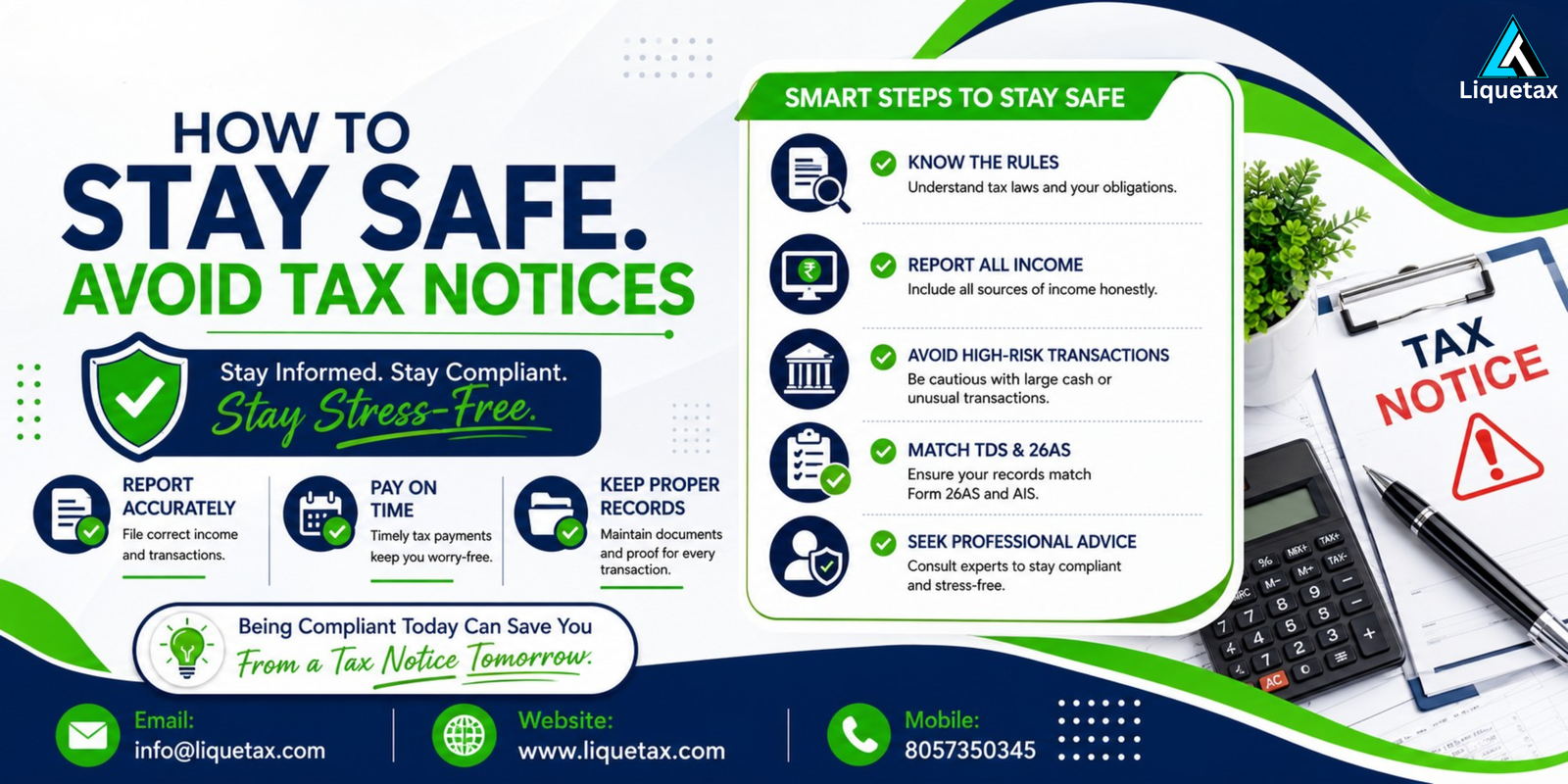
How to Stay Safe. Avoid Tax Notices
Following practices can significantly reduce the chances of getting a notice. Maintain records keep documents related to income, investments, property transactions, gifts, loans and business receipts. File tax returns, always disclose salary income, business income, interest income, rental income and capital gains. Do not underestimate income. Avoid cash transactions digital transactions create a trail. Reduce compliance risks. Whenever possible use banking channels for payments and receipts. Reconcile financial data, ensure consistency between bank accounts GST returns, Income Tax Returns and investment statements. Seek advice, tax laws change regularly consulting a tax professional can help identify compliance issues before they become problems.
Conclusion
In todays world financial transactions leave a trail. Banks, institutions, property registrars and investment platforms regularly share information with tax authorities. A single unexplained transaction can sometimes trigger questions from the Income Tax Department. However taxpayers who maintain records, file returns and stay compliant generally have little to worry about. The best strategy is simple: be transparent maintain documentation and ensure your income and transactions match your tax filings.
By staying informed and proactive you can avoid tax notices. Focus on your goals with confidence.
Call-to-Action
Need Help with Tax Compliance?
Liquetax helps individuals, professionals, traders, startups and businesses, with: ✅ Income Tax Return Filing ✅ GST Registration and GST Returns ✅ Tax Notice Replies ✅ Business Compliance Services ✅ Company Registration ✅ Tax Planning and Advisory 🌐 Website: www.liquetax.com 📧 Email: info@liquetax.com 📞 Mobile: +91 8057350345Q1. Can a single financial transaction trigger a tax notice?
Yes. If a transaction does not match your declared income or tax records, it may attract scrutiny from the Income Tax Department.
Q2. Are cash deposits monitored by the Income Tax Department?
Yes. Large or frequent cash deposits can be monitored and may require explanation regarding the source of funds.
Q3. Can high credit card spending lead to a tax notice?
Yes. If your spending is significantly higher than your reported income, the department may seek clarification.