
LLP Incorporation in India: Complete Guide for Entrepreneurs and Startups (2026)

LLP Incorporation in India: Complete Guide for Entrepreneurs and Startups (2026)
Introduction
Starting a business is an exciting journey, but choosing the right business structure is equally important. For many entrepreneurs, freelancers, consultants, professionals, and small business owners, a Limited Liability Partnership (LLP) is one of the best options available in India. An LLP combines the flexibility of a traditional partnership with the limited liability benefits of a company. It offers legal protection to partners, requires fewer compliances, and is easier to manage compared to a Private Limited Company. In this guide, we will explain everything you need to know about LLP Incorporation in India, including its benefits, eligibility, registration process, required documents, compliance requirements, and costs.
What is an LLP?
A Limited Liability Partnership (LLP) is a business structure governed by the Limited Liability Partnership Act, 2008. It combines the operational flexibility of a partnership firm with the limited liability protection of a company. This means that the personal assets of partners are generally protected from business liabilities and debts. An LLP is a separate legal entity, which means it can own assets, enter contracts, sue, and be sued in its own name.
Key Features of LLP
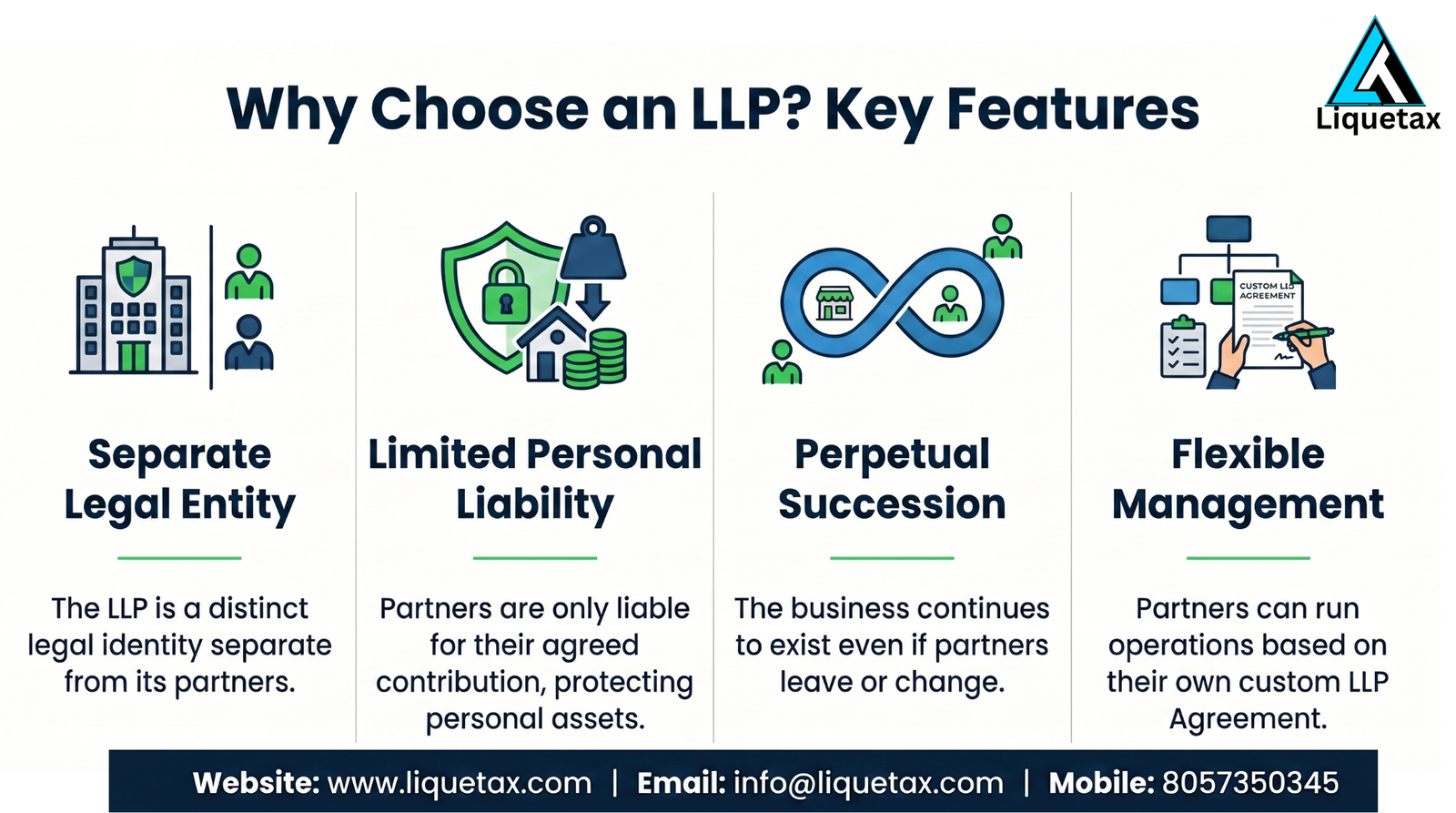
1. Separate Legal Entity
An LLP has its own legal identity separate from its partners.
2. Limited Liability
Partners are liable only to the extent of their agreed contribution.
3. Perpetual Succession
The LLP continues to exist even if partners change.
4. Flexible Management
Partners can manage business operations according to their LLP Agreement.
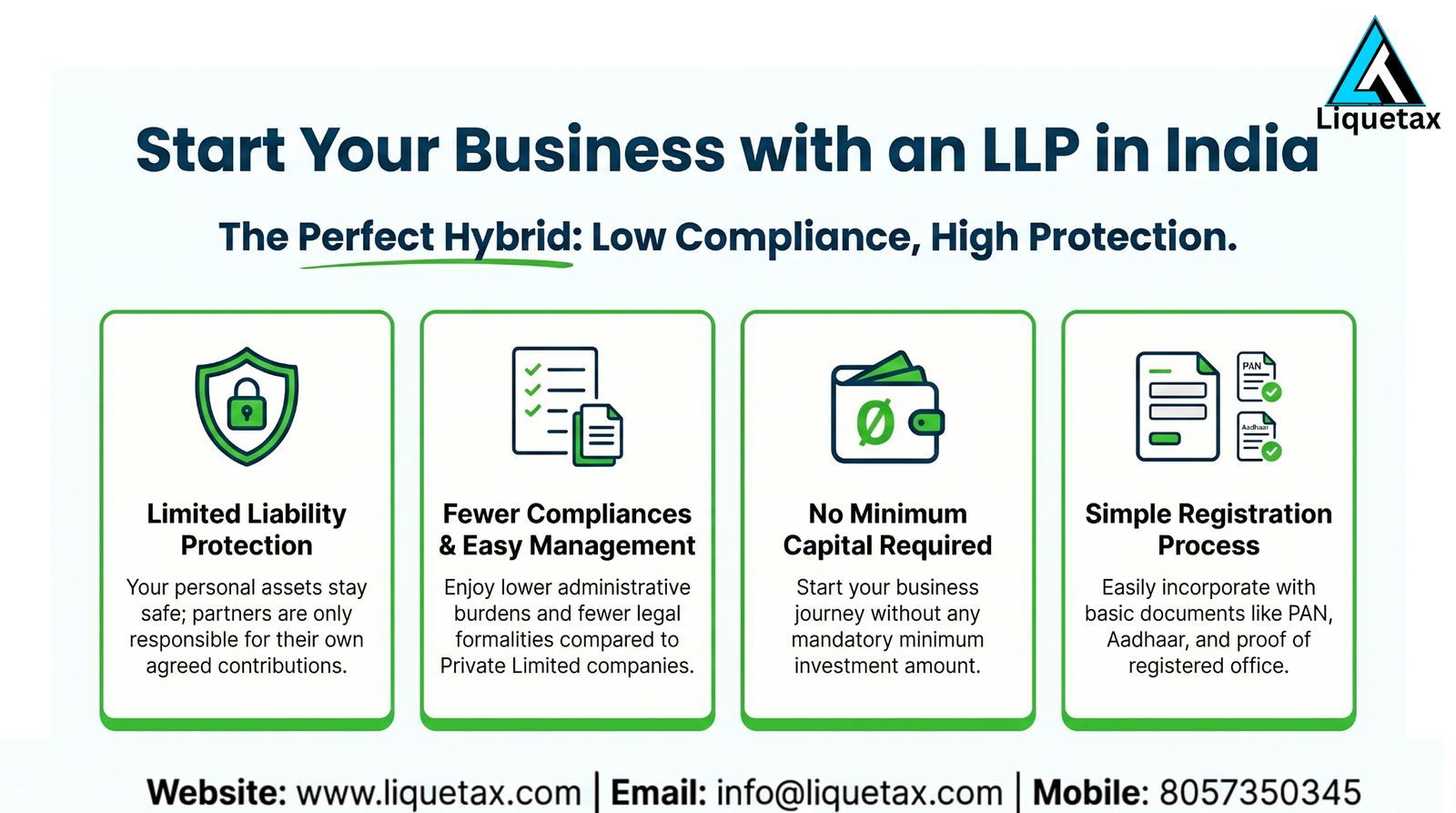
5. Lower Compliance Burden
Compared to companies, LLPs have fewer compliance requirements.
6. No Minimum Capital Requirement
You can start an LLP with any amount of capital contribution.
Benefits of LLP Registration
1. Limited Liability Protection
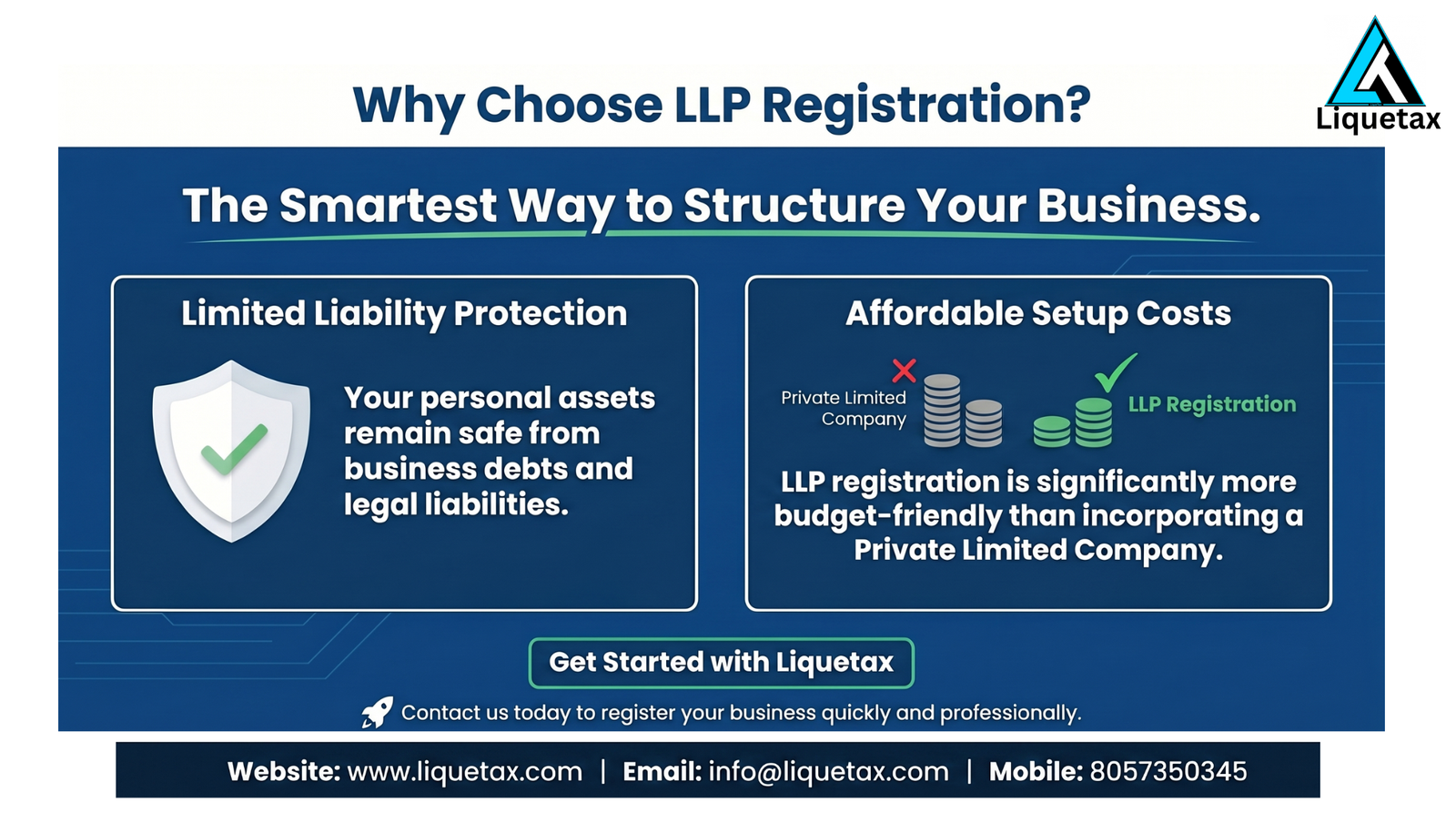
One of the biggest advantages of an LLP is limited liability. Personal assets of partners are generally protected from business debts and liabilities.
2. Affordable Setup
LLP registration is generally more affordable compared to incorporating a Private Limited Company.
3. Less Compliance
LLPs have fewer regulatory requirements and annual compliance obligations.
4. Separate Legal Identity
The LLP can own property, open bank accounts, and enter legal agreements independently.
5. Better Credibility
Registered LLPs enjoy higher credibility among clients, vendors, and financial institutions.
Who Should Choose an LLP?
An LLP is suitable for: Startups Small businesses Service providers Consultants Freelancers Digital agencies Professional firms Family businesses Import-export businesses Marketing agencies If your business does not require external equity investment in the initial stage, LLP can be an excellent option.
Eligibility for LLP Registration
To register an LLP in India: Minimum 2 partners are required. At least one designated partner must be an Indian resident. Partners can be individuals or corporate entities. A registered office address is required. A unique LLP name must be approved. There is no upper limit on the number of partners.Documents Required for LLP Registration
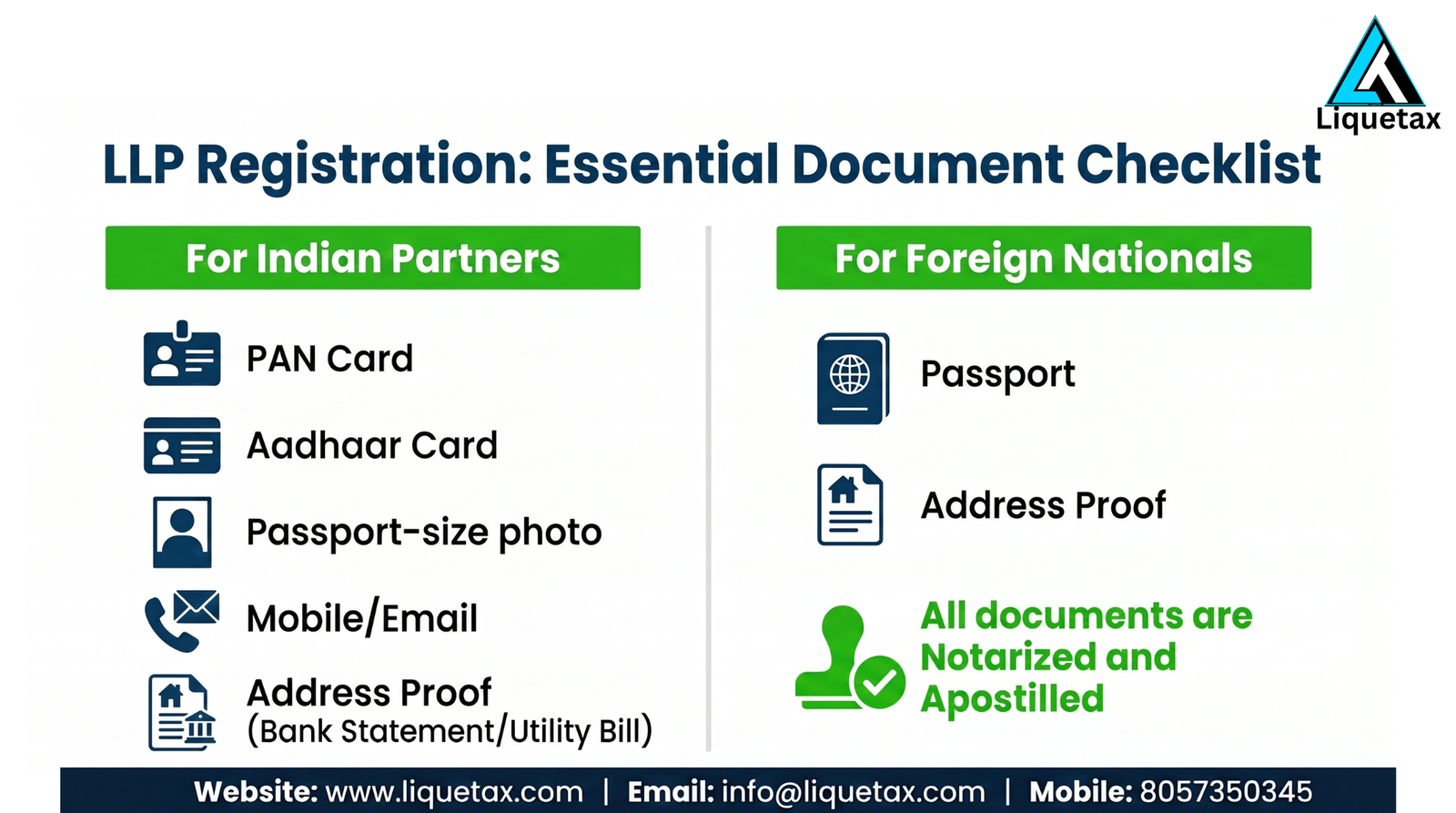
For Indian Partners
PAN Card Aadhaar Card Passport-size photograph Mobile number Email ID Address proof (Bank Statement, Utility Bill, etc.)
For Foreign Nationals
Passport Address proof Notarized and apostilled documents
Registered Office Documents
Electricity Bill Water Bill Property Tax Receipt Rent Agreement (if rented) NOC from property owner
Step-by-Step LLP Registration Process
Step 1: Obtain Digital Signature Certificate (DSC)
All designated partners must obtain a Digital Signature Certificate to sign electronic documents.
Step 2: Apply for DPIN
Designated Partner Identification Number (DPIN) is required for designated partners.
Step 3: Name Reservation
A unique LLP name is submitted for approval through the MCA portal. The proposed name should: Be unique Not violate trademarks Not resemble existing business names
Step 4: Incorporation Filing
After name approval, incorporation forms are filed with the Ministry of Corporate Affairs (MCA).
Step 5: Certificate of Incorporation
Once approved, MCA issues the Certificate of Incorporation along with LLP Identification Number (LLPIN).
Step 6: LLP Agreement
The LLP Agreement must be drafted and filed within the prescribed timeline after incorporation.
Step 7: PAN & TAN Application
PAN and TAN are obtained for taxation purposes.
Step 8: Open Bank Account
After receiving registration documents, a business bank account can be opened.
Conclusion
A Limited Liability Partnership is one of the most practical and cost-effective business structures available in India. It offers limited liability protection, flexibility in management, lower compliance requirements, and better credibility than traditional partnership firms. Whether you are a startup founder, consultant, freelancer, or small business owner, LLP registration can provide a strong legal foundation for your business growth. Choosing the right registration partner can make the process faster and hassle-free. Professional guidance helps avoid errors, ensures compliance, and allows you to focus on growing your business.
Contact Liquetax
Need help with LLP Registration? 🌐 Website: www.liquetax.com 📧 Email: info@liquetax.com 📞 Mobile: 8057350345 Get expert assistance for LLP Incorporation, GST Registration, MSME Registration, Annual Compliance, Tax Filing, and other business registration services.
Frequently Asked Questions (FAQs)
1. What is the minimum number of partners required for an LLP?
A minimum of two partners is required.
2. Can an LLP have only one partner?
No. At least two partners are mandatory.
3. Is there any minimum capital requirement for LLP registration?
No. There is no minimum capital requirement.
4. Can foreign nationals become partners in an LLP?
Yes, subject to applicable laws and documentation requirements.
5. How long does LLP registration take?
Generally between 7 and 15 working days.