
ISO 14001:2015 Guide: Master Environmental Compliance for Indian Businesses
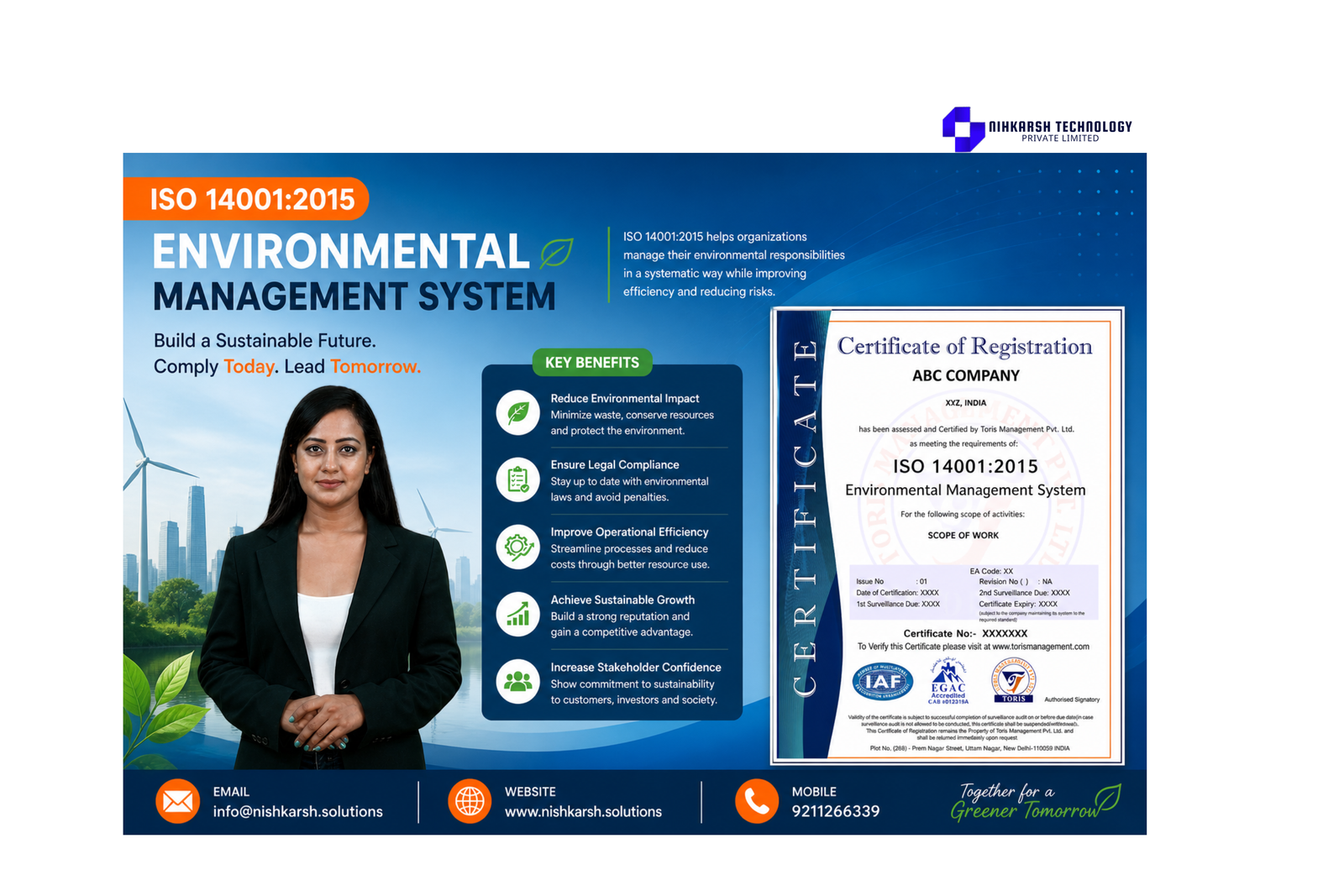
ISO 14001:2015 Environmental Management System – A Practical Guide for Growing Businesses
Let’s be honest—most businesses don’t think about environmental management until a problem shows up. Maybe it’s a notice from the pollution department, rising electricity bills, or a client asking for compliance documents.
That’s usually when companies realize they need a system in place.
ISO 14001:2015 isn’t just a certification you hang on the wall. It’s a structured way to run your business responsibly—without unnecessary waste, penalties, or last-minute firefighting.
If you’re planning to scale, work with bigger clients, or enter international markets, this certification quietly becomes a strong advantage.
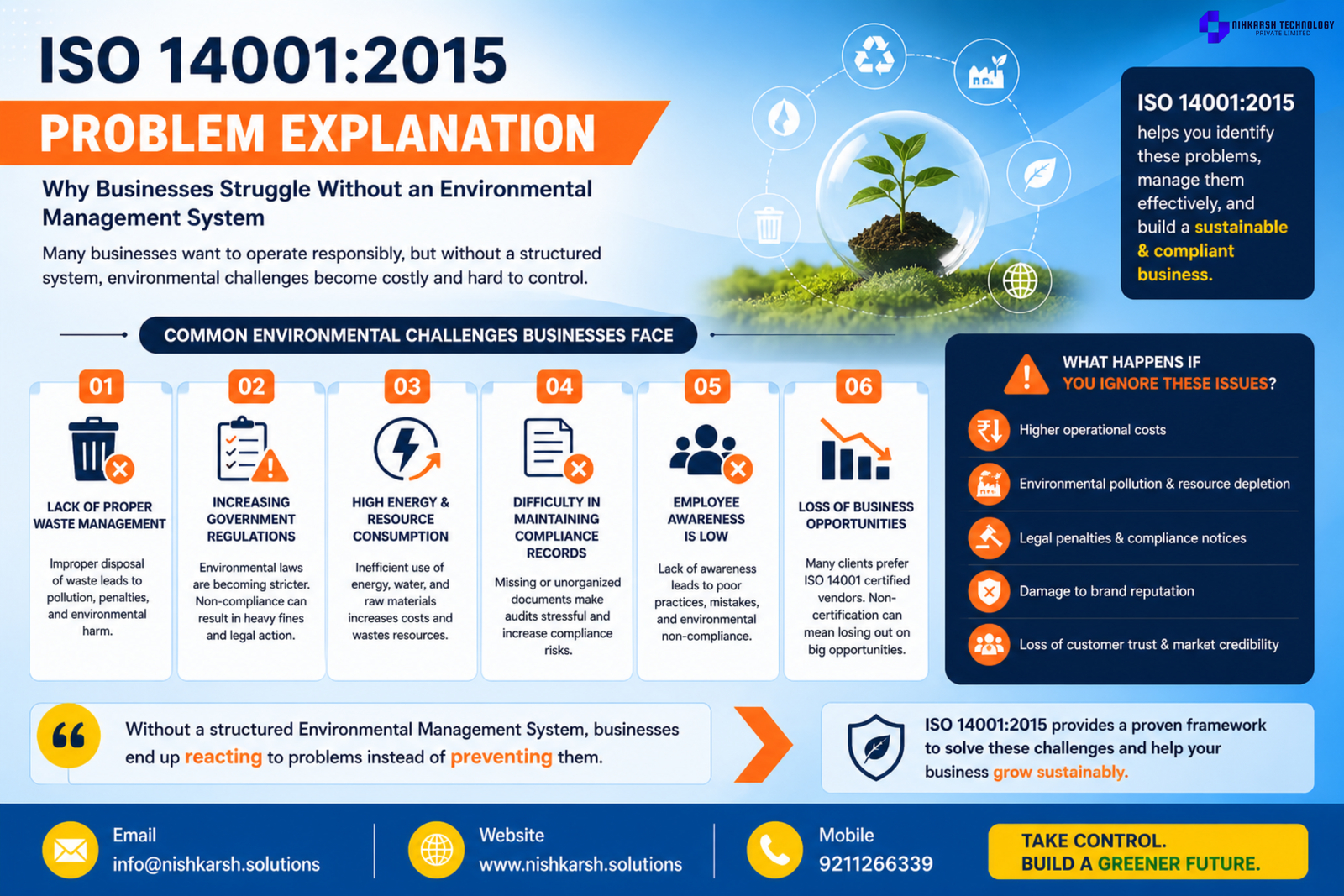
Problem Explanation
In real business scenarios, the issues are pretty common:
Waste is generated, but no one tracks where it goes
Electricity and water bills keep increasing, but no clear reason
Compliance documents are scattered or incomplete
Employees are not aware of environmental responsibilities
Clients start asking: “Do you have ISO certification?”
Most companies don’t lack intent—they lack structure.
Without a system, everything depends on people remembering things. And in business, that’s where mistakes happen.
That’s exactly what ISO 14001 fixes. It replaces guesswork with a clear process.
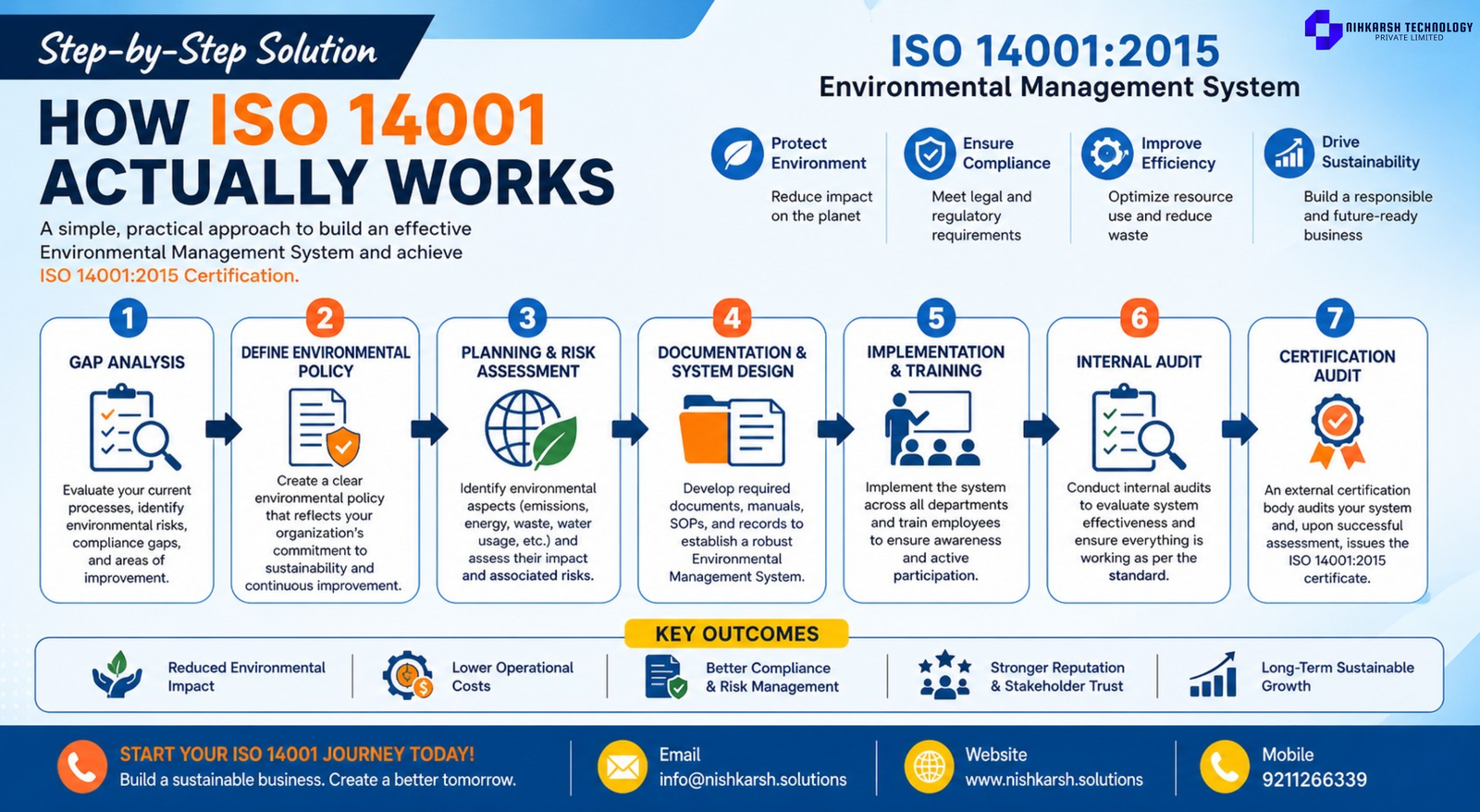
Step-by-Step Solution (How ISO 14001 Actually Works)
Step 1: Understand Where You Stand (Gap Analysis)
First, we look at your current setup. What’s working? What’s risky? What’s missing? No overcomplication—just a clear picture of your situation.
Step 2: Set a Simple Environmental Policy
This is not about fancy language. It’s about defining how your business wants to operate—clean, compliant, and efficient.
Step 3: Identify Risks & Impact
Where are you using more resources than needed?
Where can pollution or waste become a problem?
Once you identify these areas, half the job is already done.
Step 4: Build a System (Documentation)
This is where most people feel stuck—but it doesn’t have to be complicated.
We create simple processes:
How waste will be handled
How resources will be used
How records will be maintained
Everything is practical and usable.
Step 5: Train Your Team
Even the best system fails if people don’t follow it.
A short training session makes your team aware—and that’s enough to create real change.
Step 6: Internal Check (Audit)
Before the final audit, we test everything internally.
If something is missing, we fix it—no surprises later.
Step 7: Final Certification
An external auditor reviews your system.
If everything is aligned, you get your ISO 14001 certification.
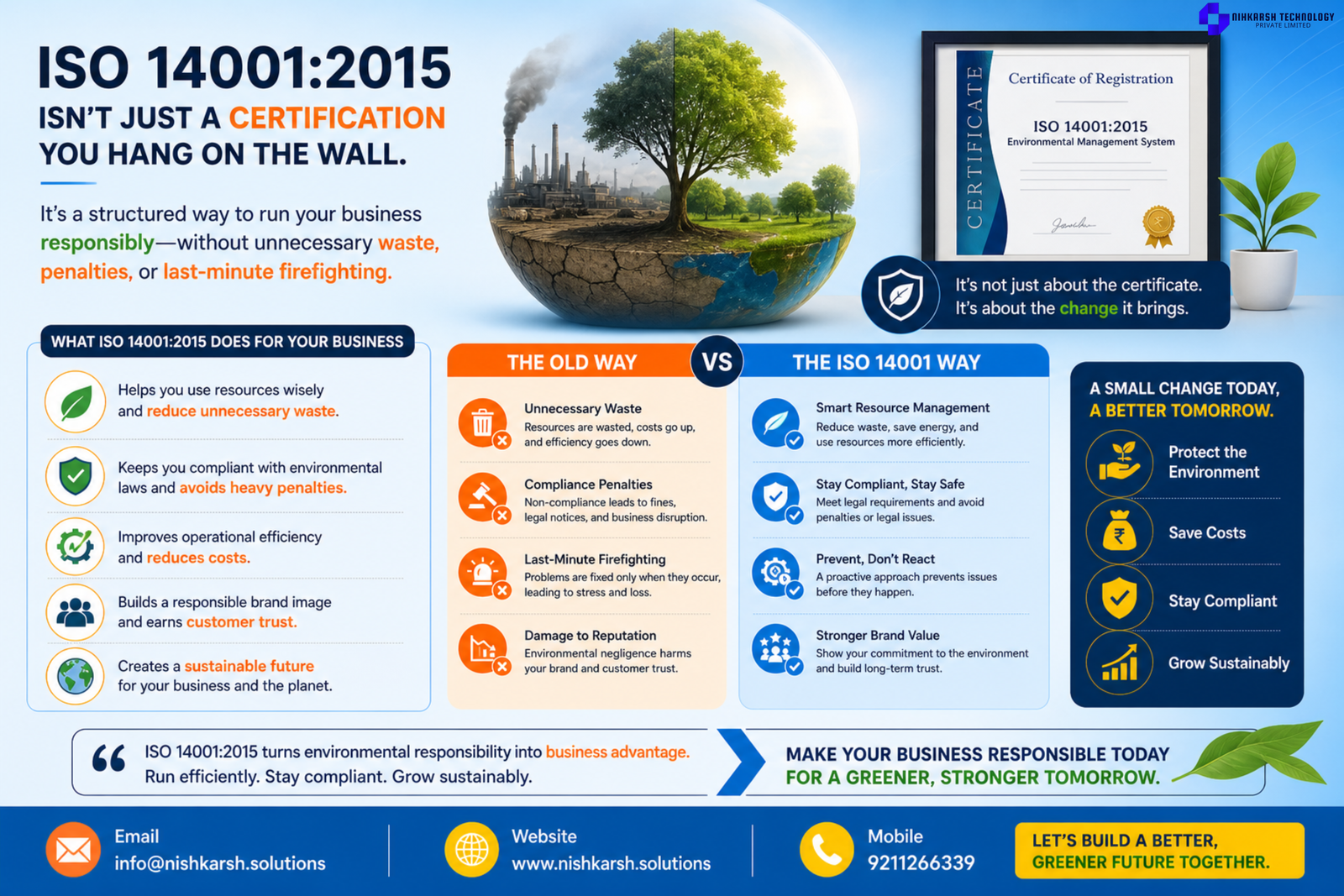
Example / Real Case
A small packaging business in Noida came with a simple issue— “Costs are increasing, and we keep getting compliance warnings.”
After implementing ISO 14001:
Electricity usage dropped noticeably
Waste handling became structured
No more compliance notices
They secured a contract with a larger company
Nothing magical happened. They just started managing things properly.
Conclusion
ISO 14001 is not about doing something extra—it’s about doing your existing work in a better, more controlled way.
It helps you avoid problems before they happen.
And in business, prevention is always cheaper than correction.
If you're serious about long-term growth, this is one of those decisions that quietly pays off over time.
Call to Action
If you’re planning to get ISO 14001 certification, don’t overthink the process.
With the right guidance, it’s straightforward and manageable.
At Nishkarsh solutions we handle everything—from start to finish—so you don’t have to deal with technical confusion or paperwork stress.
📞 Let’s discuss your requirement
email info@nishkarsh.solutions
mobile number 9211266339
website www.nishkarsh.solutions
FAQs
1. Is ISO 14001 only for manufacturing companies?
No. Any business—service, trading, or manufacturing—can implement it.
2. Will it reduce my costs?
In most cases, yes. Better resource management usually leads to lower expenses.
3. Is the process complicated?
In most cases, yes. Better resource management usually leads to lower expenses.
4. How long does it take?
Usually 1–3 weeks, depending on how ready your business already is.