
Freelancers & Consultants: Save More Tax Legally in India

Freelancers & Consultants: Save More Tax Legally in India
Introduction
Freelancing and consulting have become popular career choices in India. Whether you are a digital marketer, graphic designer, software developer, business consultant, content writer, architect, coach, or independent professional, managing taxes properly is an important part of your financial success. Many freelancers and consultants end up paying more tax than necessary simply because they are unaware of the legal tax-saving options available to them. The good news is that Indian tax laws provide several opportunities to reduce your tax burden while staying fully compliant. In this guide, we will explain practical and legal ways freelancers and consultants can save more tax, avoid common mistakes, and manage their finances efficiently.
Why Tax Planning is Important for Freelancers
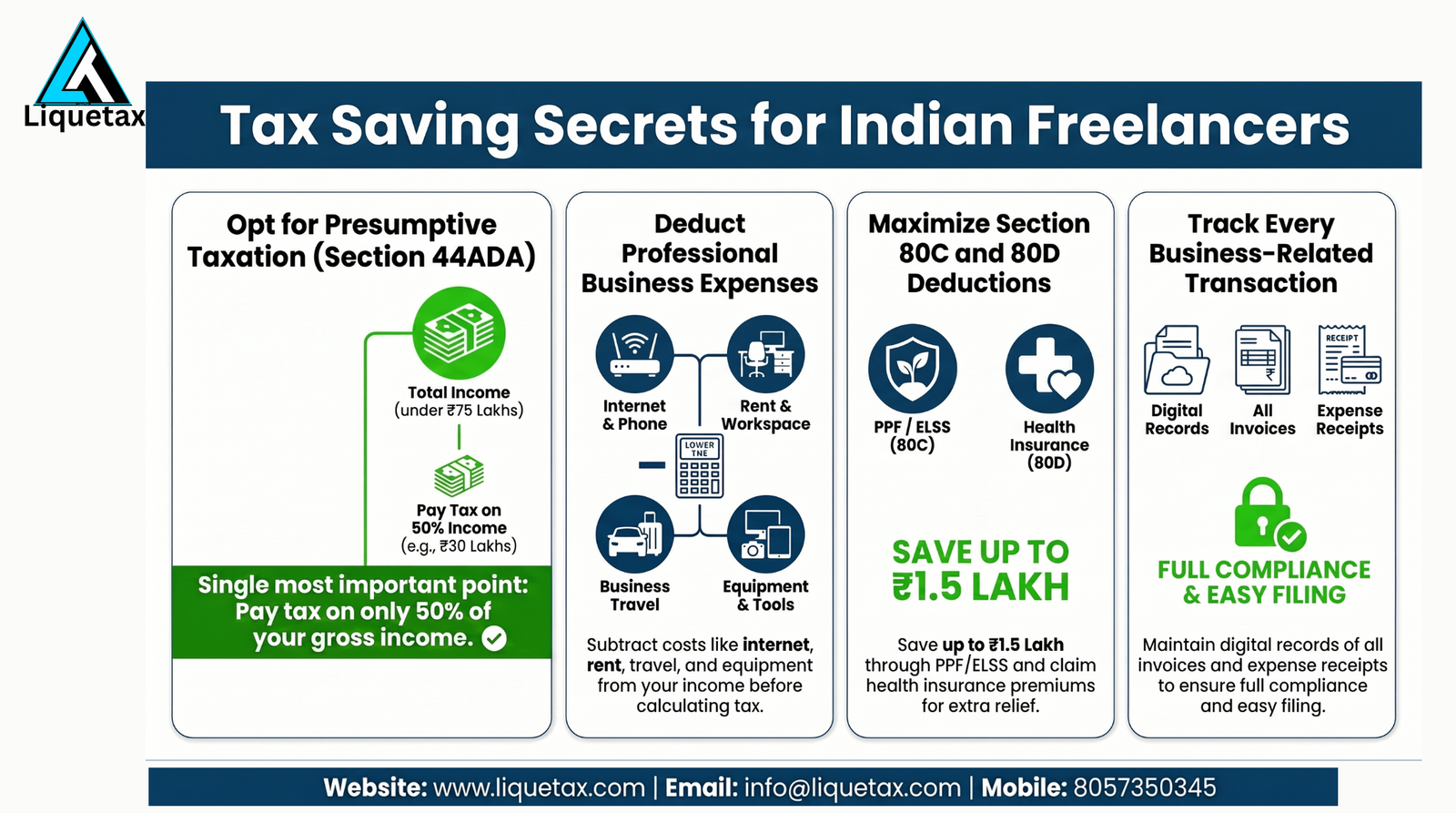
Unlike salaried employees, freelancers and consultants do not have an employer handling tax deductions. You are responsible for: Maintaining financial records Tracking income and expenses Paying taxes on time Filing Income Tax Returns (ITR) Complying with GST rules where applicable Proper tax planning helps you: Reduce tax liability legally Improve cash flow Avoid penalties and notices Build a financially stable business
Understand Your Taxable Income
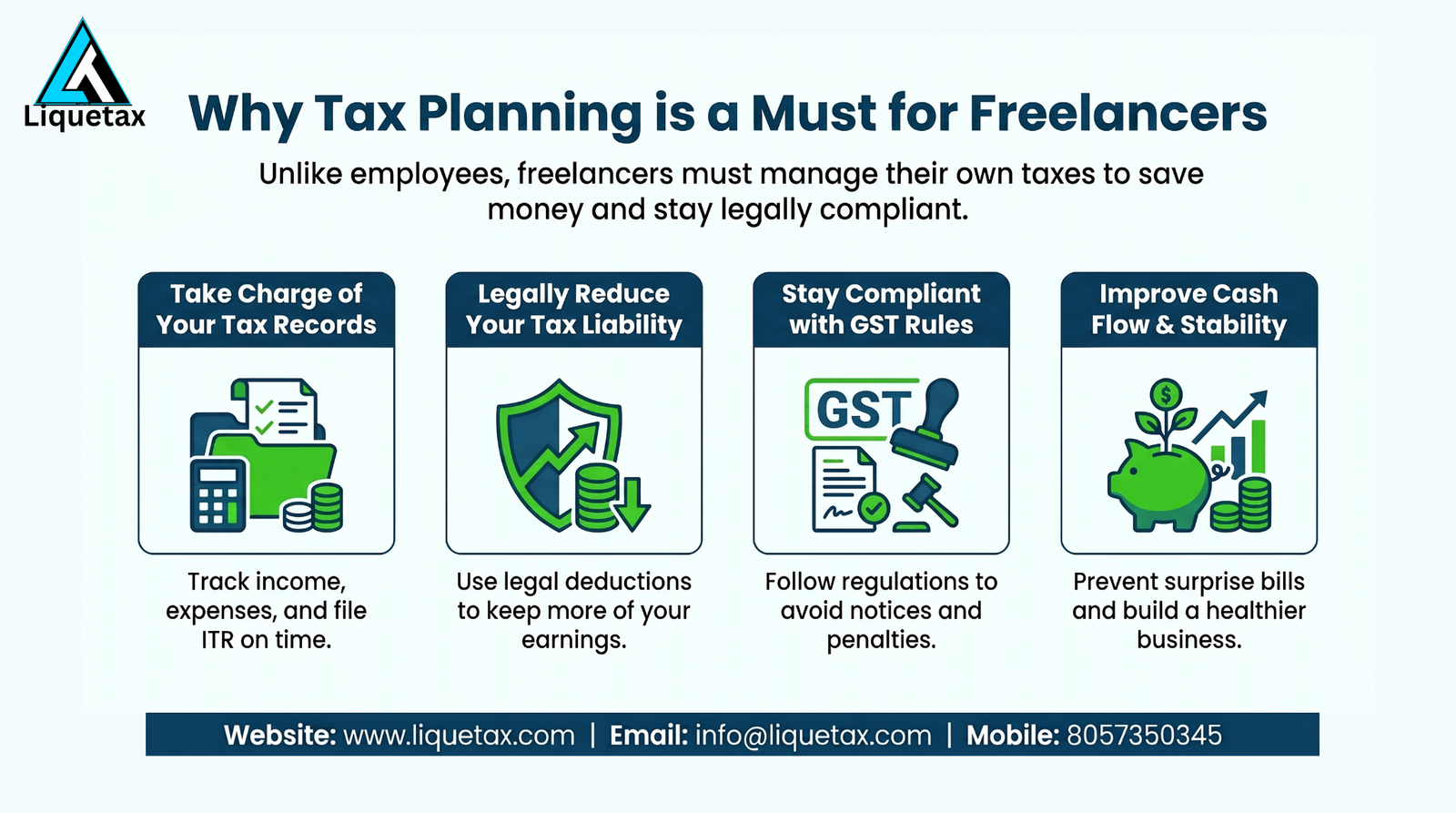
As a freelancer or consultant, your taxable income is not always equal to the total money you receive from clients. Taxable Income = Total Income – Eligible Deductions – Business Expenses For example: Total Freelance Income: ₹12,00,000 Business Expenses: ₹2,00,000 Eligible Tax Deductions: ₹1,00,000 Taxable Income = ₹9,00,000 This simple calculation can significantly reduce your tax liability.
Claim Business Expenses Legally
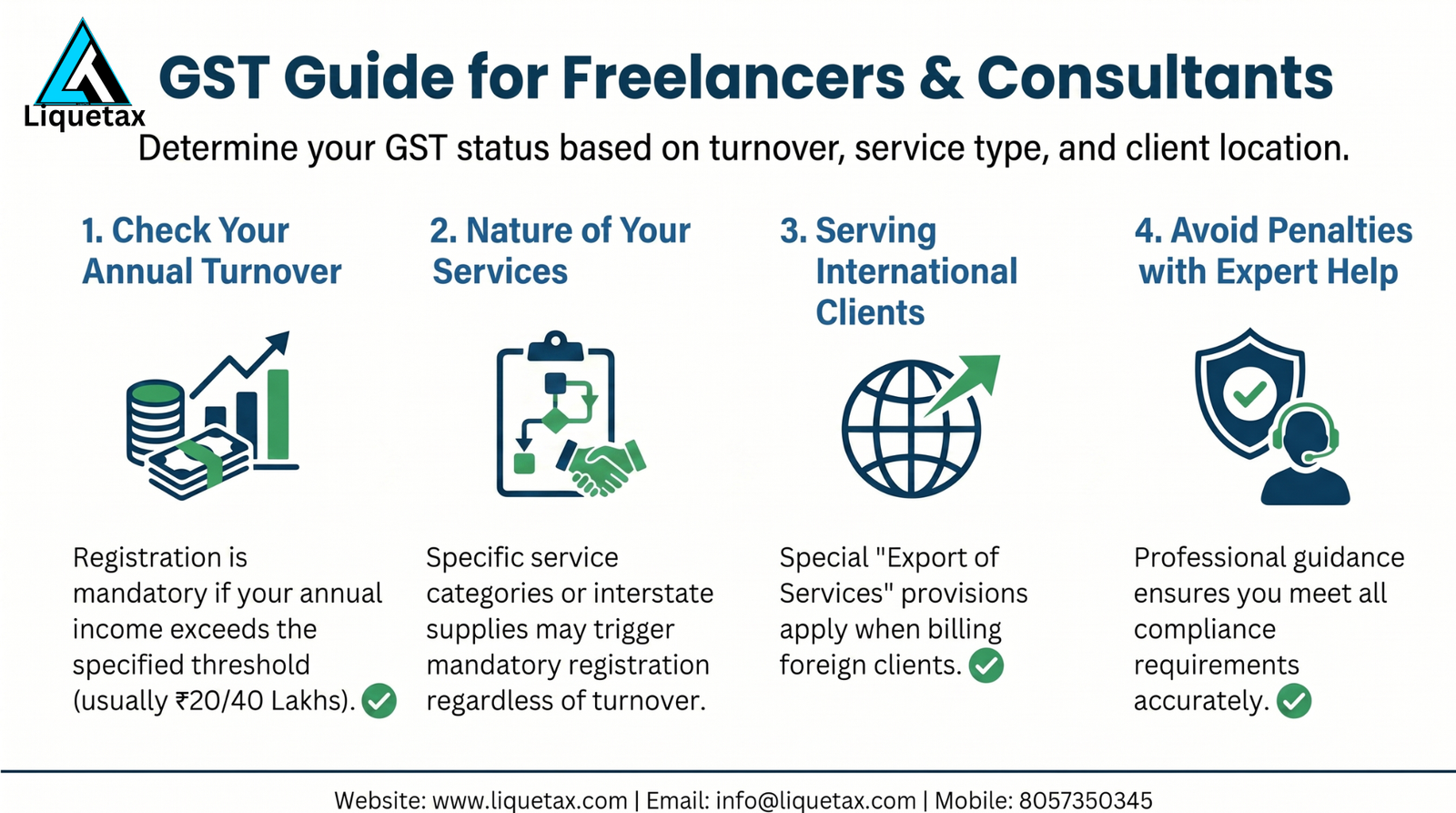
One of the biggest advantages of freelancing is the ability to claim legitimate business expenses. Some common deductible expenses include:>
1. Internet and Mobile Bills
If you use the internet and phone for client communication and work-related activities, you can claim the business portion of these expenses.
2. Laptop and Computer Equipment
Purchasing laptops, desktops, monitors, keyboards, webcams, and related accessories for work can be considered business expenses.
3. Software and Subscription Costs
Expenses on tools such as: Adobe Creative Cloud Canva Pro Microsoft 365 Zoom ChatGPT Plus Accounting software can generally be claimed as business expenses when used for professional work.
4. Office Rent or Coworking Space
If you work from a rented office or coworking space, the rent paid can be claimed as a business expense.
Understand GST Requirements
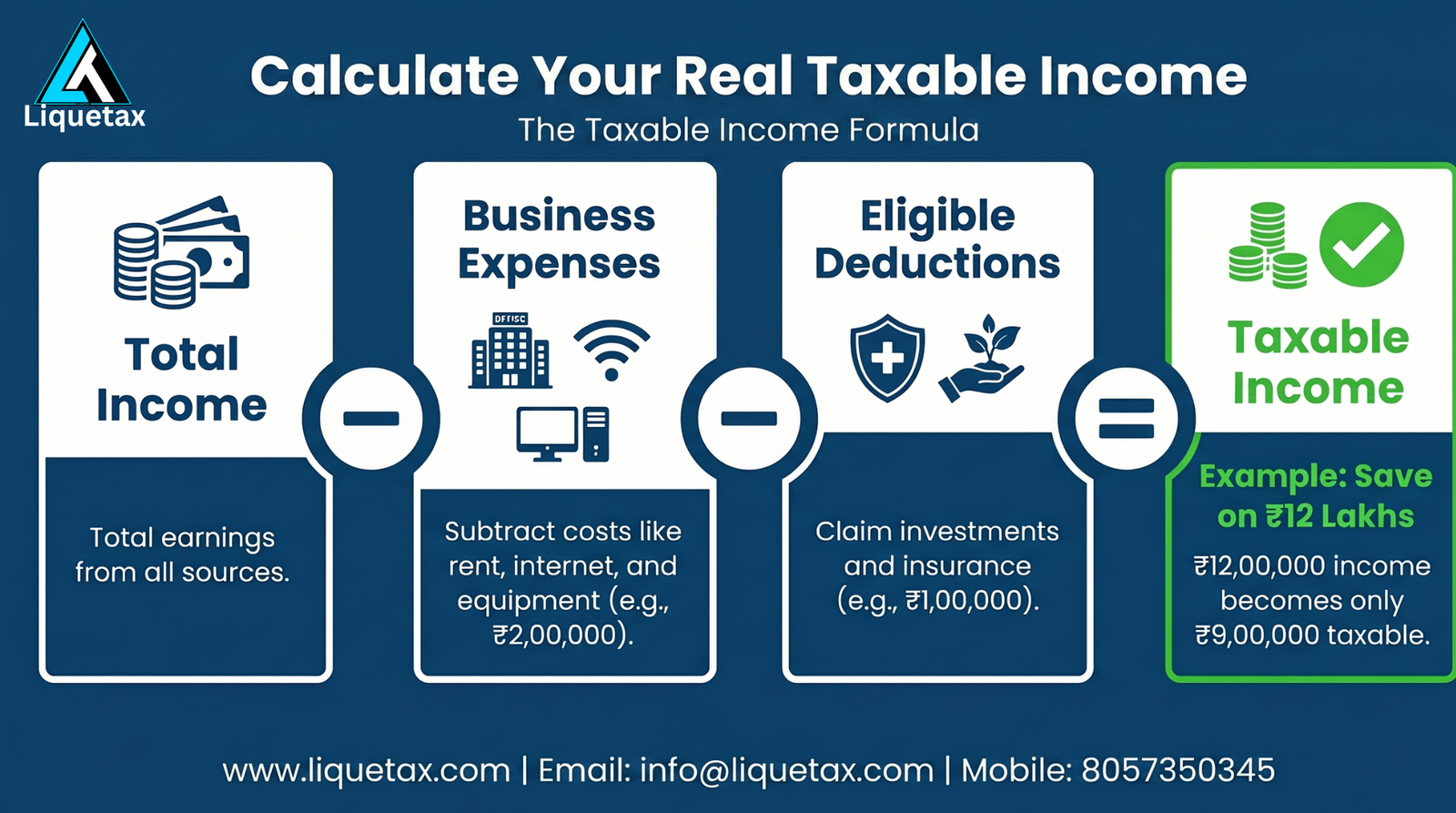
Many freelancers and consultants are unsure about GST obligations. GST registration may become necessary depending on: Annual turnover Nature of services Domestic or international clients If you provide services to foreign clients, special GST provisions may apply. Professional guidance can help ensure compliance and avoid penalties.
Separate Personal and Business Finances
Using a separate bank account for business activities offers several benefits: Easier accounting Better expense tracking Simplified tax filing Professional financial management This small step can make a significant difference during tax season.
Avoid Common Tax Mistakes
Many freelancers unintentionally create tax issues by making avoidable mistakes.
Common Mistakes
Not issuing proper invoices Missing tax filing deadlines Ignoring GST compliance Failing to track expenses Not maintaining financial records Mixing personal and business expenses Avoiding these mistakes can save you from penalties and notices.
Tax Planning Throughout the Year
Tax planning should not happen only at the end of the financial year. A better approach is to: Review income monthly Track expenses regularly Save for tax payments Organize financial records Consult a tax expert periodically Year-round planning often leads to greater tax savings.
Benefits of Professional Tax Assistance
Tax laws change frequently, and staying updated can be challenging. Professional assistance can help you: Maximize legal tax savings File accurate returns Stay compliant with GST regulations Reduce the risk of notices and penalties Focus on growing your business For freelancers and consultants, professional guidance often results in both financial savings and peace of mind.
Conclusion
Freelancers and consultants have several legal opportunities to reduce their tax burden. By claiming eligible business expenses, using Section 44ADA where applicable, investing wisely, maintaining proper records, and following compliance requirements, you can save more tax while staying fully compliant with Indian tax laws. The key is proactive tax planning. The earlier you start managing your finances efficiently, the greater your long-term benefits will be.
Contact Liquetax for Expert Tax Assistance
Need help with Freelance Tax Planning, Income Tax Return Filing, GST Registration, GST Compliance, or Business Advisory Services? Liquetax 🌐 Website: www.liquetax.com 📧 Email: info@liquetax.com 📞 Mobile: 8057350345 Our team of experienced professionals helps freelancers, consultants, startups, and businesses manage taxes efficiently and stay compliant with Indian regulations. Contact us today for expert guidance and hassle-free tax solutions.
Frequently Asked Questions (FAQs)
1. Do freelancers need to pay income tax in India?
Yes. Freelance income is taxable and must be reported while filing Income Tax Returns.
2. Can freelancers claim internet and mobile expenses?
Yes. Business-related internet and mobile expenses may be claimed as deductions.
3. What is Section 44ADA?
Section 44ADA is a presumptive taxation scheme that allows eligible professionals to declare 50% of their gross receipts as taxable income.
4. Is GST mandatory for freelancers?
GST applicability depends on factors such as turnover, type of services, and client location.
5. Can consultants claim laptop and software expenses?
Yes. Work-related equipment and software expenses may generally be claimed as business expenses.