
Common Filing Mistakes That Trigger GST and Income Tax Notices in India
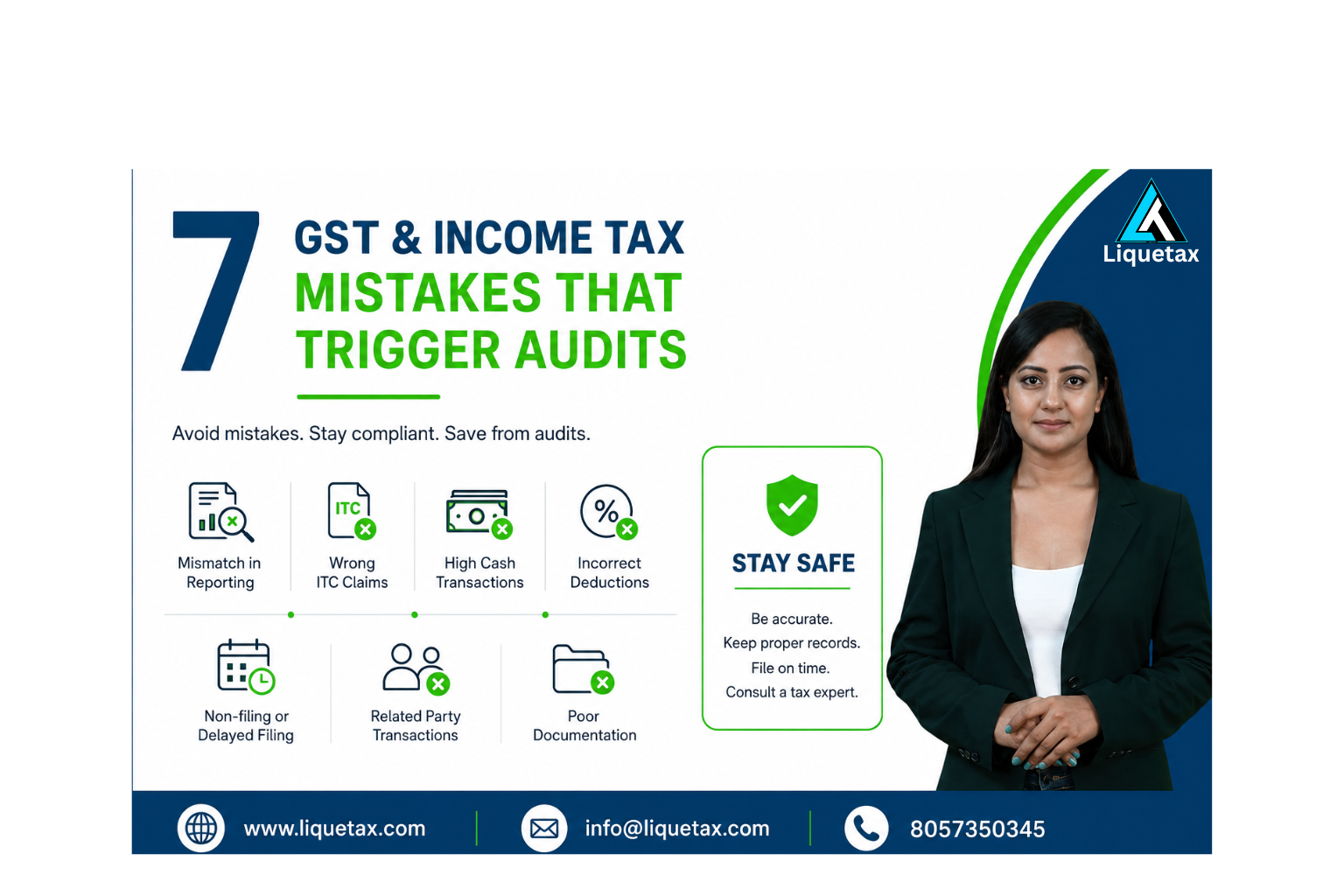
Common Filing Mistakes That Trigger GST and Income Tax Notices in India
Complete Guide for Taxpayers, Traders, Freelancers & Business Owners
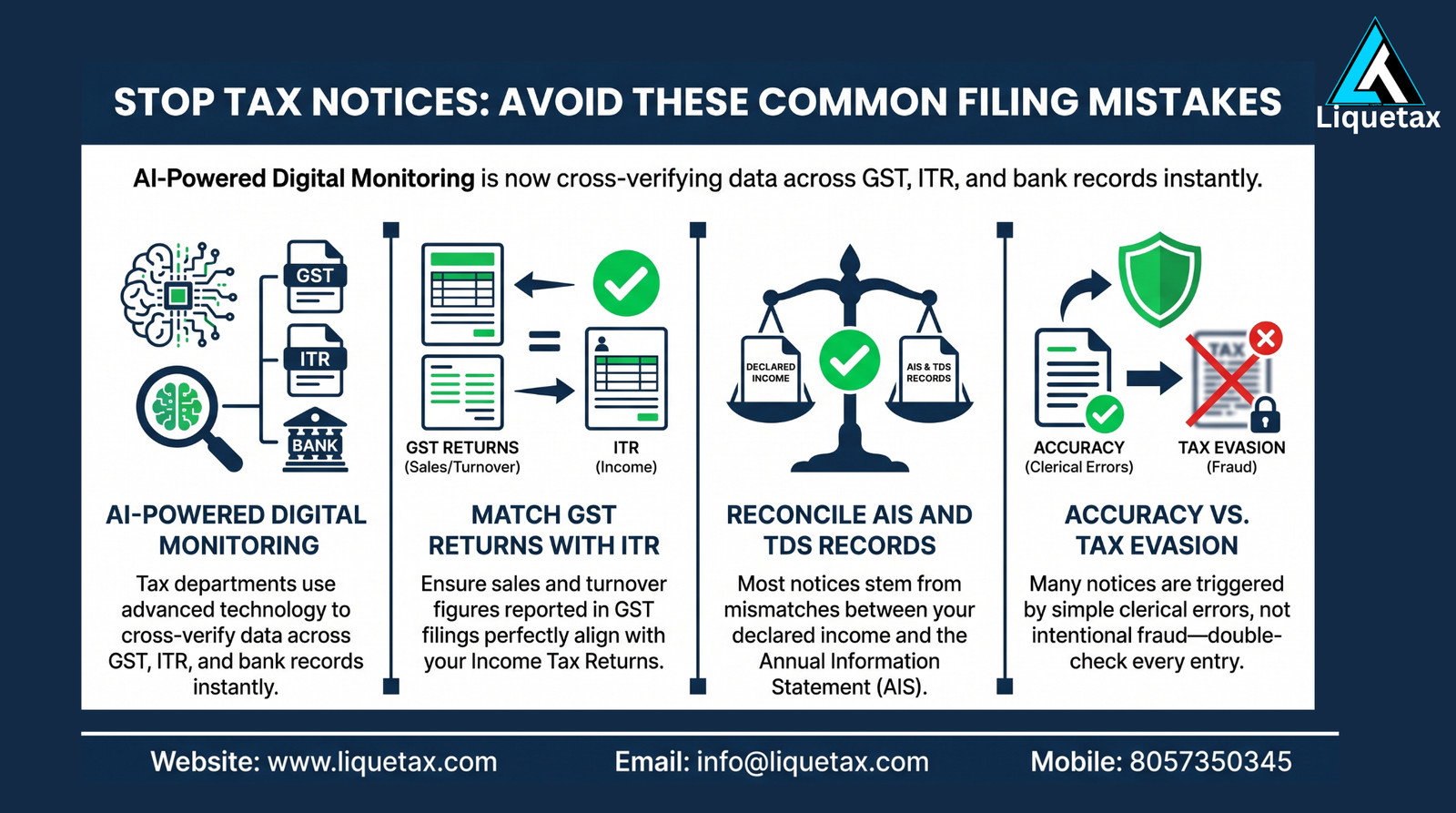
Receiving a GST or Income Tax notice can be stressful for any taxpayer. In many cases, notices are not issued because of tax evasion but due to simple filing mistakes, incorrect reporting, or mismatched information. With increasing digital monitoring and data matching by government departments, even small errors can attract scrutiny. The GST Department and Income Tax Department now use advanced technology and AI-based systems to compare information from GST returns, Income Tax Returns (ITR), bank accounts, TDS records, Annual Information Statements (AIS), and other financial data sources. This means taxpayers must be more careful than ever while filing returns. In this guide, we will discuss the most common filing mistakes that trigger GST and Income Tax notices in India and how you can avoid them.
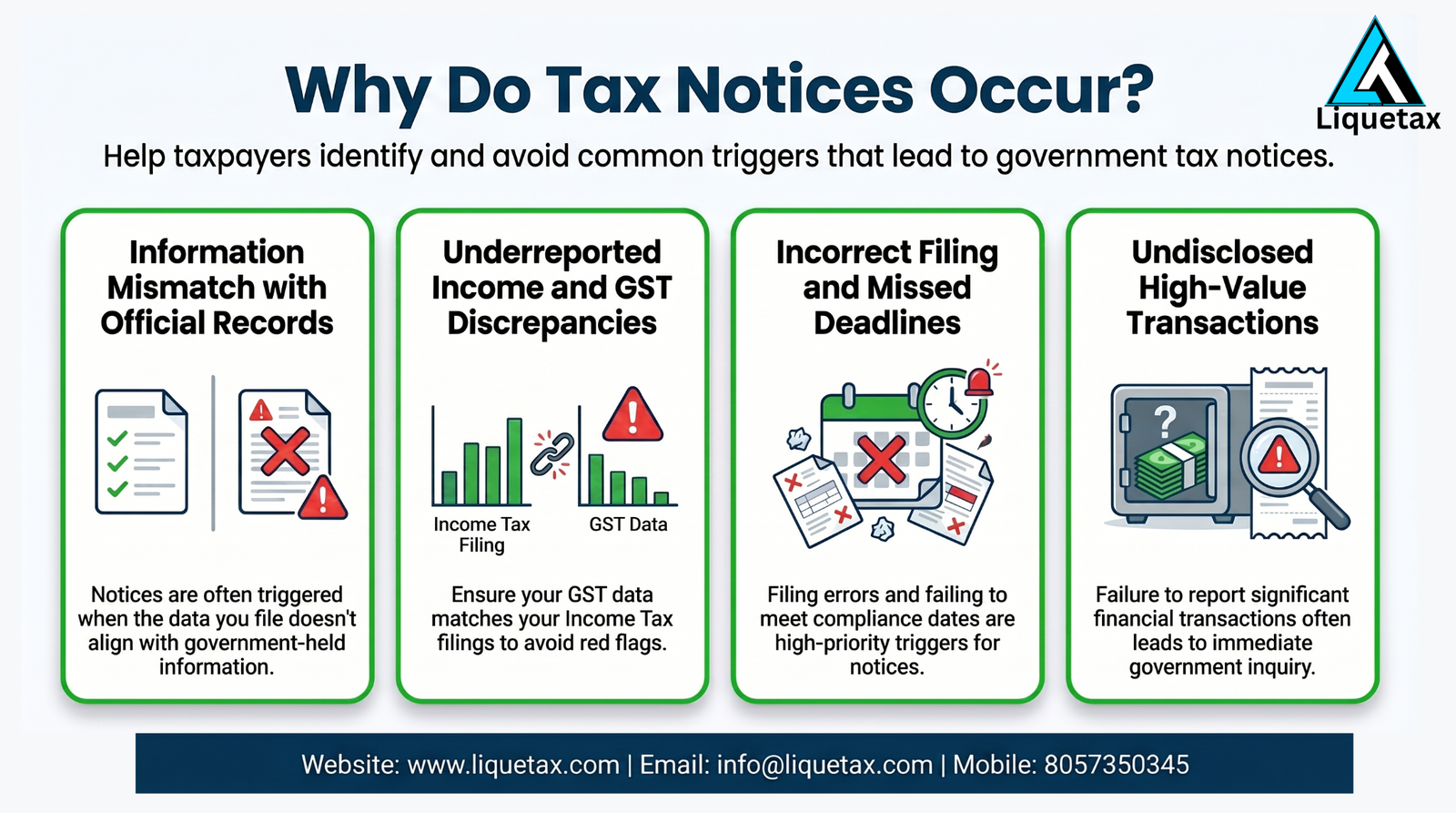
Why Do Tax Notices Occur?
Tax notices are generally issued when: Information does not match government records. Returns are filed incorrectly. Income is underreported. GST data differs from Income Tax data. Compliance deadlines are missed. High-value transactions are not disclosed. Most notices can be avoided through proper planning and accurate filing.
Common GST Filing Mistakes That Trigger Notices
1. Mismatch Between GSTR-1 and GSTR-3B
One of the most common reasons for GST notices is a mismatch between sales reported in GSTR-1 and tax paid through GSTR-3B.
Example:
Sales reported in GSTR-1: ₹15,00,000 Sales reported in GSTR-3B: ₹12,00,000 The GST system automatically detects such differences and may issue a notice seeking clarification.
How to Avoid
Reconcile sales data monthly. Verify invoices before filing. Match GSTR-1 and GSTR-3B figures carefully.
2. Wrong Claim of Input Tax Credit (ITC)
Many businesses claim ITC without proper verification. Common mistakes include: Claiming ITC on personal expenses. Claiming ITC on blocked credits. Claiming ITC when supplier has not filed returns. Duplicate ITC claims.
How to Avoid
Verify invoices. Check GSTR-2B before claiming ITC. Maintain proper purchase records.
3. Late Filing of GST Returns
Many taxpayers assume that filing late only results in penalties. However, continuous delays can attract departmental scrutiny.
Consequences
Late fees Interest liability GST notices Suspension of GST registration in extreme cases
Solution
Maintain a compliance calendar and file returns before due dates.
Common Income Tax Filing Mistakes That Trigger Notices
1. Reporting Incorrect Income
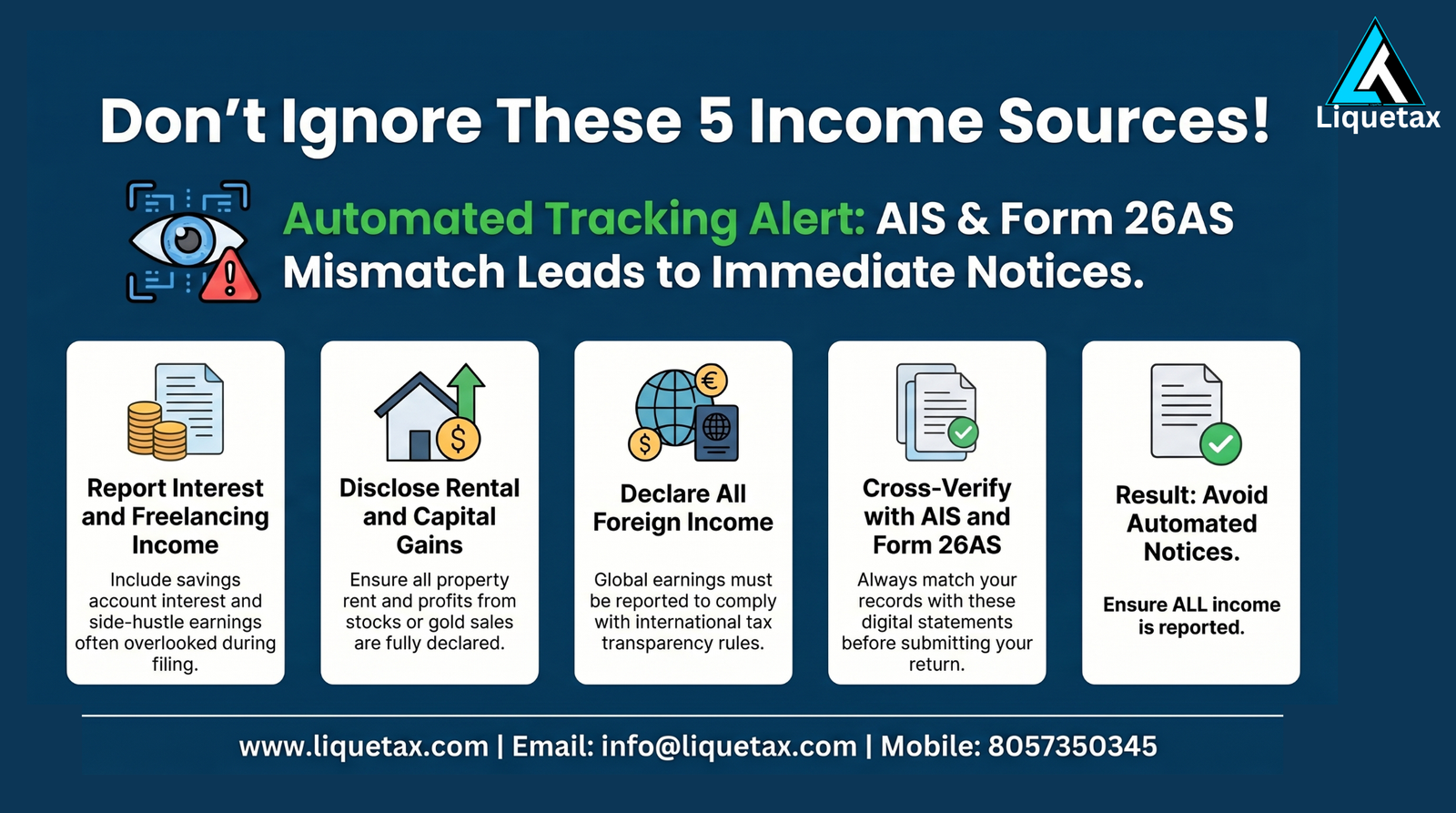
Many taxpayers forget to disclose: Interest income Freelancing income Rental income Capital gains Foreign income The Income Tax Department can easily identify these through AIS and Form 26AS.
Solution
Review AIS and Form 26AS before filing your ITR.
2. Mismatch Between AIS and ITR
The Annual Information Statement (AIS) contains: Bank interest Dividend income Mutual fund transactions Share transactions TDS details If your ITR figures do not match AIS data, you may receive a notice.
Solution
Cross-check all entries before submission.
Mistakes That Trigger Both GST and Income Tax Notices
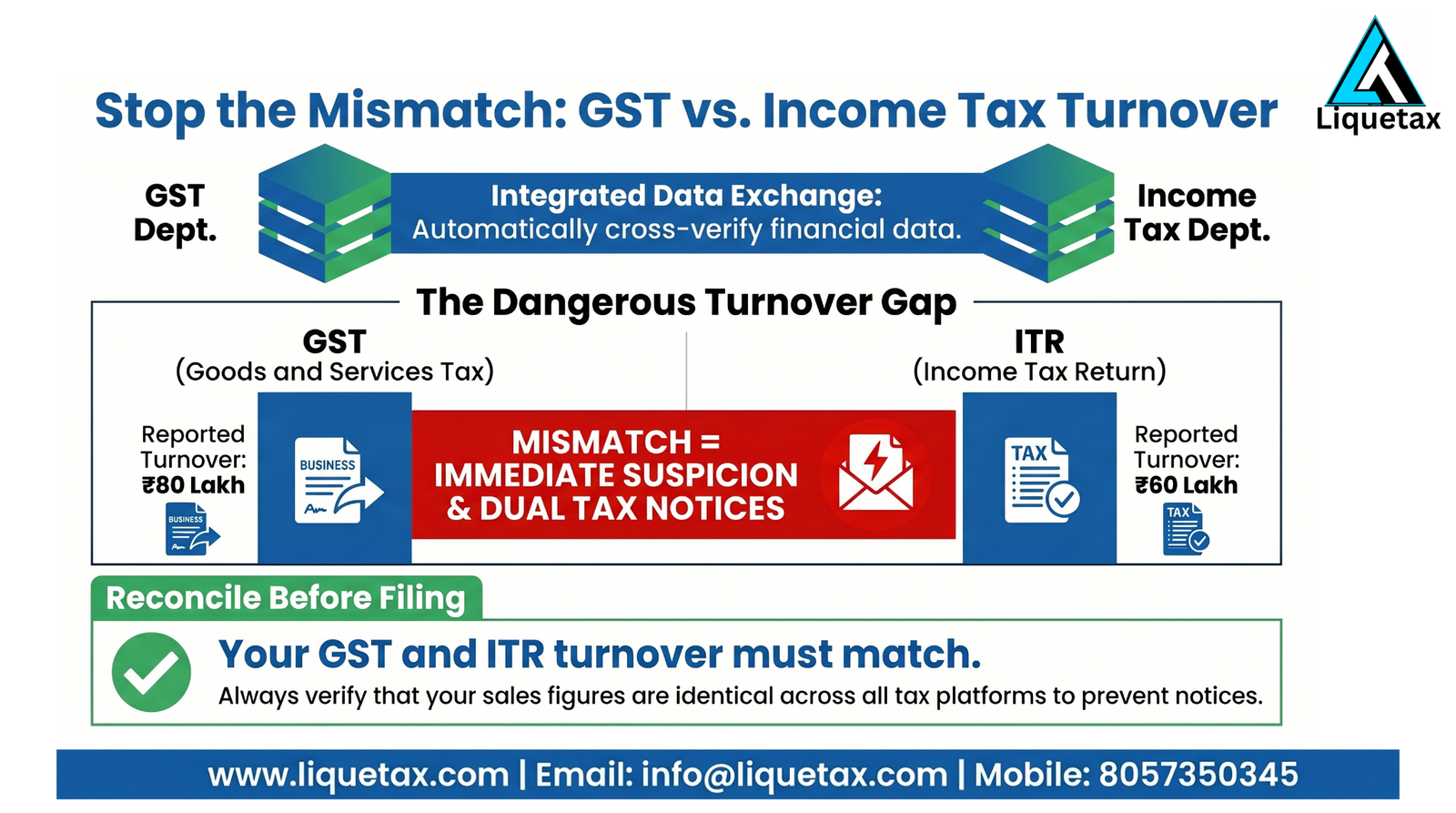
1. Difference Between GST Turnover and ITR Turnover
The Income Tax Department and GST Department now exchange data.
Example
GST Turnover: ₹80 lakh ITR Turnover: ₹60 lakh This mismatch can trigger notices from both departments.
2. Cash Transactions Not Properly Recorded
Large cash receipts and payments attract attention. Maintain proper records and avoid unnecessary cash dealings.
3. Failure to Maintain Proper Books of Accounts
Missing records often create issues during assessments. Maintain: Sales registers Purchase registers Bank statements Invoices Expense records
4. Not Reconciling Financial Data
Businesses should regularly reconcile: GST Returns TDS Returns Books of Accounts Income Tax Returns This significantly reduces notice risk.
How to Avoid GST and Income Tax Notices
Follow these best practices:
✓ File Returns On Time
Never miss filing deadlines.
✓ Reconcile Data Regularly
Match books with GST and tax records.
✓ Review AIS and Form 26AS
Check for discrepancies before filing.
✓ Maintain Proper Documentation
Keep invoices, bank statements, and supporting documents.
✓ Use Professional Assistance
Tax laws frequently change. Expert guidance helps prevent costly mistakes.
✓ Respond Quickly to Notices
If a notice is received, respond within the prescribed time.
Final Thoughts
Most GST and Income Tax notices are caused by avoidable filing errors rather than intentional tax violations. As government systems become more advanced and data-driven, maintaining accurate records and filing correct returns has become extremely important. Whether you are a salaried employee, trader, freelancer, startup founder, or business owner, regular compliance checks can save you from unnecessary penalties and legal complications. The best approach is to file accurate returns, reconcile financial data regularly, and seek professional assistance whenever required.
Need Help with GST or Income Tax Compliance?
Liquetax provides professional assistance for: ✔ GST Registration ✔ GST Return Filing ✔ Income Tax Return Filing ✔ Tax Notice Replies ✔ Business Compliance ✔ Company Registration ✔ Accounting & Bookkeeping
Contact Liquetax Today
Website: www.liquetax.com 📧 Email: info@liquetax.com 📞 Mobile: 8057350345 Our experts help individuals, freelancers, traders, startups, and businesses stay compliant and avoid costly tax notices.
Frequently Asked Questions (FAQs)
1. What is the most common reason for receiving a GST notice?
Mismatch between GSTR-1 and GSTR-3B is one of the most common reasons for GST notices.,/p>
2. Can wrong ITC claims trigger GST notices?
Yes. Incorrect or unsupported Input Tax Credit claims frequently lead to GST scrutiny and notices.
3. Does AIS mismatch result in Income Tax notices?
Yes. Differences between AIS data and reported income can trigger automated notices.
4. Can high-value transactions attract tax notices?
Yes. Large property purchases, cash deposits, foreign travel expenses, and investments may trigger notices if not supported by reported income.
5. What happens if I ignore a GST or Income Tax notice?
Ignoring notices can lead to penalties, assessments, recovery proceedings, and other legal actions.