
How to Rank Your Business Website on Google in 90 Days
How to Rank Your Business Website on Google in 90 Days
Introduction
Every business owner wants one thing. To be visible on Google. This is because being visible on Google means people will visit your website and when people visit your website they become customers. Let us look at the reality. Most websites do not get people visiting them from Google because they do not have a plan for search engine optimization or what we call SEO. You may have already made a website written some content for it and even posted about it on media websites.. Still you are not getting the results you want. The good thing is that getting your website to rank on Google is not about being lucky. It is something that you can do by following a system. In this guide you will learn how to get your business website to rank on Google in 90 days using methods that we know really work and these methods are still effective in 2025, for getting your business website ranked on Google.
The Real Problem: Why Your Website Is Not Ranking
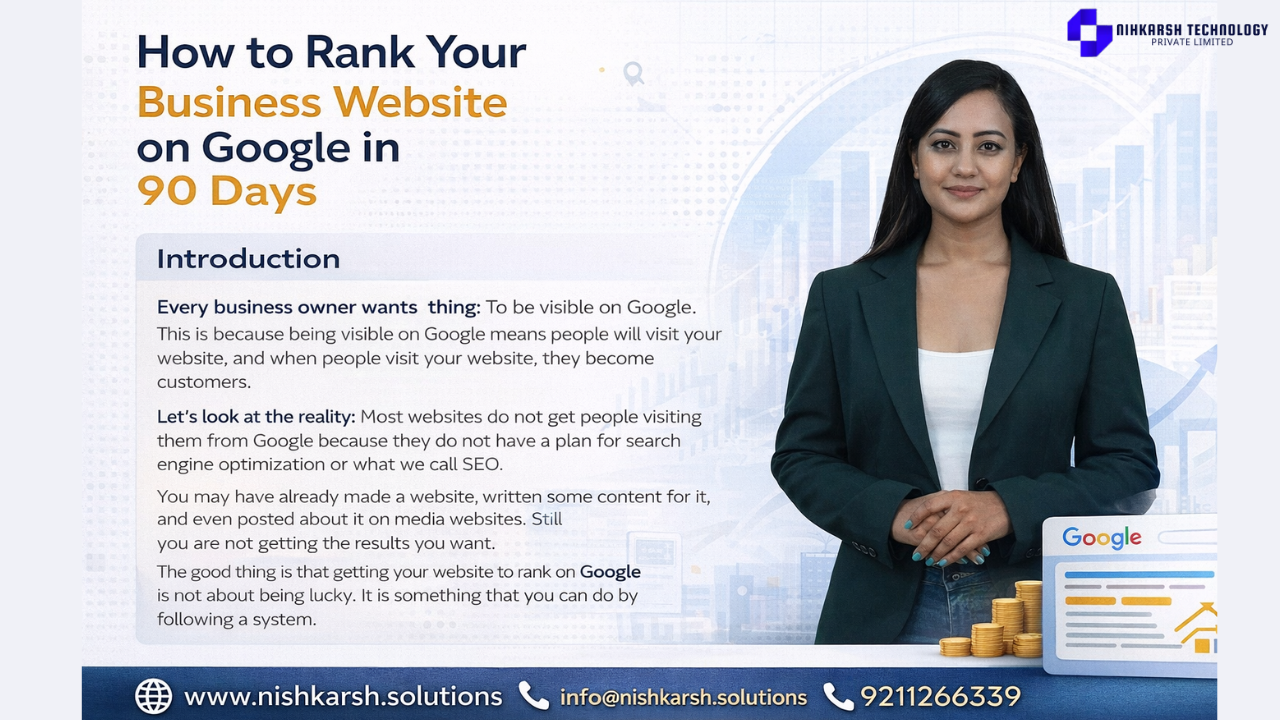
The Real Problem: Why Your Website Is Not Ranking
❌ 1. No Keyword Strategy
They target random keywords without understanding user intent.
❌ 2. Poor Website Structure
Google cannot understand or crawl their website properly.
❌ 3. Weak Content
Content does not solve real user problems.
❌ 4. No Backlinks
Google uses backlinks as a trust signal.
❌ 5. Technical Issues
Slow speed, broken links, and poor mobile experience.
❌ 6. Lack of Consistency
SEO is not a one-time activity—it requires continuous effort.
👉 According to Google, SEO is about helping search engines understand your content and helping users find it easily.
The 90-Day SEO Framework (Overview)
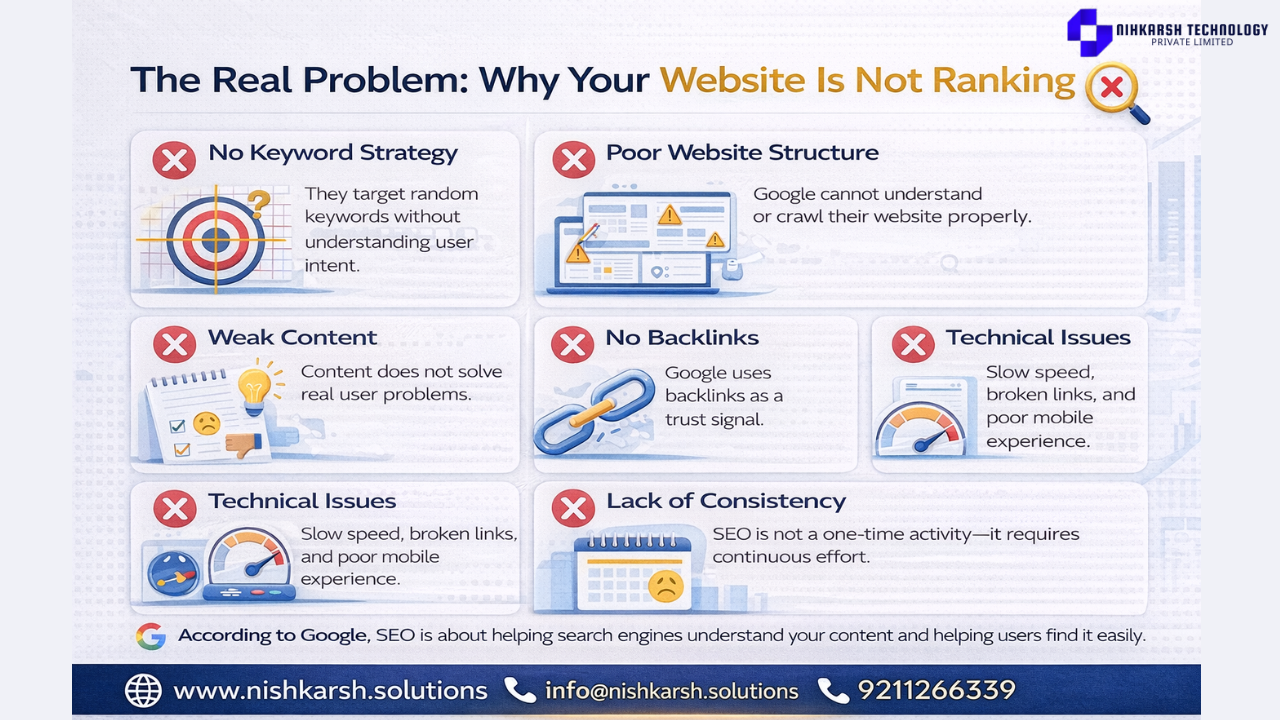
To rank your website, you need a 3-phase strategy:
| Phase | Duration | Goal | | ------- | --------- | ---------------------- | | Phase 1 | Day 1–30 | Foundation Setup | | Phase 2 | Day 31–60 | Content + Optimization | | Phase 3 | Day 61–90 | Authority + Growth |
Let’s break it down step by step.
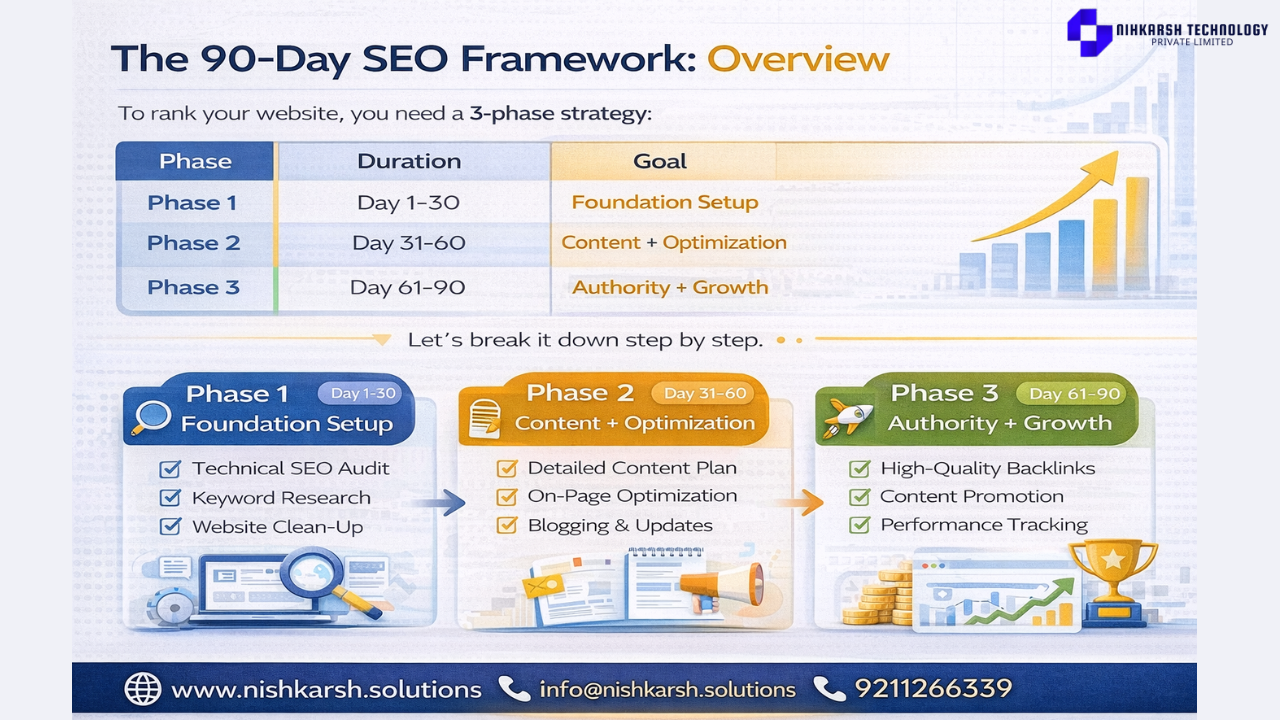
Phase 1 (Day 1–30): Build Strong SEO Foundation
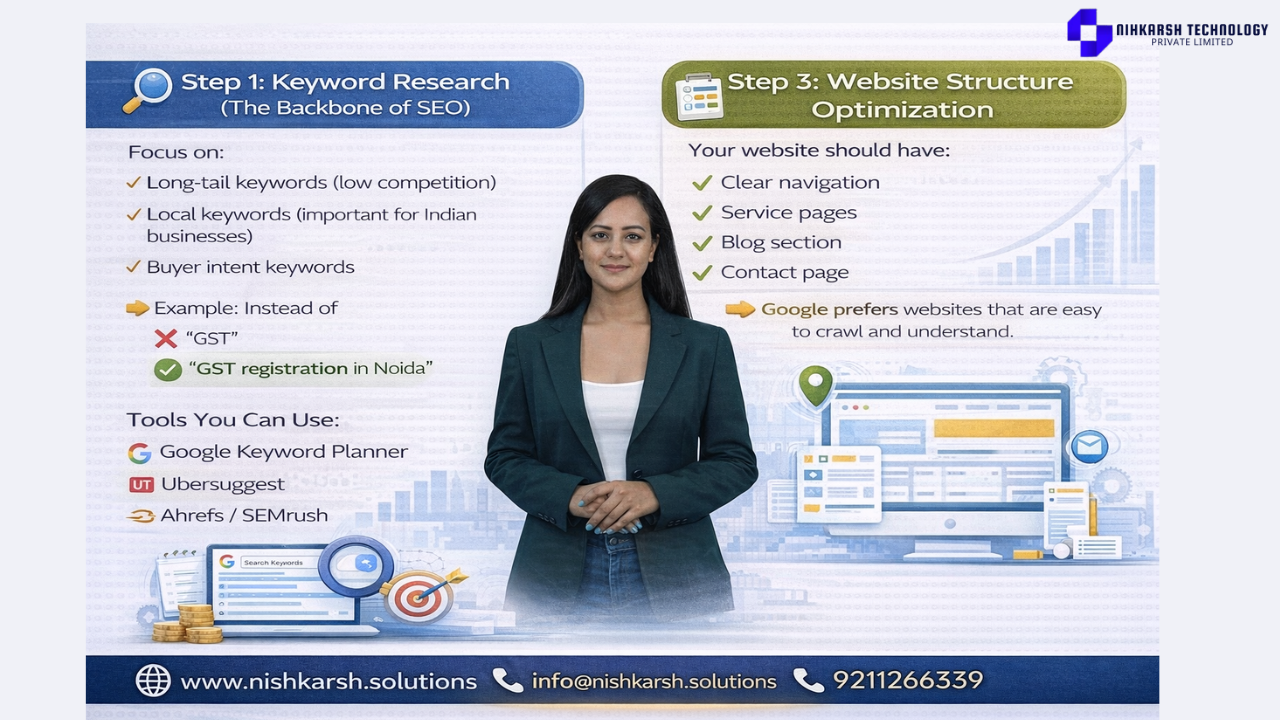
Step 1: Keyword Research (The Backbone of SEO)
Focus on: Long-tail keywords (low competition) Local keywords (important for Indian businesses) Buyer intent keywords
👉 Example: Instead of ❌ “GST” Use ✅ “GST registration in Noida”
Tools You Can Use:
Google Keyword Planner Ubersuggest Ahrefs / SEMrush
Step 3: Website Structure Optimization
Your website should have: Clear navigation Service pages Blog section Contact page 👉 Google prefers websites that are easy to crawl and understand
Step 4: Technical SEO Fixes
Fix these immediately: Page speed (under 3 seconds) Mobile responsiveness Sitemap submission Broken links HTTPS security 👉 Technical SEO ensures Google can properly index your website.
Step 5: Setup Google Tools
Google Search Console Google Analytics Track: Traffic Keywords User behavior
Phase 2 (Day 31–60): Content & On-Page SEO
Step 6: Create High-Quality Content
Google ranks content that: Solves problems Provides value Matches user intent 👉 “Useful content” is one of the strongest ranking factors.
Content Types:
Blogs Service pages Guides FAQs
Step 7: On-Page SEO Optimization
Optimize: Title tags Meta descriptions Headings (H1, H2, H3) Internal linking Image ALT tags ❌ Avoid keyword stuffing ✔ Focus on natural writing
Step 8: Publish Consistently
Post at least: 2–3 blogs per week 👉 Consistency builds authority and trust.
Step 9: Improve User Experience (UX)
Focus on: Easy navigation Fast loading Clear call-to-action 👉 Websites that keep users engaged rank higher.
Phase 3 (Day 61–90): Authority & Growth
Step 10: Build Backlinks
Backlinks = Trust signal for Google Ways to get backlinks: Guest posting Business directories Social media sharing Local listings 👉 Quality backlinks improve ranking significantly.
Step 11: Local SEO Optimization
For local businesses: Google Business Profile Local keywords Reviews 👉 This helps you dominate local search results.
Step 12: Performance Tracking & Optimization
Track: Keyword rankings Traffic growth Conversion rate 👉 SEO is data-driven—always improve based on results.
Example: Real SEO Strategy
Let’s say you run a GST service business.
Step-by-step:
Target keyword: “GST registration in Noida” Create optimized landing page Write blog: “Documents required for GST registration” Build backlinks from local directories Add Google reviews 👉 Result: Ranking improves within 30–60 days Leads increase gradually
Case Study: Ranking in 90 Days
A digital agency helped a local business reach #1 ranking in just 90 days by focusing on: User-focused content Fast website speed Strong backlinks Clear structure
Key Insight:
👉 Google rewards value, trust, and user experience—not tricks.
Important SEO Tips for 2025
✔ Focus on User Intent
Google now prioritizes meaning over keywords.
✔ Avoid AI-only Content
Low-quality AI content can hurt rankings.
✔ Build Brand Authority
SEO is not just keywords—it’s trust.
✔ Be Consistent
SEO success = long-term effort
Conclusion
Ranking your website on Google in 90 days is possible—but only if you follow the right strategy. 👉 Focus on: Strong foundation Quality content Backlinks User experience SEO is not magic—it’s discipline. If you stay consistent, results will come.
🚀 Grow Your Business with Expert Support
Are you struggling to rank your website or generate leads? At Nishkarsh Solutions, we help businesses: ✔ Rank on Google ✔ Generate high-quality leads ✔ Build strong online presence ✔ Grow faster with proven SEO strategies
👉 Get Started Today
🌐 Website: www.nishkarsh.solutions 📧 Email: info@nishkarsh.solutions 📞 Call/WhatsApp: 9211266339 💼 Book your FREE consultation today and start your growth journey!
FAQs (Frequently Asked Questions)
1. Can I really rank on Google in 90 days?
Yes, with the right strategy and low-competition keywords, you can see noticeable improvements within 90 days.
2. What is the most important SEO factor?
Content quality and user experience are the most important factors.
3. Do backlinks still matter in 2025?
Yes, backlinks remain one of the strongest ranking signals.
4. How many blogs should I post weekly?
At least 2–3 high-quality blogs per week.
5. Is SEO better than paid ads?
SEO gives long-term results, while ads provide short-term traffic.
6. What mistakes should I avoid?
Keyword stuffing Low-quality content Ignoring technical SEO
7. How long does SEO take?
Initial results: 30–90 days Strong ranking: 3–6 months