
The Most Missed Business Expense Claims That Could Save You Money
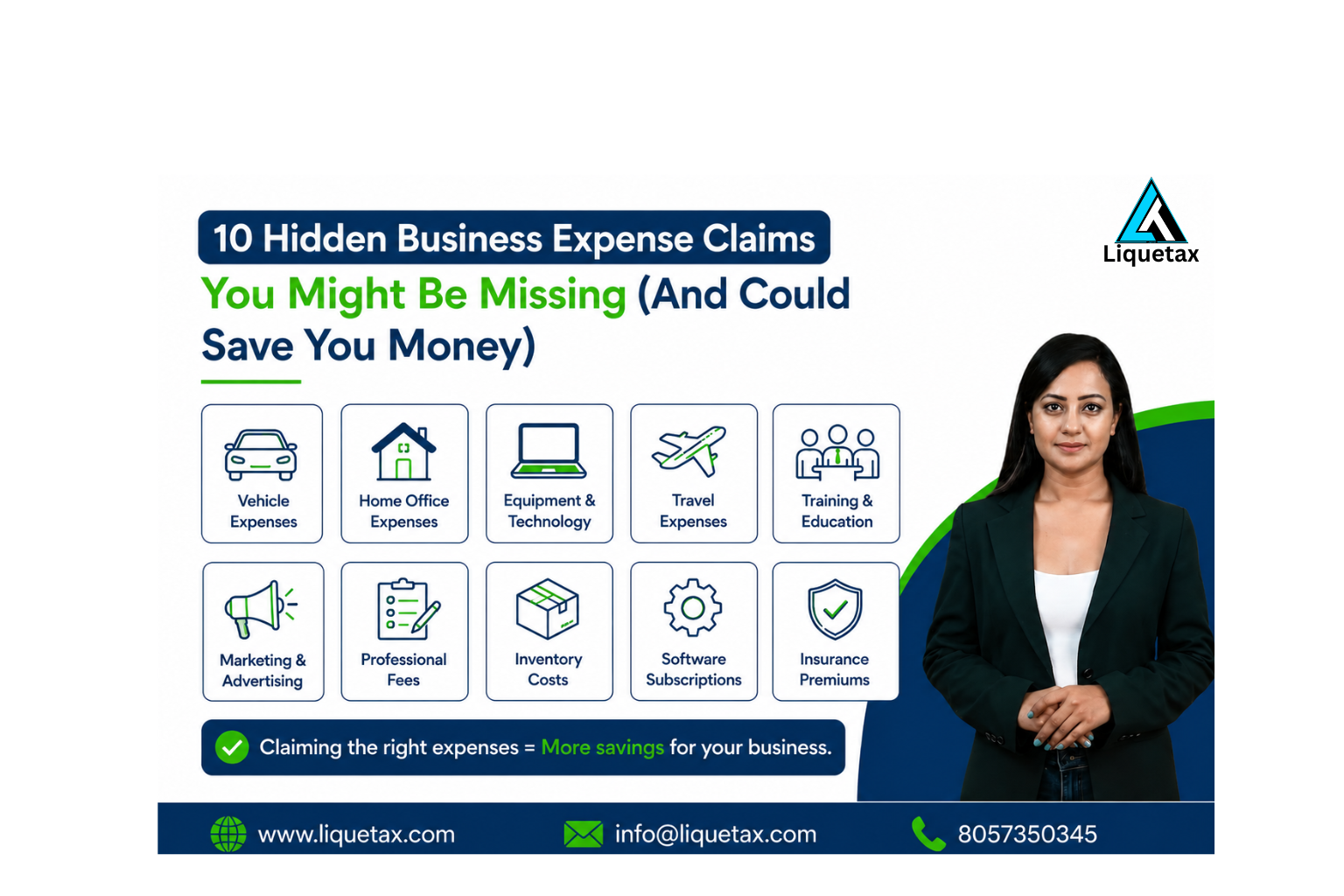
The Most Missed Business Expense Claims That Could Save You Money
Introduction
Running a business involves many expenses. While most business owners remember to claim major expenses like rent, salaries, and utility bills, many forget several smaller expenses that are also tax-deductible. Missing these deductions can result in paying more tax than necessary. Whether you are a freelancer, consultant, trader, startup founder, or small business owner, understanding allowable business expenses can help reduce your taxable income and improve profitability. In this guide, we will explore some of the most commonly missed business expense claims and explain how you can legally save money while staying compliant with tax regulations.
What Are Business Expense Claims?
Business expense claims are costs incurred wholly and exclusively for business purposes. These expenses can usually be deducted from your business income before calculating taxable profits. For example, if your business earns ₹10 lakh and you have eligible business expenses of ₹3 lakh, your taxable income may be reduced to ₹7 lakh. Claiming all eligible expenses accurately helps you: Reduce tax liability Improve cash flow Increase business profitability Maintain proper financial records Stay compliant with tax laws
1. Internet and Mobile Phone Expenses
Many entrepreneurs use their personal phone and internet connection for business activities but forget to claim these expenses. If your phone or internet is used partly for business purposes, you may claim the business-related portion of the expense. Examples: Mobile recharge plans Business calls Internet broadband Wi-Fi expenses Data plans Keep bills and records to support your claims.
2. Home Office Expenses
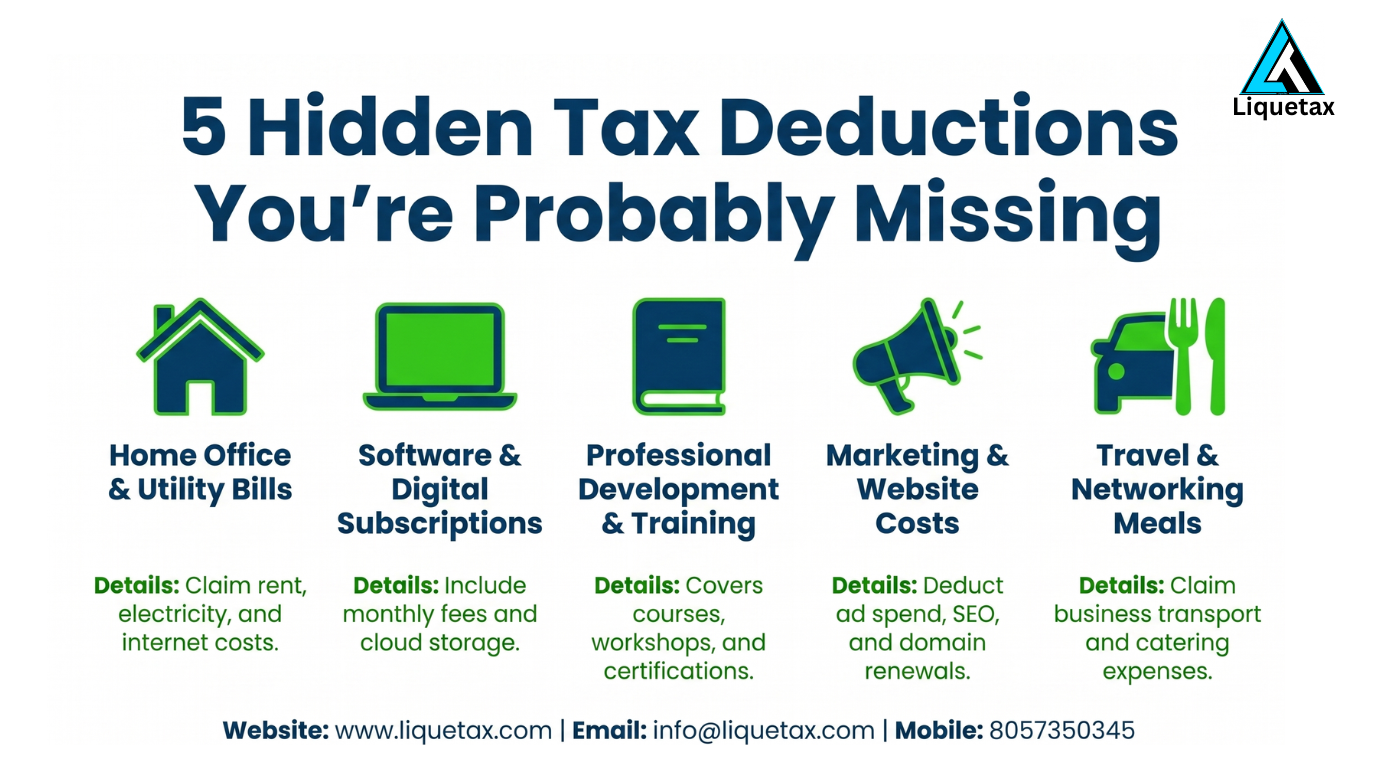
Since remote work has become common, many business owners operate from home. If you use a dedicated area of your home for business activities, you may claim certain expenses related to that workspace. Examples include: Electricity bills Internet charges Rent proportion Maintenance expenses Office furniture Proper documentation helps justify these claims during assessments.

3. Professional Development and Training
Many professionals invest in learning new skills but forget that these expenses may qualify as business deductions. Examples: Online courses Industry certifications Workshops Business seminars Professional memberships If the training relates directly to your business or profession, it may qualify as an allowable expense.
4. Accounting and Legal Fees
Professional services are often overlooked while preparing tax returns. Eligible expenses may include: Chartered Accountant fees Tax consultation charges GST filing fees Company compliance fees Legal advisory fees Contract drafting charges These expenses are incurred for running and managing the business and are generally deductible.
5. Software and Subscription Costs
Modern businesses rely heavily on digital tools. Many entrepreneurs subscribe to software platforms but forget to include them as business expenses. Examples: Accounting software CRM tools Email marketing software Cloud storage subscriptions Design tools Project management platforms Keep invoices and payment records for all subscriptions.
6. Business Travel Expenses
Business travel often involves several costs that can be claimed as deductions. Examples include: Air tickets Train tickets Taxi fares Hotel accommodation Local transportation Parking charges Travel should be directly related to business activities, meetings, conferences, or client visits.
7. Marketing and Advertising Expenses
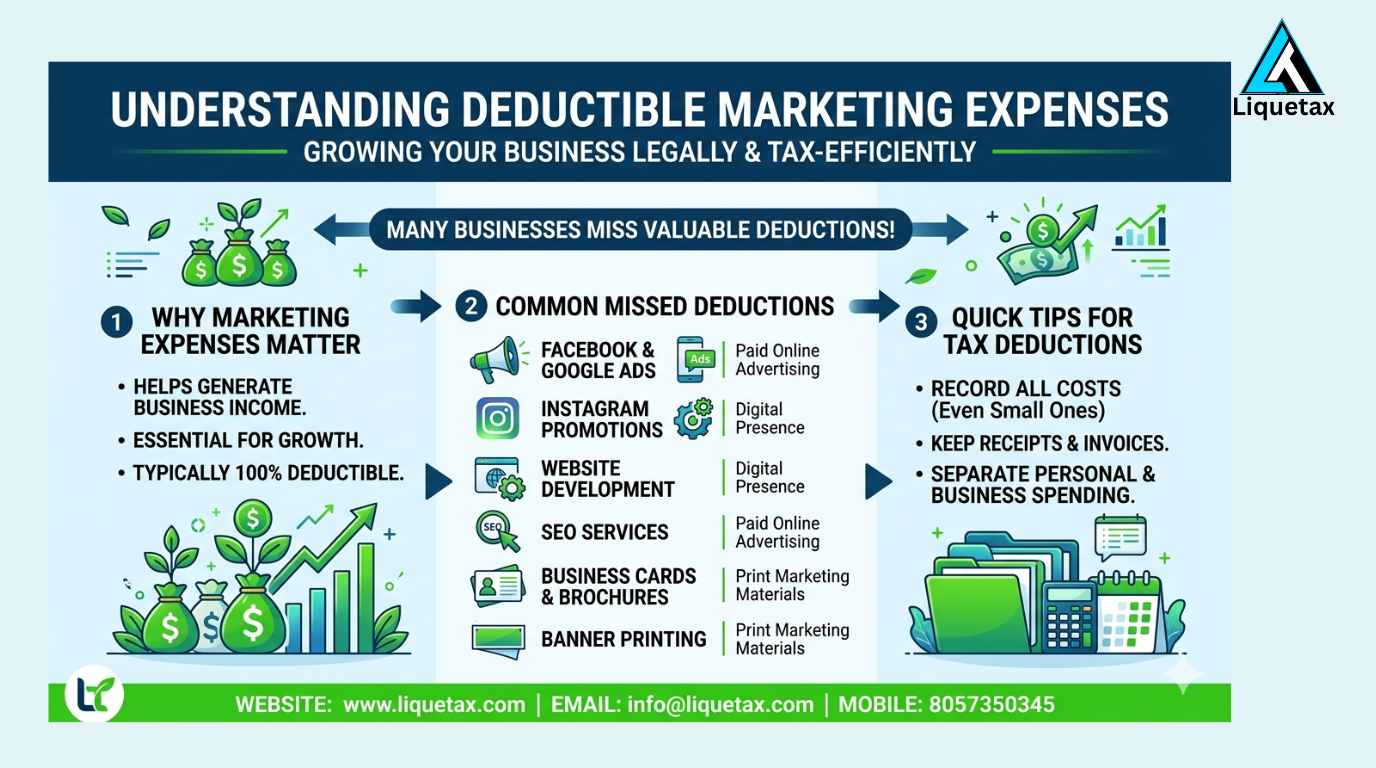
Growing a business requires marketing investment. Many business owners only record large advertising expenses while missing smaller promotional costs. Examples: Facebook Ads Google Ads Instagram promotions Website development SEO services Business cards Brochures Banner printing These expenses are generally deductible because they help generate business income.
8. Website and Domain Expenses
A business website is an essential asset today. Expenses that may qualify include: Domain registration Website hosting Website maintenance Security certificates Content writing services Website redesign costs Many small businesses forget to include these expenses while calculating taxable income.

Why Keeping Proper Records Is Important
Claiming expenses without proper documentation can create problems during tax assessments. Maintain: Invoices Bills Bank statements Payment receipts Contracts Digital records Good record-keeping not only supports deductions but also improves financial management.
Final Thoughts
Many business owners focus only on major deductions and overlook several legitimate business expenses. These missed claims can increase taxable income and result in unnecessary tax payments. By understanding eligible deductions, maintaining proper records, and reviewing expenses regularly, you can maximize tax savings while remaining fully compliant. Every rupee saved through proper tax planning can be reinvested into growing your business. Businesses should periodically review their expenses and seek professional guidance to ensure that all allowable deductions are claimed accurately.
How Liquetax Can Help
At Liquetax, our experts help businesses and professionals identify eligible tax deductions, maintain compliance, and optimize tax planning strategies. Our services include: Income Tax Return Filing GST Registration & Returns Company Registration LLP Registration Trademark Registration Annual Compliance Accounting & Bookkeeping Business Tax Advisory
Contact Us Today
Website: www.liquetax.com 📧 Email: info@liquetax.com 📞 Mobile: 8057350345 Get professional assistance and ensure you never miss valuable business expense claims again.
Frequently Asked Questions (FAQs)
1. What is a business expense claim?
A business expense claim is a deduction for costs incurred wholly and exclusively for business purposes, helping reduce taxable income.
2. Can I claim internet expenses for my business?
Yes. If the internet connection is used for business activities, the business-related portion may generally be claimed.
3. Are software subscriptions tax-deductible?
Yes. Software and digital tools used for business operations are generally considered allowable business expenses.
4. Can I claim home office expenses?
If part of your home is regularly used for business purposes, certain related expenses may qualify for deduction.
5. Are advertising expenses deductible?
Yes. Marketing and advertising expenses incurred to promote your business are generally deductible.