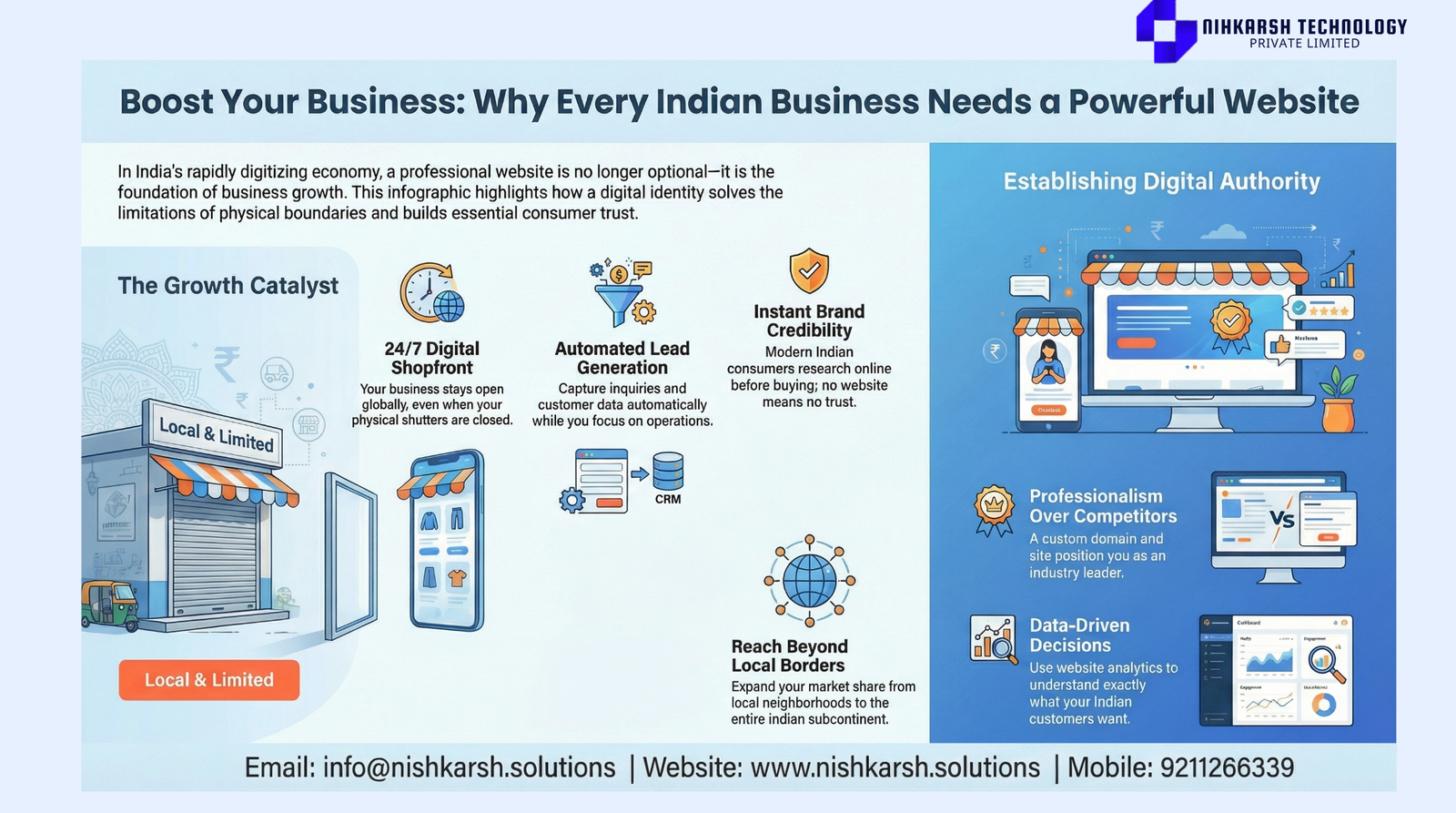
Boost Your Business: Why Every Indian Business Needs a Powerful Website

Website Designing Services – Why Every Business in India Needs a Powerful Website
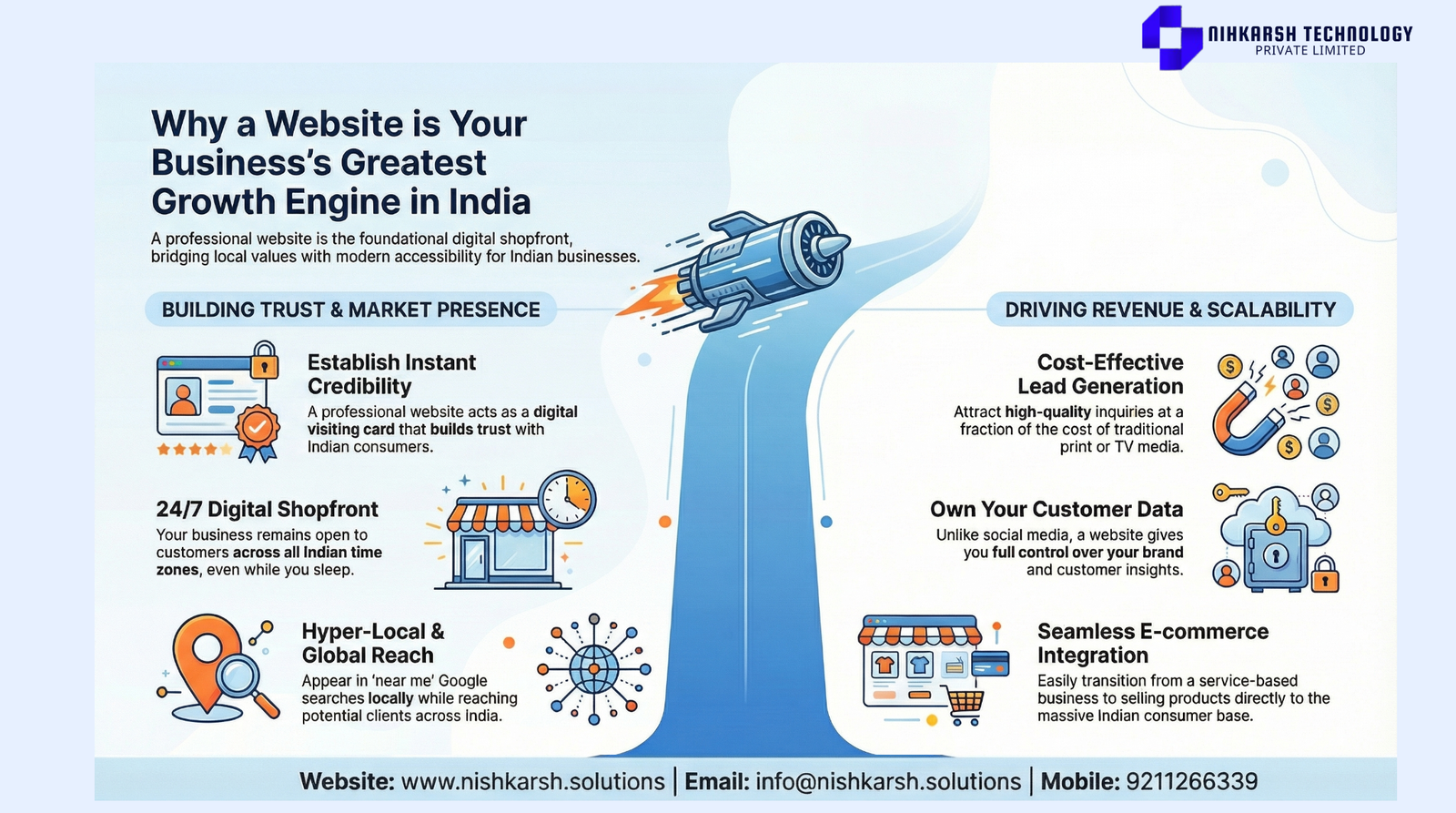
In the digital age of 2026, a business's website is no longer just an online brochure. It's the digital storefront, the 24/7 sales representative, and the marketing powerhouse that keeps your brand relevant. With over 800 million internet users in India, having a powerful website is no longer optional—it's a necessity. Whether you're a startup, a small business, or an established enterprise, your website is your most critical digital asset.
But why exactly does every business in India need a powerful website? The answer lies in the evolving digital landscape, consumer behavior shifts, and the competitive advantages that a well-designed website provides. From improving user experience to boosting search engine rankings, a powerful website can transform your business operations and growth trajectory.
In this comprehensive guide, we'll explore the key reasons why your business needs a powerful website, the latest trends in website design for 2026, and practical insights to help you make an informed decision. Let's dive in!
The Digital Transformation of Businesses in India
India's digital economy is booming, with e-commerce, digital payments, and online services driving growth. According to recent data, India's digital economy is projected to reach $1 trillion by 2027, up from $600 billion in 2022. This surge in digital activity means that businesses must adapt to stay competitive.
A powerful website is at the heart of this digital transformation. It serves as the primary point of interaction between your business and customers, making it essential for brand visibility, customer engagement, and revenue generation. In 2026, businesses that neglect their online presence risk falling behind in a market where digital-first consumers expect seamless, intuitive, and visually appealing experiences.
Moreover, the COVID-19 pandemic accelerated the digital adoption curve in India. With remote work, online shopping, and digital banking becoming the norm, businesses that didn't have a strong online presence struggled to keep up. Today, a well-designed website is not just a luxury but a survival tool.
Why a Powerful Website is Non-Negotiable for Businesses in India
If you're still wondering whether a powerful website is necessary for your business, here are some compelling reasons why it is:
1. Credibility and Trust
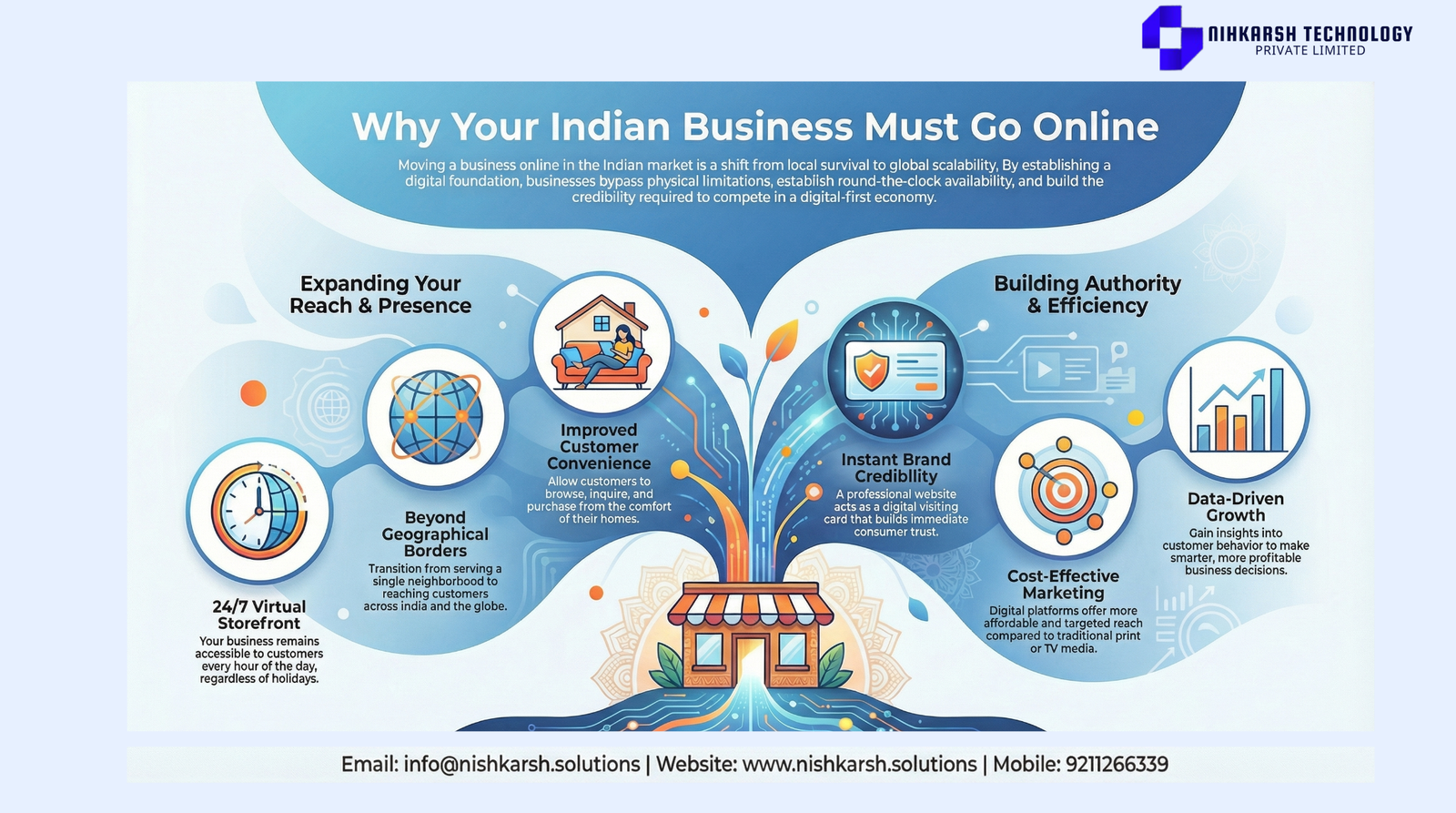
A professional website instantly builds credibility. In a market like India, where trust is earned through experience, a poorly designed or outdated website can deter potential customers. On the other hand, a modern, well-designed website signals professionalism and reliability.
For example, a real estate agency with a sleek, mobile-friendly website will be perceived as more trustworthy than one with a cluttered, slow-loading site. Similarly, an e-commerce brand with a seamless checkout process and fast load times will likely convert more customers than one with a glitchy interface.
2. Improved User Experience (UX)
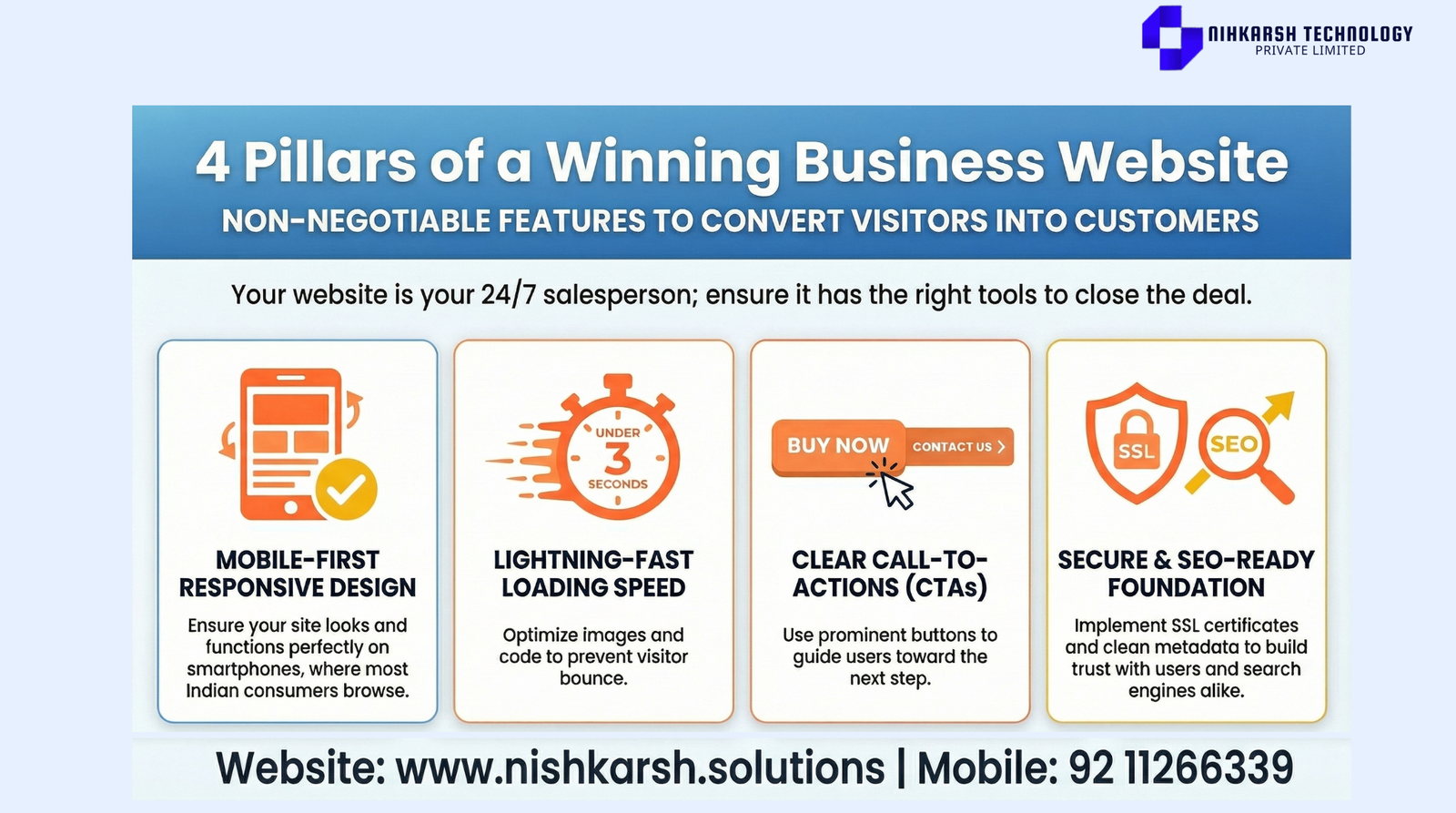
User experience is a critical factor in website success. In 2026, consumers expect websites to load in under 2 seconds, be fully responsive on all devices, and offer intuitive navigation. A poorly designed website can frustrate users and drive them to competitors.
For instance, a restaurant chain with a website that's difficult to navigate or has broken links will lose potential customers to a rival with a more user-friendly site. Similarly, a financial services company with a slow-loading website may lose clients who prefer faster, more efficient digital experiences.
3. Enhanced Search Engine Visibility
Search engine optimization (SEO) is no longer optional. In 2026, Google's algorithms prioritize websites that offer a great user experience, including fast load times, mobile-friendliness, and secure connections. A well-optimized website can rank higher in search results, driving more organic traffic to your business.
For example, a local business with a strong SEO strategy can appear on the first page of Google for relevant keywords, attracting more customers than those without an optimized website. Similarly, an e-commerce brand with a high domain authority can outrank competitors and capture more market share.
4. 24/7 Customer Engagement
A website allows your business to engage with customers around the clock. Unlike traditional marketing channels, a website is always open, enabling you to provide information, answer queries, and promote products or services at any time.
For instance, a healthcare provider can use its website to offer 24/7 access to patient information, appointment scheduling, and telemedicine services. Similarly, an e-commerce brand can use its website to showcase new products, run flash sales, and provide customer support through live chat or FAQs.
5. Cost-Effective Marketing
A well-designed website can serve as a powerful marketing tool. It allows you to showcase your products or services, share testimonials, and provide valuable content to attract and retain customers. Additionally, a website can integrate with other marketing channels, such as social media, email marketing, and paid advertising, to create a cohesive digital strategy.
For example, a travel agency can use its website to showcase destination packages, accept bookings, and drive traffic to its social media channels. Similarly, a SaaS company can use its website to demonstrate product features, offer free trials, and generate leads for its sales team.
6. Competitive Advantage
In a crowded market, a powerful website can give you a competitive edge. It allows you to differentiate your brand, highlight unique selling points, and provide a seamless customer experience that competitors may not offer.
For instance, a fintech startup with a user-friendly website and advanced security features can attract customers away from traditional banks. Similarly, a local retailer with a mobile-optimized website can compete with larger e-commerce giants by offering a personalized shopping experience.
7. Data Collection and Insights
A website enables you to collect valuable data about your customers, including their preferences, behaviors, and demographics. This data can be used to improve your products or services, personalize marketing efforts, and make data-driven decisions.
For example, an e-commerce brand can use website analytics to identify popular products, optimize its inventory, and tailor promotions to different customer segments. Similarly, a B2B company can use its website to gather leads, understand customer pain points, and refine its sales strategy.
8. Future-Proofing Your Business
As technology evolves, so do consumer expectations. A powerful website ensures that your business remains relevant and competitive in the digital landscape. By investing in a modern, scalable website, you future-proof your brand and position it for long-term success.
For instance, a business that embraces AI-driven chatbots and voice search optimization in 2026 will be better prepared to meet the evolving needs of its customers. Similarly, a company that invests in a headless CMS and omnichannel integration will be more agile and adaptable in the face of changing market conditions.
The Latest Trends in Website Design for 2026
Website design is constantly evolving, with new trends emerging to meet the changing needs of users and businesses. In 2026, some of the key trends in website design include:
1. AI-Powered Personalization
AI is transforming website design by enabling personalized experiences for users. AI-powered chatbots, recommendation engines, and dynamic content can tailor the user experience to individual preferences, increasing engagement and conversions.
For example, an e-commerce website can use AI to recommend products based on a user's browsing history and purchase behavior. Similarly, a news portal can use AI to curate personalized content feeds for different users.
2. Voice Search Optimization
With the rise of smart speakers and voice assistants, voice search is becoming increasingly popular. Websites that optimize for voice search can improve their visibility in voice-powered search results and attract more organic traffic.
For instance, a local business can optimize its website for voice search by including natural language keywords and structured data. Similarly, an e-commerce brand can use voice search optimization to improve its product listings and increase sales.
3. Dark Mode and Accessibility
Dark mode is a popular design trend that reduces eye strain and conserves battery life on mobile devices. Websites that offer a dark mode option can enhance user experience and appeal to a broader audience. Additionally, accessibility features, such as screen reader compatibility and keyboard navigation, are becoming increasingly important for users with disabilities.
For example, a news website can offer a dark mode option to improve readability and reduce eye fatigue. Similarly, a financial services company can ensure its website is accessible to users with visual impairments by incorporating alt text and ARIA labels.
4. Micro-Interactions and Animations
Micro-interactions and animations can enhance user engagement and make the website more interactive. Subtle animations, such as hover effects, loading spinners, and success messages, can provide feedback and improve the overall user experience.
For instance, an e-commerce website can use micro-interactions to show product availability, offer discounts, and guide users through the checkout process. Similarly, a portfolio website can use animations to showcase projects and highlight key achievements.
5. Mobile-First Design
With over 60% of global web traffic coming from mobile devices, mobile-first design is no longer optional. Websites that prioritize mobile responsiveness and performance can provide a seamless experience for users on smartphones and tablets. Additionally, mobile-first design ensures that your website is optimized for the latest mobile features, such as touch gestures and accelerometer data.
For example, a restaurant chain can use mobile-first design to showcase its menu, accept reservations, and provide directions to its location. Similarly, a travel agency can use mobile-first design to offer a personalized travel experience and make bookings on the go.
6. Interactive Storytelling
Interactive storytelling is a powerful way to engage users and convey your brand's message. Websites that use interactive elements, such as scroll-triggered animations, parallax scrolling, and 3D models, can create a memorable and immersive experience.
For instance, a marketing agency can use interactive storytelling to showcase its campaigns and highlight its expertise. Similarly, a museum can use interactive storytelling to showcase its exhibits and provide an engaging virtual tour.
7. Sustainability and Green Web Design
As environmental concerns grow, businesses are increasingly focused on sustainability. Websites that prioritize green design principles, such as reducing carbon footprints, using renewable energy, and minimizing data usage, can appeal to eco-conscious consumers and enhance their brand image.
For example, a travel agency can use green web design to showcase its eco-friendly practices and attract environmentally conscious travelers. Similarly, a tech company can use green web design to demonstrate its commitment to sustainability and appeal to socially responsible investors.
8. Web3 and Blockchain Integration
Web3 and blockchain technology are transforming the way websites interact with users. Websites that integrate blockchain features, such as NFTs, decentralized identity, and smart contracts, can offer unique and innovative experiences. Additionally, Web3 websites can provide enhanced security, transparency, and user control.
For instance, an art gallery can use NFTs to showcase and sell digital art, providing a new revenue stream and engaging a broader audience. Similarly, a gaming company can use blockchain to create a decentralized gaming platform and offer in-game assets as NFTs.
Choosing the Right Website Designing Service in India
With so many website designing services available in India, choosing the right one can be challenging. Here are some factors to consider when selecting a website design agency:
1. Experience and Expertise
Look for an agency with a proven track record of delivering high-quality websites for businesses in your industry. A reputable agency should have a portfolio of successful projects and testimonials from satisfied clients.
For example, if you're a B2B company, you should look for an agency with experience in creating lead generation websites. Similarly, if you're an e-commerce brand, you should look for an agency with expertise in building high-converting online stores.
2. Customization and Flexibility
A good website design agency should offer customization options to meet your specific needs. They should be willing to work with you to create a unique design that reflects your brand and appeals to your target audience.
For instance, if you have a unique product or service, the agency should be able to create a website that highlights your differentiators and provides a seamless user experience. Similarly, if you have specific branding guidelines, the agency should be able to incorporate them into the design.
4. Technical Expertise
A website is only as good as its underlying technology. Look for an agency with technical expertise in areas such as SEO, security, and performance optimization. They should be able to build a website that is fast, secure, and optimized for search engines.
For example, if you're an e-commerce brand, the agency should be able to build a website with features such as secure payment gateways, inventory management, and abandoned cart recovery. Similarly, if you're a SaaS company, the agency should be able to build a website with features such as user authentication, role-based access control, and API integrations.
5. Communication and Collaboration
Effective communication is key to a successful website project. Look for an agency that values clear and transparent communication, provides regular updates, and is responsive to your feedback. They should be willing to collaborate with you throughout the design and development process.
For instance, if you have specific requirements or changes, the agency should be able to accommodate them and keep the project on track. Similarly, if you have a tight deadline, the agency should be able to manage your expectations and deliver the project on time.
6. Post-Launch Support
A good website design agency should offer post-launch support to ensure that your website continues to perform well. They should be willing to provide ongoing maintenance, updates, and technical support to keep your website secure, up-to-date, and optimized for performance.
For example, if your website experiences a security breach, the agency should be able to respond quickly and implement necessary fixes. Similarly, if your website needs updates to accommodate new features or changes in your business, the agency should be able to provide timely and efficient support.
7. Cost and Value
While cost is an important factor, it should not be the sole determining factor. Look for an agency that offers a competitive price while delivering high-quality work. They should be transparent about their pricing and provide a clear breakdown of costs.
For instance, if you have a tight budget, the agency should be able to offer a solution that meets your needs without compromising on quality. Similarly, if you have a complex project, the agency should be able to provide a detailed proposal and manage your expectations.
8. Reputation and Reviews
Before committing to an agency, research its reputation and read reviews from past clients. A reputable agency should have a strong online presence, positive reviews, and a history of delivering successful projects.
For example, if you're looking for a website design agency in Mumbai, you should research agencies with a strong presence in the city and positive reviews from local businesses. Similarly, if you're looking for a global agency, you should look for one with a strong international reputation and a portfolio of successful projects.
Case Studies: Successful Website Design Projects in India
To illustrate the impact of a powerful website, let's look at some real-world examples of businesses in India that have successfully leveraged their websites to drive growth and achieve their goals.
1. Flipkart: The E-Commerce Revolution
Flipkart, India's leading e-commerce platform, has transformed the way Indians shop online. Its website, designed with a focus on speed, user experience, and mobile optimization, has become a key driver of its success. Flipkart's website features a clean, intuitive interface, fast load times, and a seamless checkout process, enabling it to capture a significant share of the online retail market.
2. Swiggy: Food Delivery Innovation
Swiggy, India's largest food delivery platform, has revolutionized the way Indians order food online. Its website, designed with a focus on speed, convenience, and personalization, has become a key driver of its success. Swiggy's website features a user-friendly interface, real-time order tracking, and a wide range of restaurant options, enabling it to capture a significant share of the online food delivery market.
3. Ola: The Ride-Hailing Disruptor
Ola, India's leading ride-hailing platform, has transformed the way Indians commute. Its website, designed with a focus on speed, convenience, and personalization, has become a key driver of its success. Ola's website features a clean, intuitive interface, fast load times, and a seamless booking process, enabling it to capture a significant share of the online transportation market.
4. Paytm: The Digital Payments Pioneer
Paytm, India's leading digital payments platform, has revolutionized the way Indians transact online. Its website, designed with a focus on speed, security, and convenience, has become a key driver of its success. Paytm's website features a user-friendly interface, secure payment gateways, and a wide range of financial services, enabling it to capture a significant share of the online payments market.
5. Zomato: The Food Discovery Platform
Zomato, India's leading food discovery platform, has transformed the way Indians explore and order food. Its website, designed with a focus on speed, convenience, and personalization, has become a key driver of its success. Zomato's website features a clean, intuitive interface, real-time order tracking, and a wide range of restaurant options, enabling it to capture a significant share of the online food delivery market.
6. Myntra: The Fashion E-Commerce Leader
Myntra, India's leading fashion e-commerce platform, has revolutionized the way Indians shop for clothing and accessories online. Its website, designed with a focus on speed, user experience, and mobile optimization, has become a key driver of its success. Myntra's website features a clean, intuitive interface, fast load times, and a seamless checkout process, enabling it to capture a significant share of the online fashion market.
7. BookMyShow: The Entertainment Booking Giant
BookMyShow, India's leading entertainment booking platform, has transformed the way Indians book tickets for movies, events, and sports. Its website, designed with a focus on speed, convenience, and personalization, has become a key driver of its success. BookMyShow's website features a clean, intuitive interface, real-time seat selection, and a wide range of show options, enabling it to capture a significant share of the online entertainment market.
8. Cleartrip: The Travel Booking Disruptor
Cleartrip, India's leading travel booking platform, has revolutionized the way Indians plan and book their trips. Its website, designed with a focus on speed, convenience, and personalization, has become a key driver of its success. Cleartrip's website features a clean, intuitive interface, real-time pricing, and a wide range of travel options, enabling it to capture a significant share of the online travel market.
9. Policybazaar: The Insurance Comparison Leader
Policybazaar, India's leading insurance comparison platform, has transformed the way Indians compare and buy insurance policies. Its website, designed with a focus on speed, convenience, and personalization, has become a key driver of its success. Policybazaar's website features a clean, intuitive interface, real-time quote comparisons, and a wide range of insurance options, enabling it to capture a significant share of the online insurance market.
10. Cred: The Credit Card and Loan Platform
Cred, India's leading credit card and loan platform, has revolutionized the way Indians manage their finances. Its website, designed with a focus on speed, convenience, and personalization, has become a key driver of its success. Cred's website features a clean, intuitive interface, real-time credit score tracking, and a wide range of financial services, enabling it to capture a significant share of the online finance market.
Conclusion: Investing in a Powerful Website for Long-Term Success
In the digital age of 2026, a powerful website is no longer optional—it's a necessity for businesses in India. A well-designed website can enhance your brand's credibility, improve user experience, boost search engine visibility, and drive customer engagement. It can also provide a competitive advantage, enable data-driven decision-making, and future-proof your business.
As the digital landscape continues to evolve, businesses that invest in a powerful website will be better positioned to adapt to changing consumer expectations and market conditions. By staying ahead of the latest trends in website design and choosing the right design agency, you can create a website that not only meets your current needs but also supports your long-term growth and success.
So, if you're still considering whether a powerful website is necessary for your business, the answer is clear: yes, it is. Don't wait until it's too late—start investing in a powerful website today and unlock the full potential of your brand in the digital age.
Remember, your website is your digital storefront, your 24/7 sales representative, and your marketing powerhouse. Make it count!